Key takeaways
- Pipes freeze where cold outdoor air reaches them: exterior walls, rim joists, crawl spaces and unheated rooms.
- Air leaks are often the real cause, because a stream of frigid air can freeze a pipe in an otherwise warm space.
- During a cold snap: open cabinet doors, let faucets drip and keep the heat on.
- Permanent fixes include sealing and insulating rim joists, crawl spaces and exterior walls.
Why pipes freeze
Water expands as it freezes. When ice forms in a pipe, pressure builds between the ice and a closed faucet until the pipe splits. The pipe usually bursts where it did not freeze, which is why the damage often appears days later when it thaws.
In Massachusetts homes, the pipes most at risk are:
- Pipes in exterior walls, especially under kitchen and bathroom sinks.
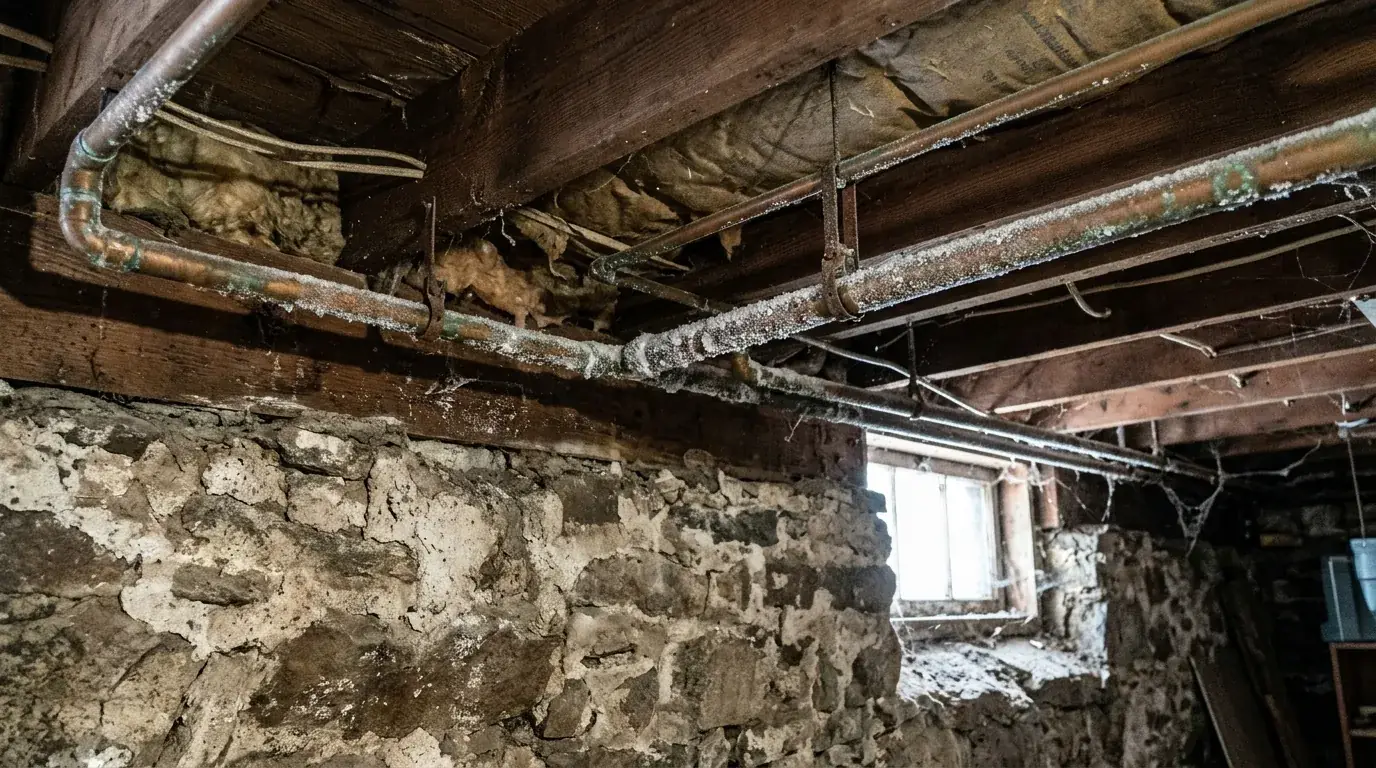
- Pipes along the basement rim joist, where the house meets the foundation.
- Pipes in crawl spaces, garages and unheated additions.
- Pipes near leaky basement windows, bulkheads and dryer vents.
Air leaks are the hidden cause
Insulation alone does not always protect a pipe. A small gap that lets frigid outside air blow directly on a pipe can freeze it even in a heated basement. That is why so many frozen pipes happen in the same spot every year, right next to a crack in the foundation, a gap at the sill or an old basement window. Sealing the leak is often more important than wrapping the pipe.
What to do during a cold snap
- Open cabinet doors under sinks on exterior walls so warm air can reach the pipes.
- Let faucets drip on the coldest nights; moving water is less likely to freeze.
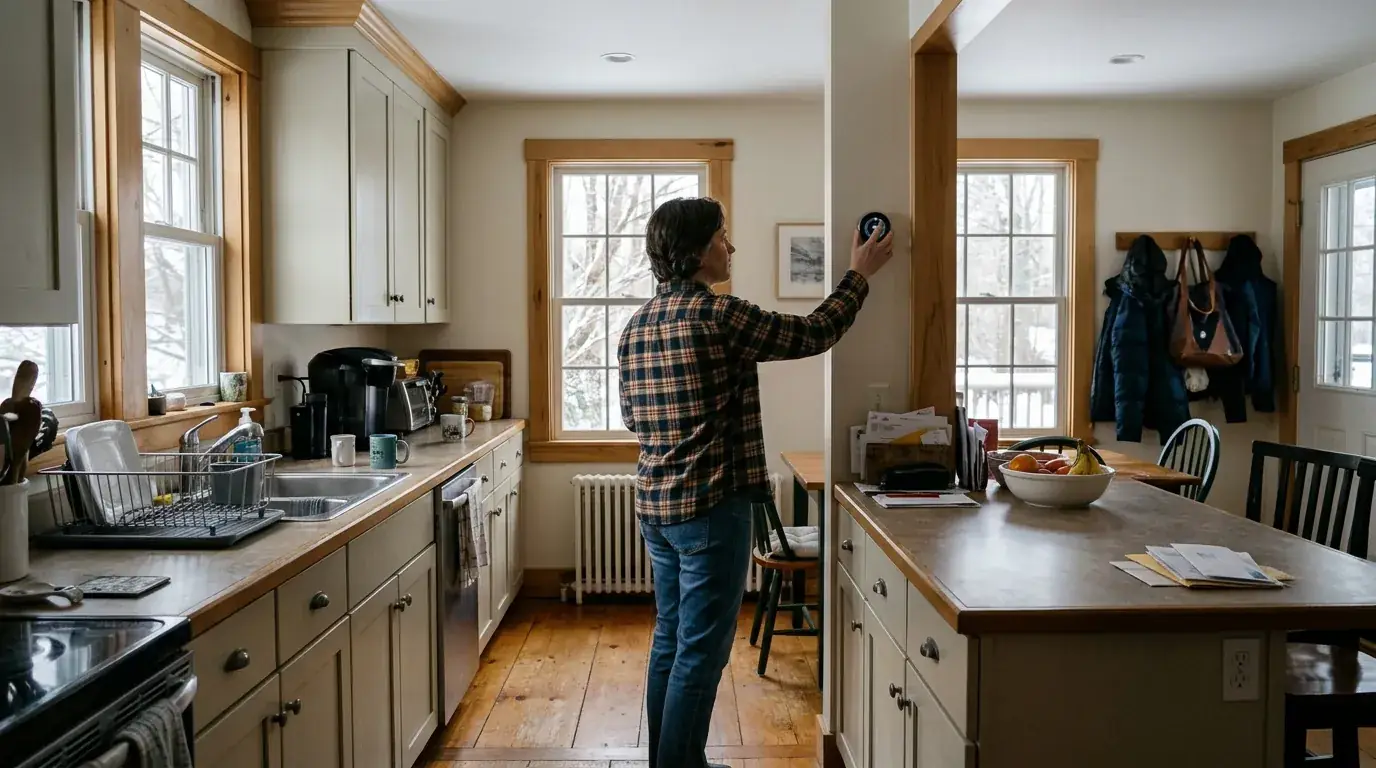
- Keep the heat on, even when you are away. Do not set the thermostat too low.
- Close garage doors if water lines run through the garage.
- Shut off and drain outdoor faucets before winter.
Turn off the water to that line if you can, open the faucet and warm the pipe gently with a hair dryer. Never use an open flame. If you suspect a burst, shut off the main and call a plumber.
Permanent fixes
| Problem spot | Permanent fix |
|---|---|
| Basement rim joists | Air seal and insulate with closed-cell spray foam |
| Exterior walls with pipes | Dense-pack the wall cavity and seal the penetrations |
| Crawl spaces | Seal and insulate the crawl space walls (see crawl space encapsulation) |
| Floors over garages | Seal and insulate the floor; keep pipes on the warm side |
| Leaky basement windows and bulkheads | Weatherstrip, seal or replace |
Why rim joists matter so much
The rim joist is the band of wood that sits on top of the foundation wall. In most older homes it has little or no insulation and leaks air at every joint. Pipes often run right along it. Sealing and insulating the rim joist with closed-cell foam is one of the most effective ways to stop frozen pipes, and it reduces drafts in the whole house. Learn more in our rim joist guide.
Does insulation help in the rest of the house?
Yes. Air sealing the attic reduces the stack effect, which reduces the amount of cold air pulled into the basement and crawl spaces in the first place. A tighter house is warmer at the bottom. See why your house is drafty.
Know your shutoffs
Every household should know where to shut off the water:
- Main shutoff: usually in the basement where the water line enters, or near the water meter.
- Fixture shutoffs: under sinks and behind toilets.
- Outdoor faucet shutoffs: inside the basement for each hose bib.
Test them once a year. Old valves can seize, and finding that out during a burst pipe is stressful.
When you go away in winter
- Keep the thermostat at a safe temperature, never off.
- Ask someone to check the house if you will be gone for several days.
- Consider a smart thermostat or temperature alert that notifies you if the house gets too cold.
- For long trips, consider shutting off the main water and draining lines, with professional advice.
Pipes in exterior walls
Kitchen sinks under windows are the classic problem in Massachusetts homes. The pipes run up through a cold exterior wall, often next to gaps in the sill and sheathing. Long-term solutions include:
- Sealing and insulating the rim joist below the sink.
- Dense-packing the wall cavity around the pipes.
- Sealing where pipes enter the cabinet.
- In renovations, rerouting pipes into interior walls.
Pipes in garages and crawl spaces
| Location | Long-term fix |
|---|---|
| Garage wall or ceiling | Insulate the wall between garage and house; keep pipes on the warm side |
| Crawl space | Encapsulate and insulate the crawl walls |
| Unheated addition | Insulate and air seal the addition's floor and walls |
Heat tape: a stopgap
Self-regulating heat cable can protect a vulnerable pipe, but it uses electricity and must be installed according to the manufacturer's instructions. It is a backup, not a substitute for sealing and insulating the space.
After a burst pipe
Shut off the water, call a plumber and photograph the damage. Once repairs are made, ask why that spot froze. In most cases, the answer is cold air reaching the pipe through a leak that can be sealed.
Get ahead of next winter
BCI Group seals and insulates rim joists, crawl spaces and walls across Central Massachusetts, where winters are coldest. Call (774) 278-8256 or request a free estimate, and we will look at the spots where your pipes are at risk.
Frequently asked questions
At what temperature do pipes freeze?
Pipes in unheated or drafty spaces can freeze when outdoor temperatures drop well below freezing, especially below about 20°F. Wind and air leaks raise the risk.
Should I let my faucets drip?
On very cold nights, a slow drip in faucets on exterior walls can reduce the risk of freezing.
Does pipe insulation prevent freezing?
Pipe insulation slows heat loss but cannot stop freezing in a stream of cold air. Sealing air leaks around the pipe matters most.
Why do my pipes freeze in the same place every year?
There is usually an air leak nearby, often at the rim joist, a foundation crack or a basement window.
Can spray foam be used around pipes?
Closed-cell spray foam is commonly used to seal and insulate rim joists where pipes run. It should be installed by trained professionals.
Services mentioned in this article
Spray Foam Insulation near you in Massachusetts
BCI Group crews work in these communities every week. See local details for spray foam in your town: