
Dunstable, MA · Middlesex County
Blown-In Cellulose Insulation in Dunstable, MA
Warmer rooms and lower heating bills in Dunstable: dense-pack cellulose fills the walls older homes were built without.





Built for Dunstable
Cellulose insulation for Dunstable attics and walls
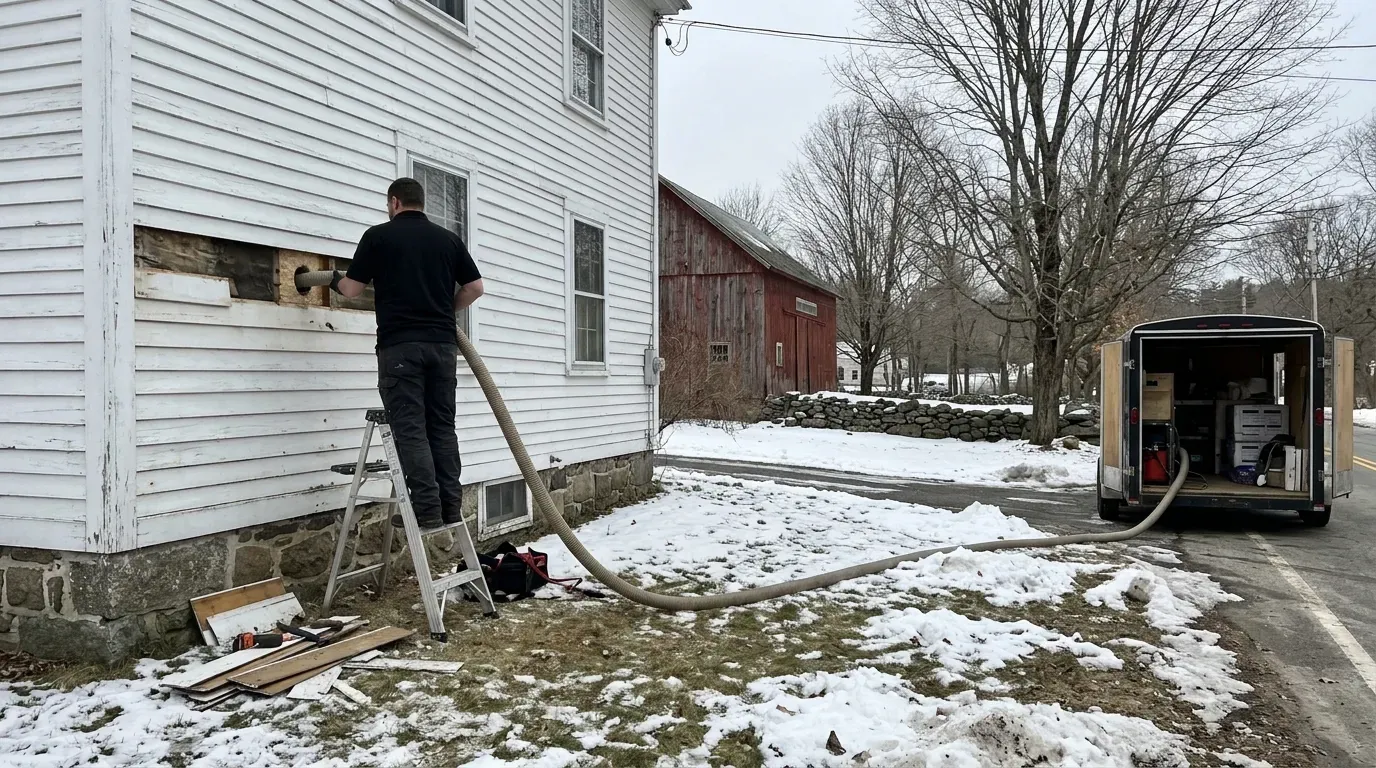
About 9% of Dunstable homes were built before 1940 and 18% before 1960 (Census ACS 2020-2024). Many of the oldest of those roughly 103 houses are balloon-framed, with cavities open from basement to attic, so we block those paths before dense-packing cellulose.
The median house in Dunstable dates from 1987. Homes from the 1980s usually have some attic insulation, but in Dunstable it has often settled to a fraction of its depth, and a loose-fill top-up is a quick fix.
Two- to four-unit buildings make up about 3% of the housing in Dunstable, roughly 34 units. In these we seal the shared attic floor and basement first and then fill exterior walls unit by unit.
- Fills existing walls without demolition
- Made largely from recycled paper
- Settles less when dense-packed
- Reduces sound between rooms
Applications
Where we install cellulose in Dunstable
Cellulose shines in places that are already closed in or hard to reach.
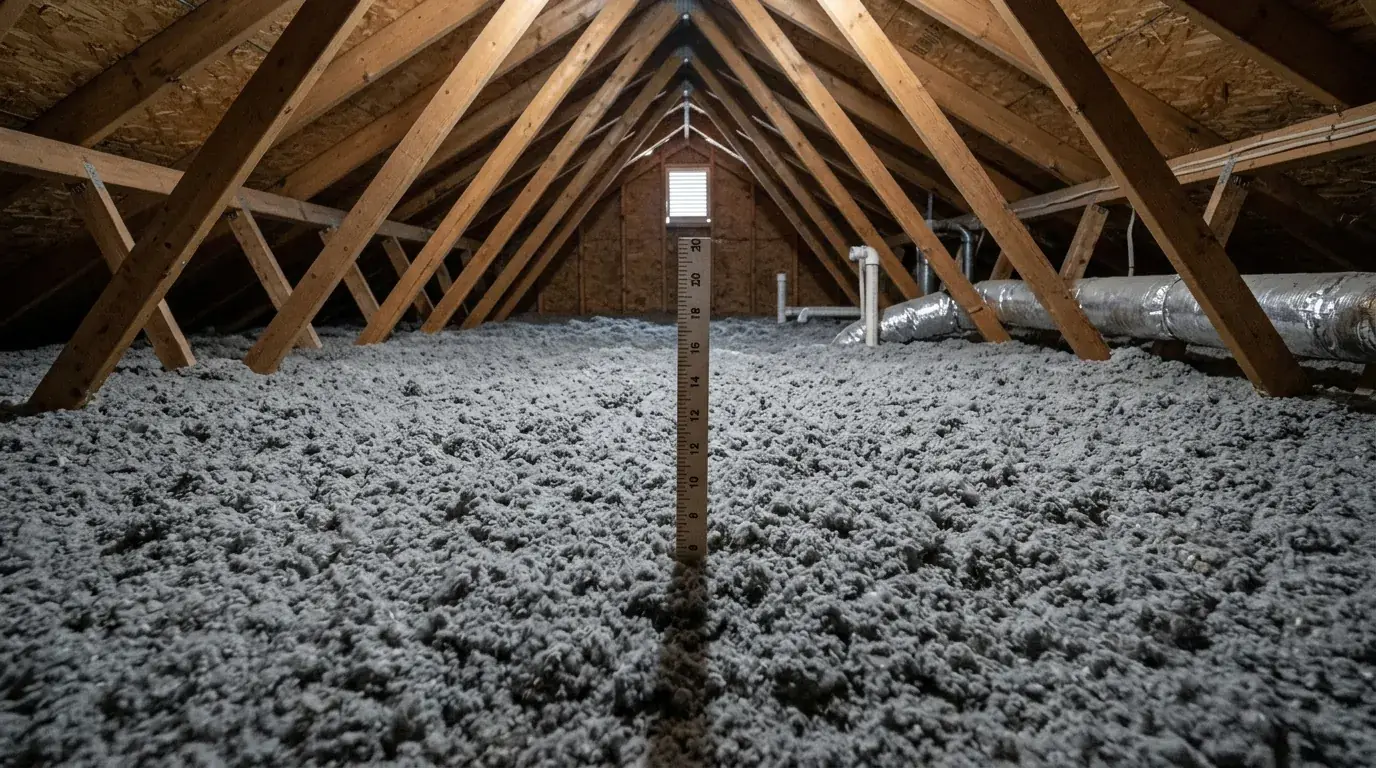
Attic floors
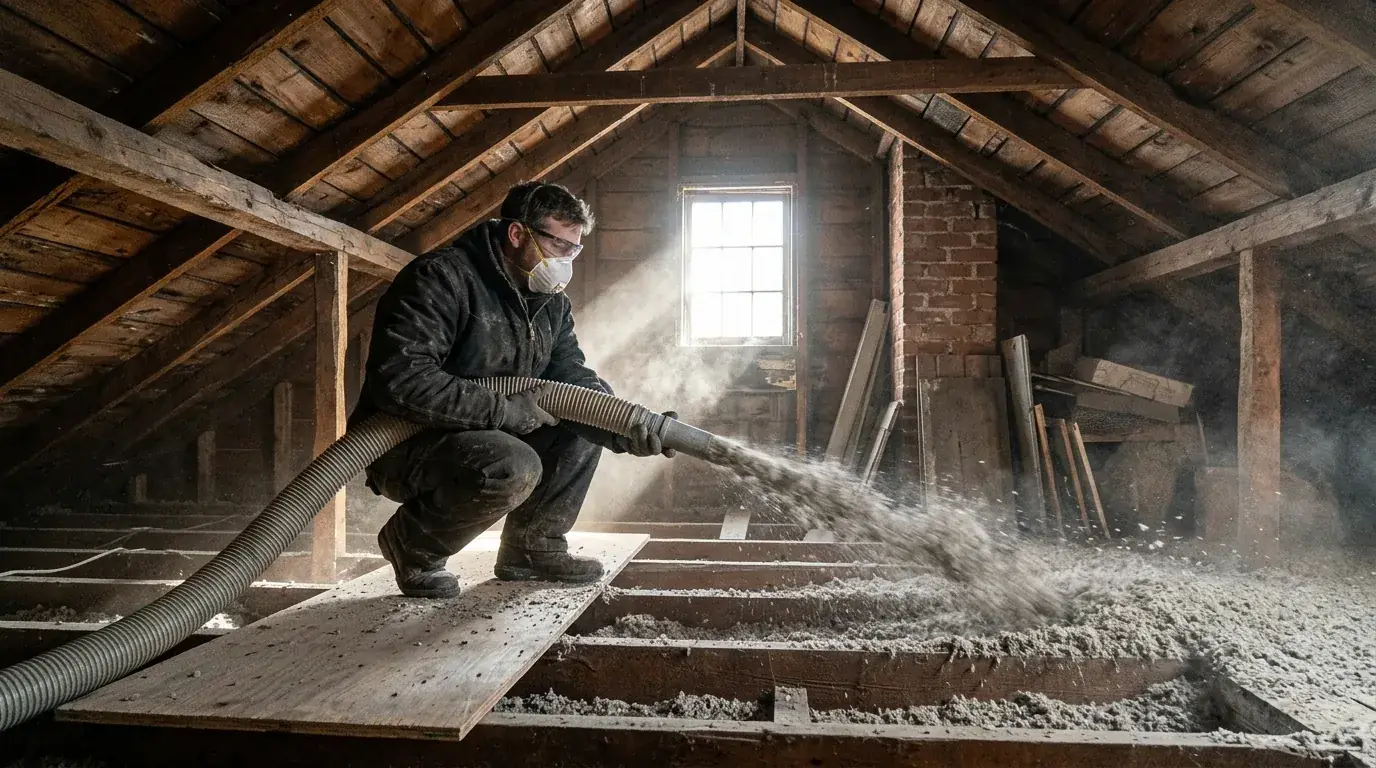
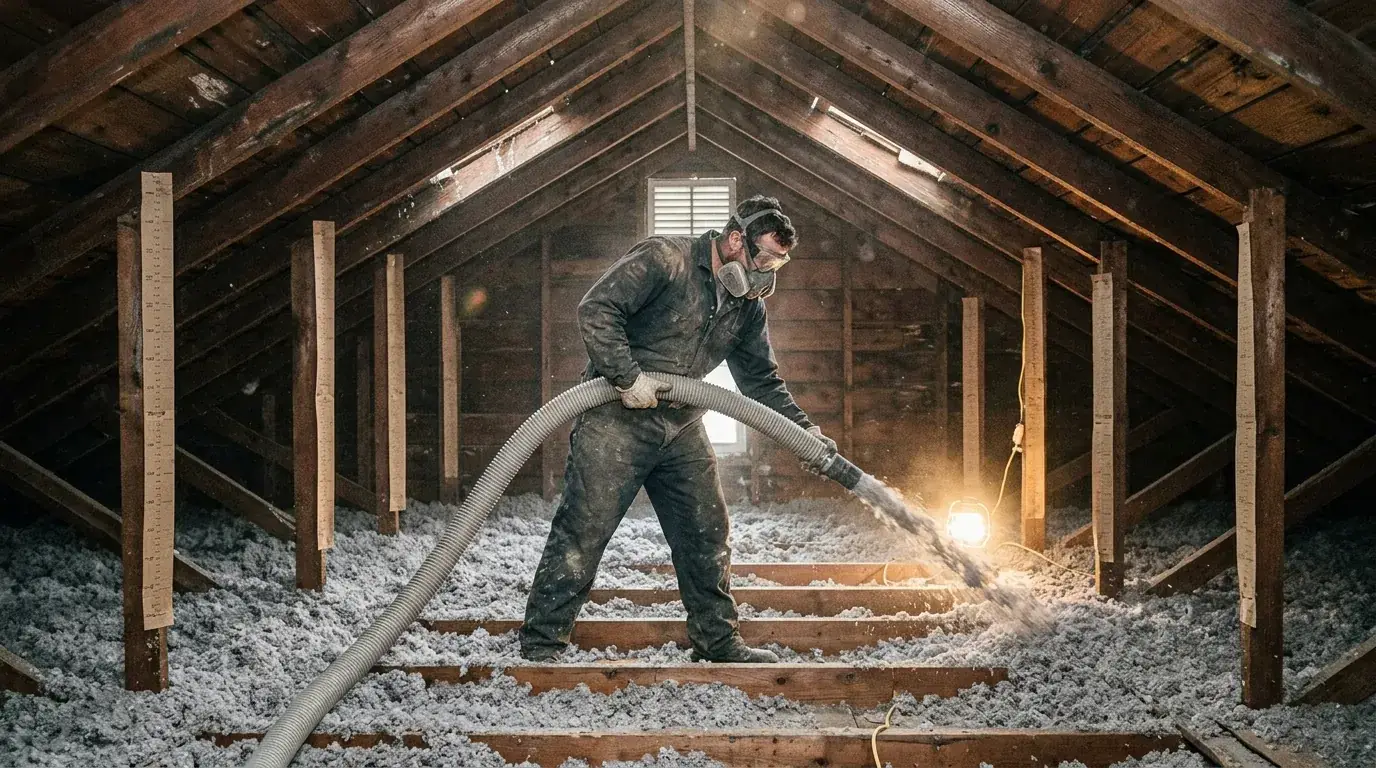
Loose-fill cellulose brings attics up to R-49 or more after air sealing.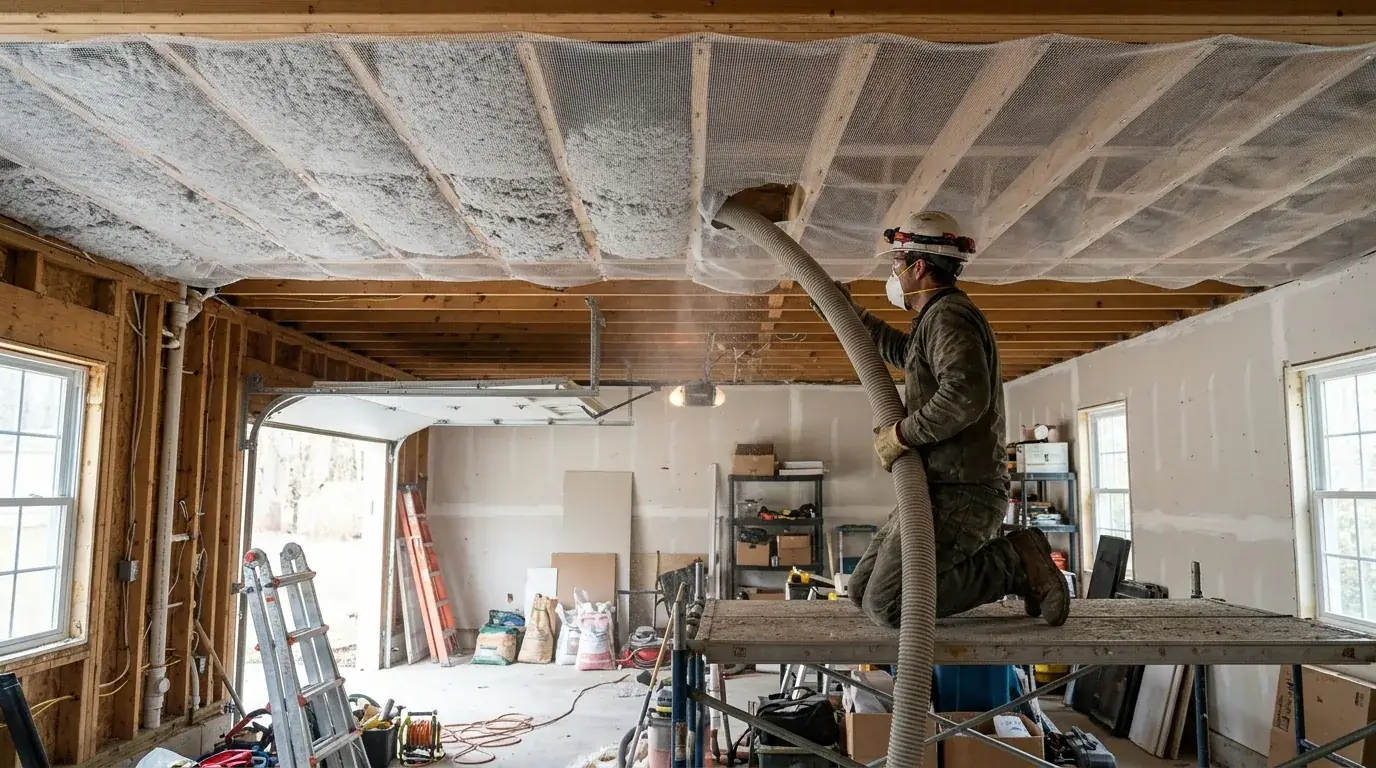
Floors over unheated spaces
Cellulose fills floors over porches and garages to stop cold floors.
Additions and renovations
Netted dense-pack fills open walls in additions before drywall.Local homes
Know your Dunstable home
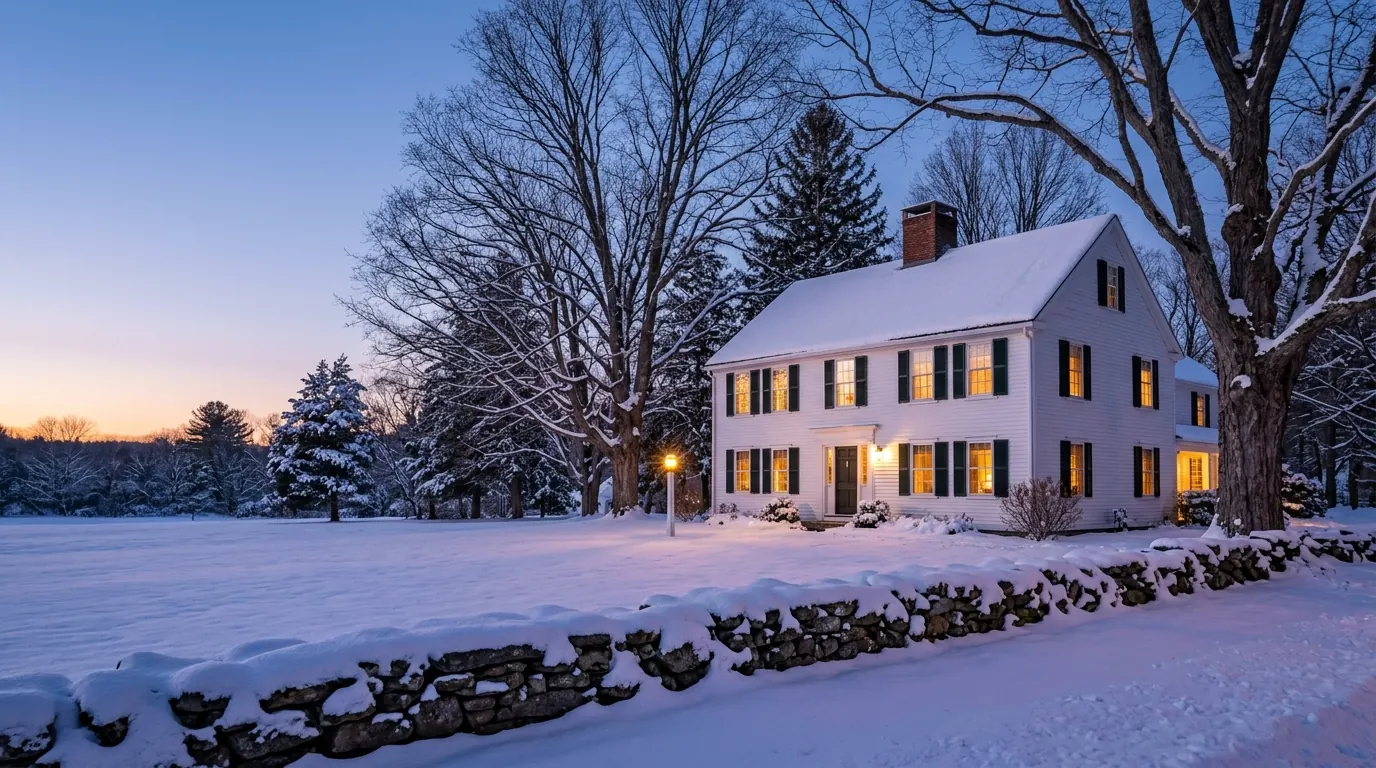
Dunstable is a small rural town of single-family homes, mostly colonials and capes on large lots built from the 1970s on, along with antique farmhouses near the town center.
Dunstable borders New Hampshire along Route 113, and with homes spread out on large lots, many of its houses heat with fuel oil rather than natural gas.
71% of Dunstable homes burn oil or propane for heat (Census ACS 2020-2024), so every leak is expensive there, and cellulose also slows air movement through the walls.
Dunstable is served by National Grid (Massachusetts Electric) for electricity and National Grid (Boston Gas) for gas, all Mass Save® sponsors, so the no-cost Home Energy Assessment and insulation incentives are open to its roughly 1,141 housing units. That includes the 3% of Dunstable households who rent, with the owner on board for the work.
Dunstable at a glance
- Region
- the Merrimack Valley
- County
- Middlesex County
- Climate zone
- 5A
- From our Westborough office
- About 35 miles
- Efficiency program
- Mass Save®
- Median year built
- 1987
- Homes built before 1940
- 9%
- Most common heating fuel
- fuel oil (54%)
- Electric utility
- National Grid (Massachusetts Electric)
- Energy code
- Stretch (since January 2020)
Recommended plan
How we would insulate a typical newer home in Dunstable with cellulose
Top up the attic
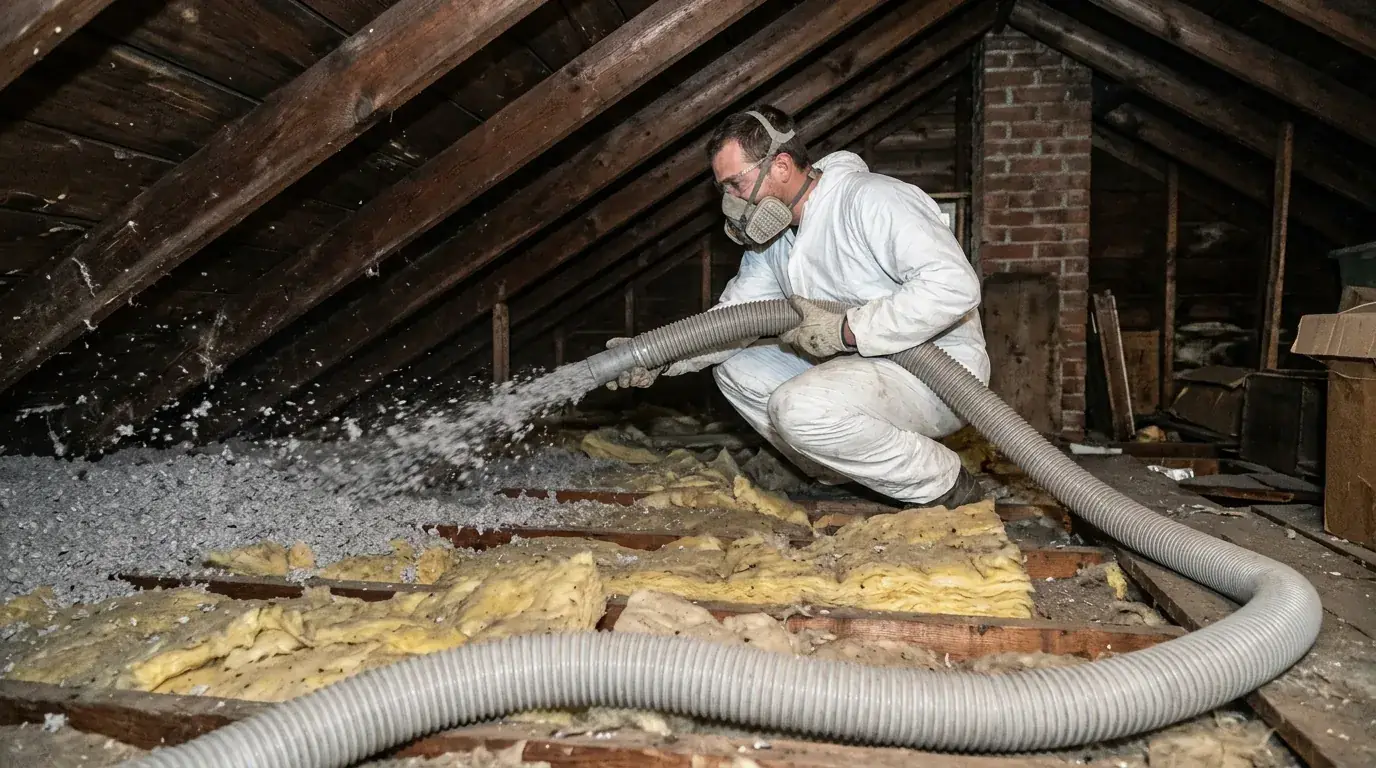
Cellulose over settled batts brings the attic to R-49 or more.
Fix the bonus room
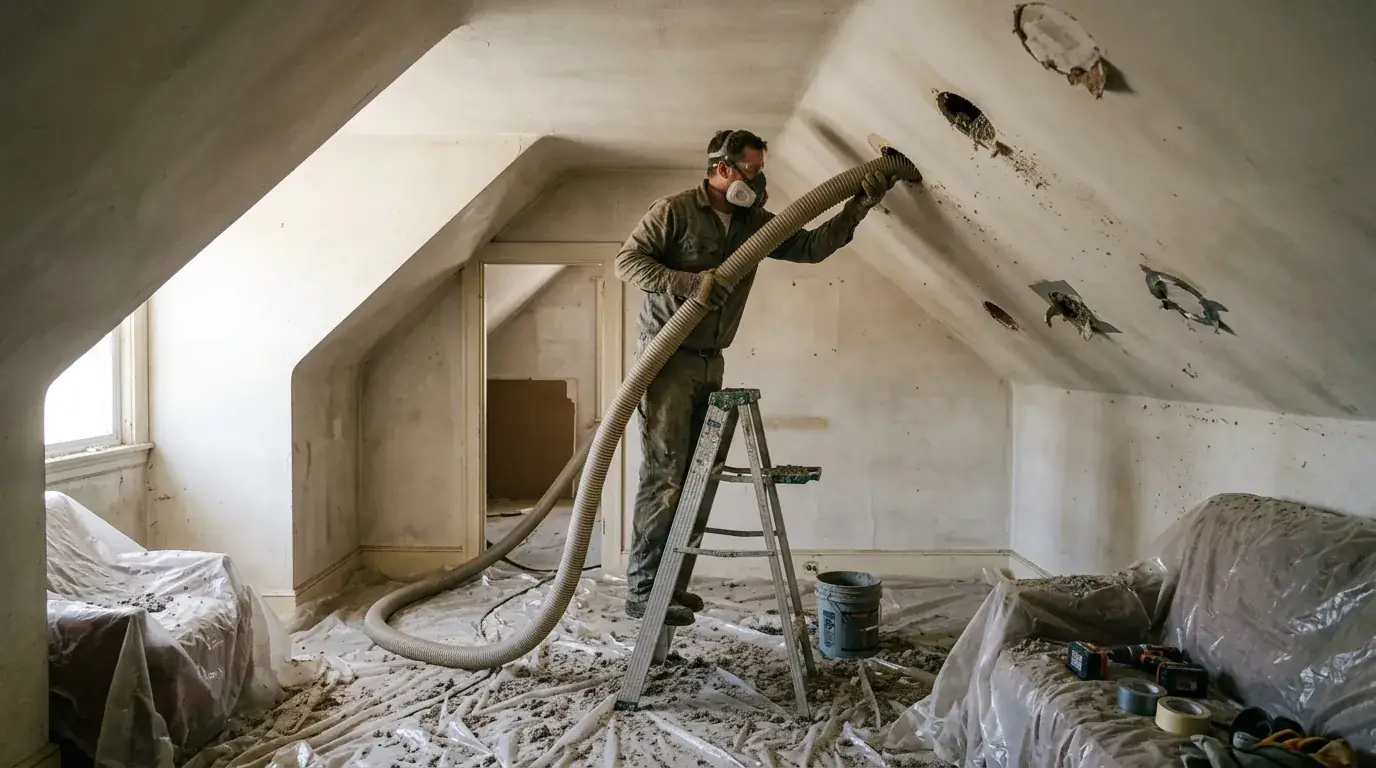
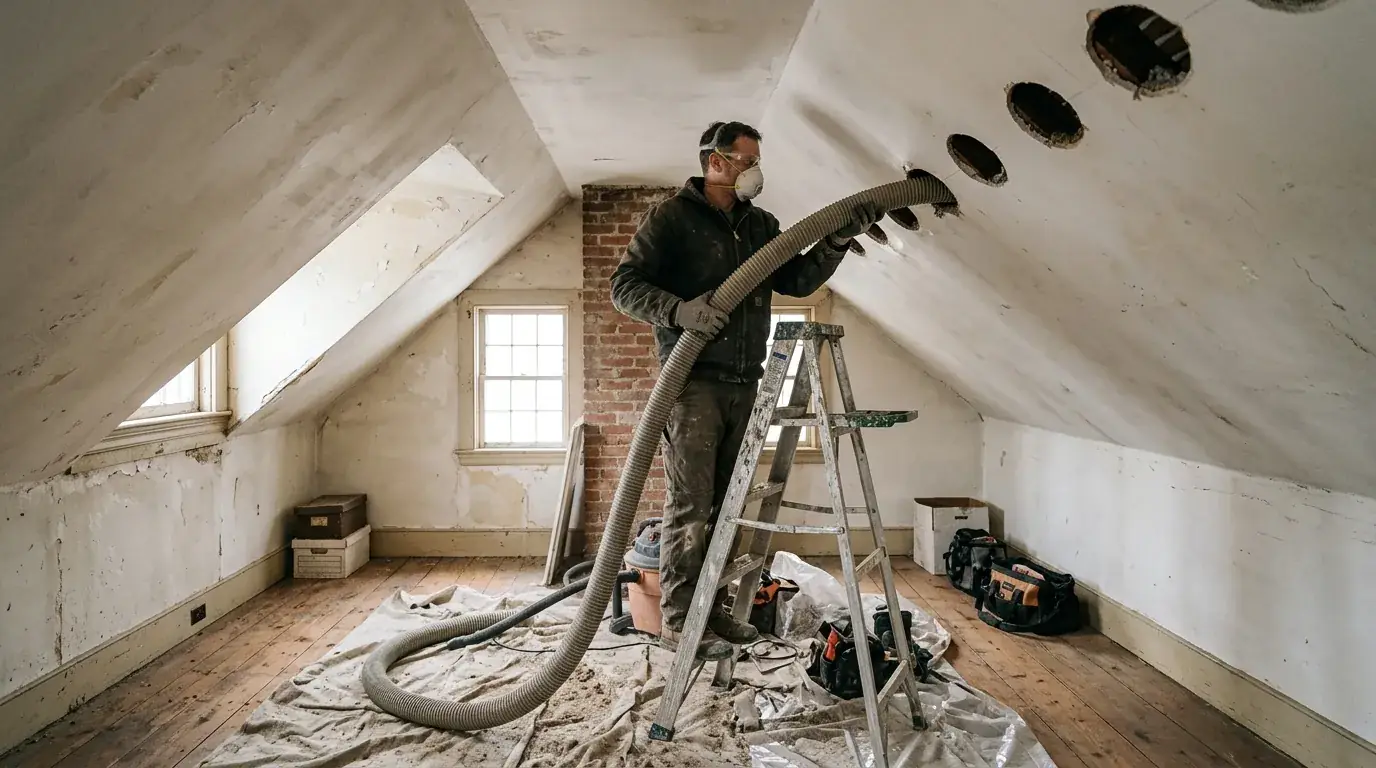
Dense-pack fills the floor and slopes over the garage.
Seal the attic plane
Lights, top plates and duct boots are sealed first.
Even out the rooms
Better attic coverage reduces hot and cold spots upstairs.
Climate, code & rebates
Insulation targets and incentives in Dunstable
Climate & code
Climate zone 5A targets
For blown-in cellulose in Dunstable, the target is set by IECC climate zone 5A, where ENERGY STAR recommends about R-49 to R-60 in attics; with a median build year of 1987, many of the 1,141 homes there fall well short of that. For new work, Dunstable follows the Stretch Energy Code, adopted in Dunstable in January 2020 (MA DOER list, November 2026).
Incentives
Mass Save® in Massachusetts
With electricity from National Grid and gas from National Grid, the roughly 1,141 homes in Dunstable can pair blown-in cellulose with Mass Save® incentives after a no-cost Home Energy Assessment, and as a Mass Save® partner BCI Group helps with the program steps.
About Mass Save® →How it works
From estimate to finished cellulose in Dunstable
- 01
Free estimate
We measure each area and recommend loose-fill or dense-pack.
- 02
Protect the home
Floors and furniture near the work are covered.
- 03
Install
Our crew fills each wall bay and the attic evenly.
- 04
Final check
We confirm coverage and give you a record of the work.
Pricing
What affects the cost of cellulose in Dunstable
Dunstable builds under the Stretch Energy Code, adopted in Dunstable in January 2020; for existing homes that mostly matters during renovations, when opened walls in Middlesex County have to meet current insulation levels.
- Siding or clapboard work
- Wall area to dense-pack
- Attic area and the depth needed
- Wiring or moisture issues to fix first
- Air sealing before insulating
Our work
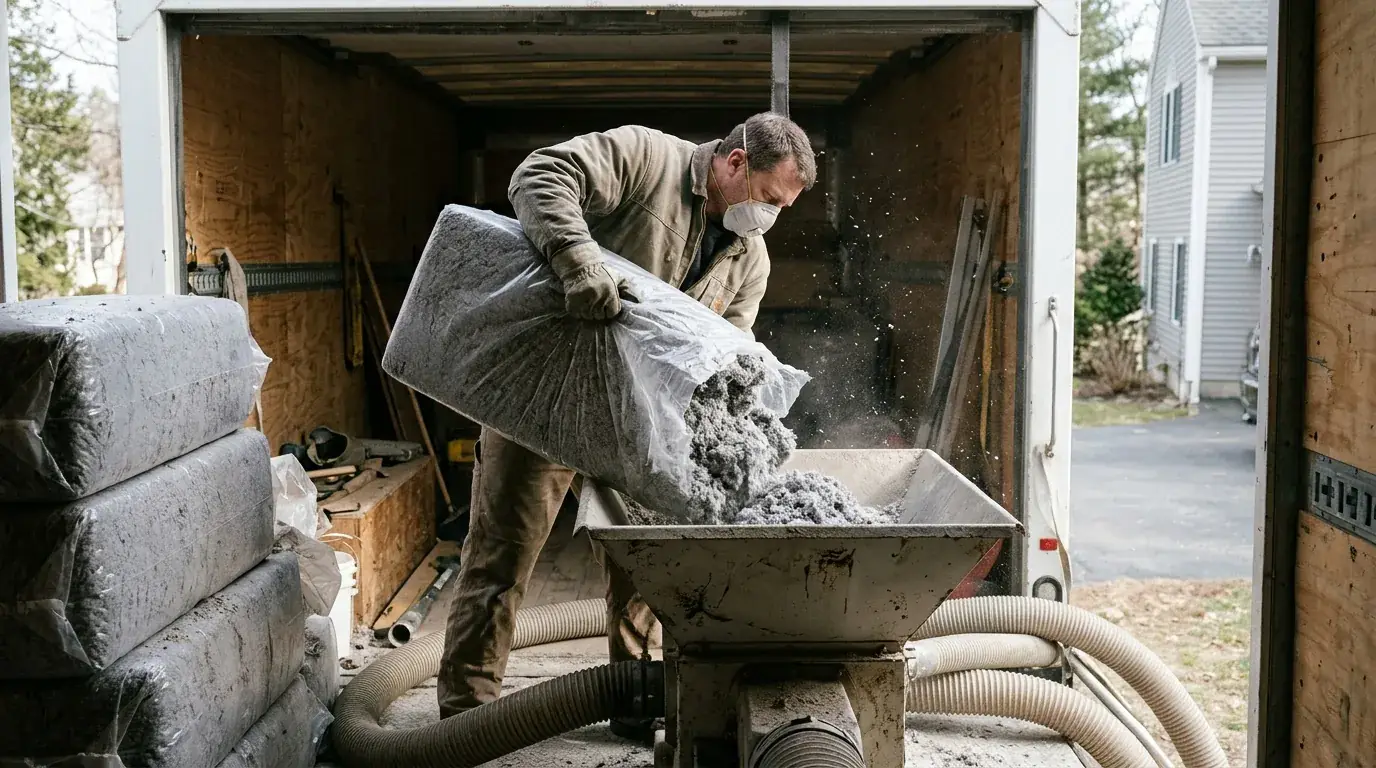
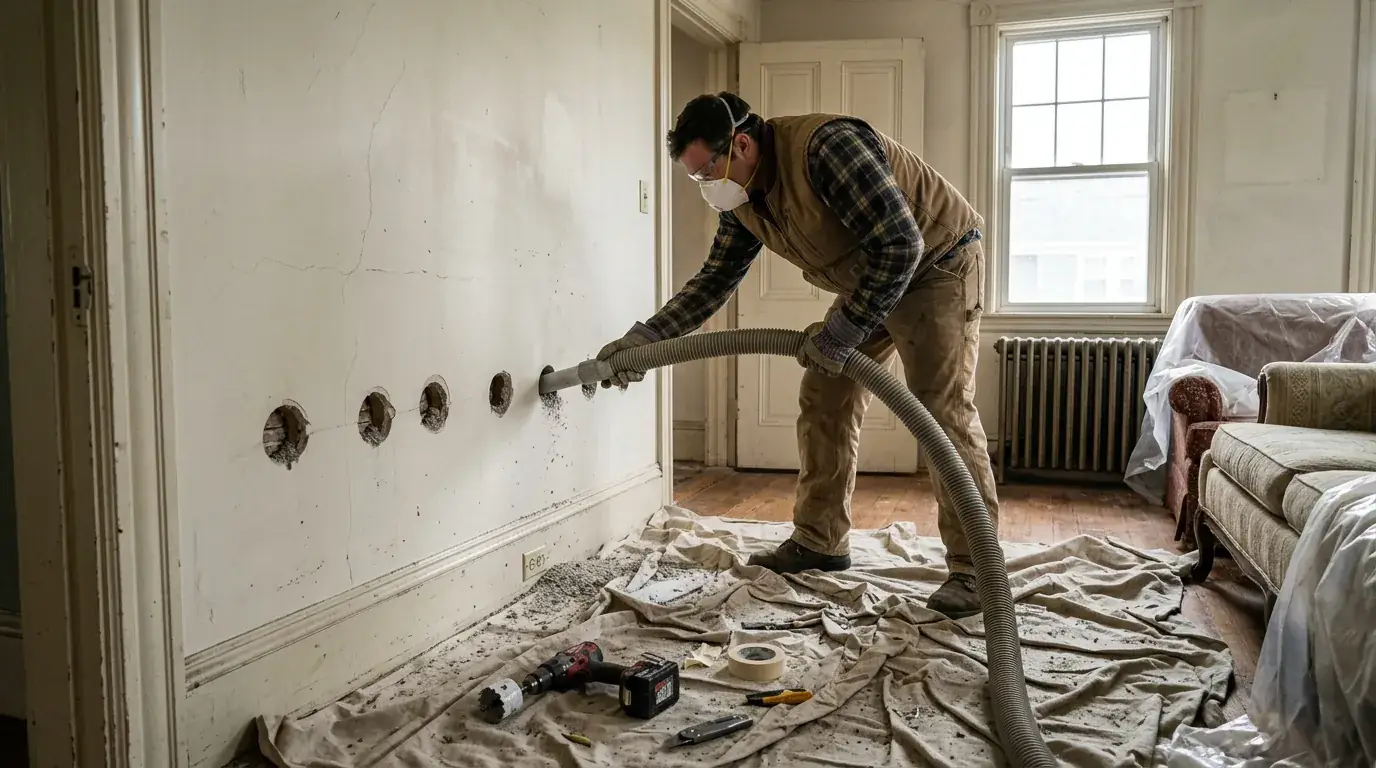
Cellulose jobs like the ones we do in Dunstable
FAQ
Blown-In Cellulose questions in Dunstable, MA
Can I use Mass Save® for blown-in insulation in Dunstable?
In most cases, yes. Dunstable gets electricity from National Grid and gas from National Grid, all Mass Save® sponsors, and Dunstable homes heat with about 21% natural gas, 54% fuel oil, 7% electricity and 17% propane.
Can you blow cellulose into the walls of an old Dunstable house?
Yes. With 9% of Dunstable homes built before 1940, dense-pack through small holes in siding or plaster is our most common wall method there, with balloon-frame cavities blocked first.
How much attic insulation do Dunstable homes usually need?
Dunstable is in IECC climate zone 5A, where ENERGY STAR recommends about R-49 to R-60 in attics. The median Dunstable home dates from 1987, and homes that old often have far less.
Which utilities serve Dunstable?
Electric service in Dunstable: National Grid (Massachusetts Electric). Natural gas: National Grid (Boston Gas). Source: MassGIS and MA Department of Public Utilities listings for Middlesex County.
How do most Dunstable homes heat?
About 54% of occupied homes in Dunstable use fuel oil. The full mix is 21% natural gas, 54% fuel oil, 7% electricity and 17% propane (Census ACS 2020-2024).
Do you work on multifamily buildings in Dunstable?
Yes. About 3% of Dunstable homes are in two- to four-unit buildings and 0% in buildings with five or more units (Census ACS 2020-2024). We fill walls unit by unit to limit disruption.
How soon can you start a cellulose project in Dunstable?
Our crews travel about 35 miles from Westborough, MA to Dunstable. We group estimates and jobs by area, and you'll get a start date with your written quote.
Do you also work in towns near Dunstable?
Yes. Besides Dunstable, we serve nearby communities such as Tyngsborough, Groton and Westford, along with the rest of Middlesex County.
Nearby
More from BCI Group in Middlesex County and beyond
Free estimate · No commitment
Stop overpaying for energy.
Fill out the form or reach us directly — we respond within one business day.
10+ Years
Serving New England
HERS Certified
In-house ratings
Mass Save®
Rebates handled
5 States
MA · NH · RI · CT · ME