
Gardner, MA · Worcester County
Blown-In Cellulose Insulation in Gardner, MA
Blown-in and dense-pack cellulose for Gardner attics and walls, installed by BCI Group crews with a free written estimate.






Built for Gardner
Why cellulose works so well in Gardner homes
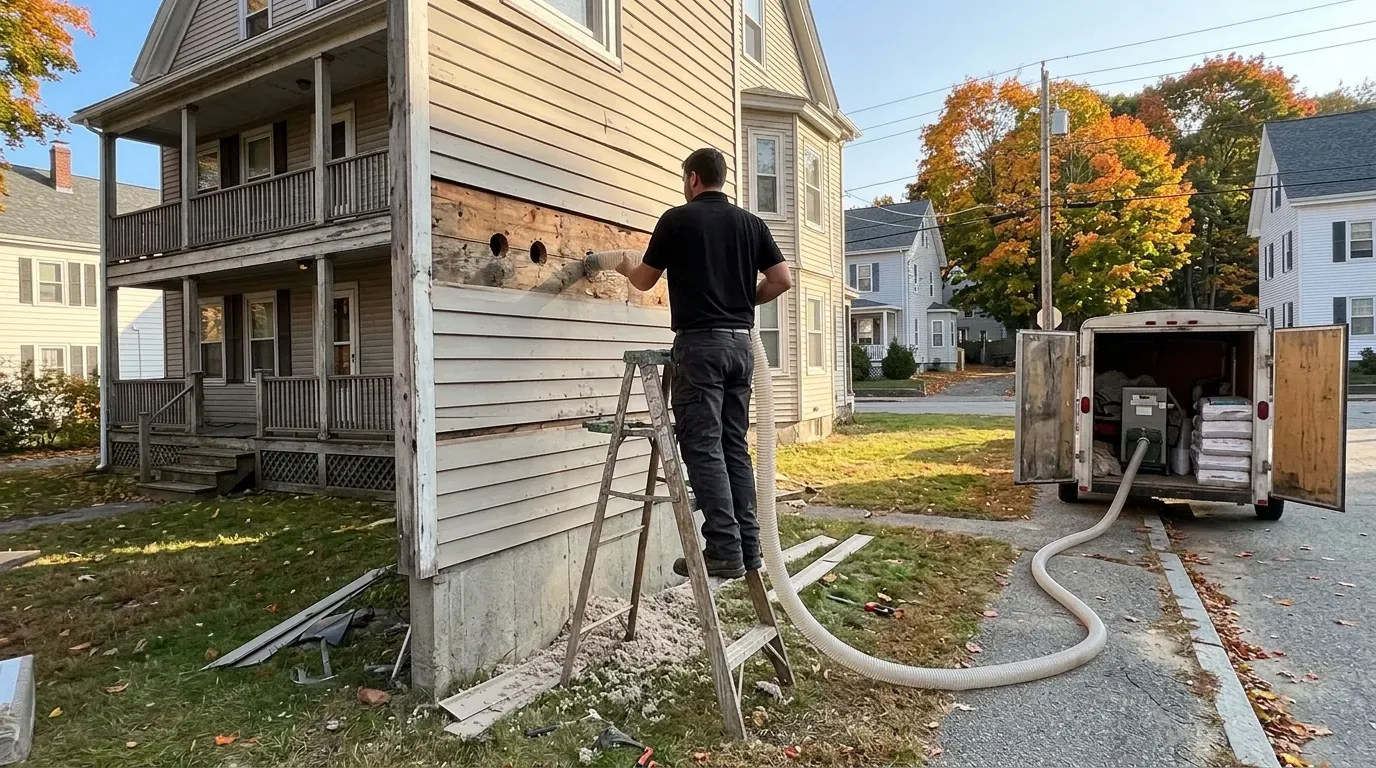
About 41% of Gardner homes were built before 1940 and 55% before 1960 (Census ACS 2020-2024). Many of the oldest of those roughly 3,890 houses are balloon-framed, with cavities open from basement to attic, so we block those paths before dense-packing cellulose.
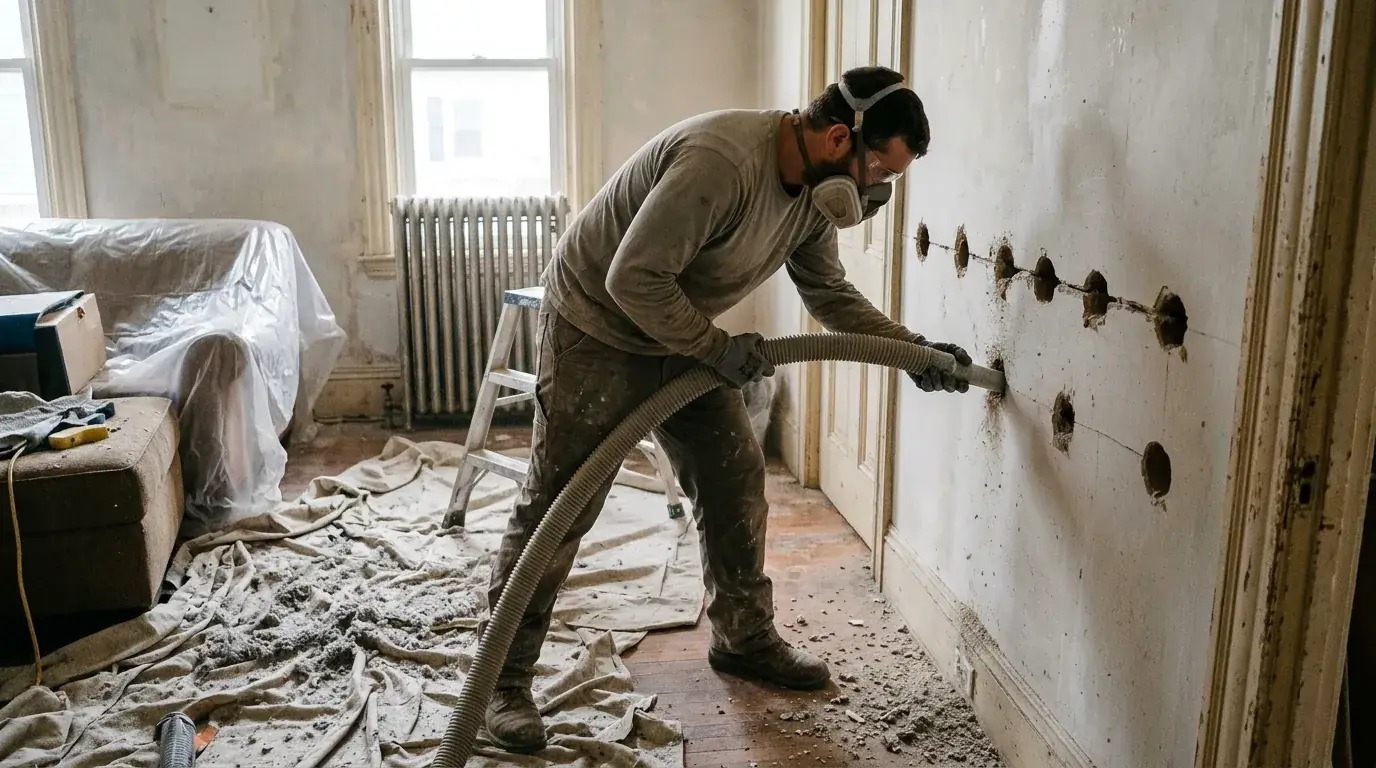
The median house in Gardner dates from 1954. Walls in homes that old are often completely empty, and in Worcester County dense-pack cellulose blown through small holes is the least disruptive way to fill them.
Gardner has many early-1900s two- and three-family homes and Victorians near downtown, built when the city was known for furniture making, plus post-war capes and ranches on its outer streets.
- Reduces sound between rooms
- Fills existing walls without demolition
- Treated for fire and pest resistance
- Settles less when dense-packed
Applications
Where we install cellulose in Gardner
Cellulose shines in places that are already closed in or hard to reach.
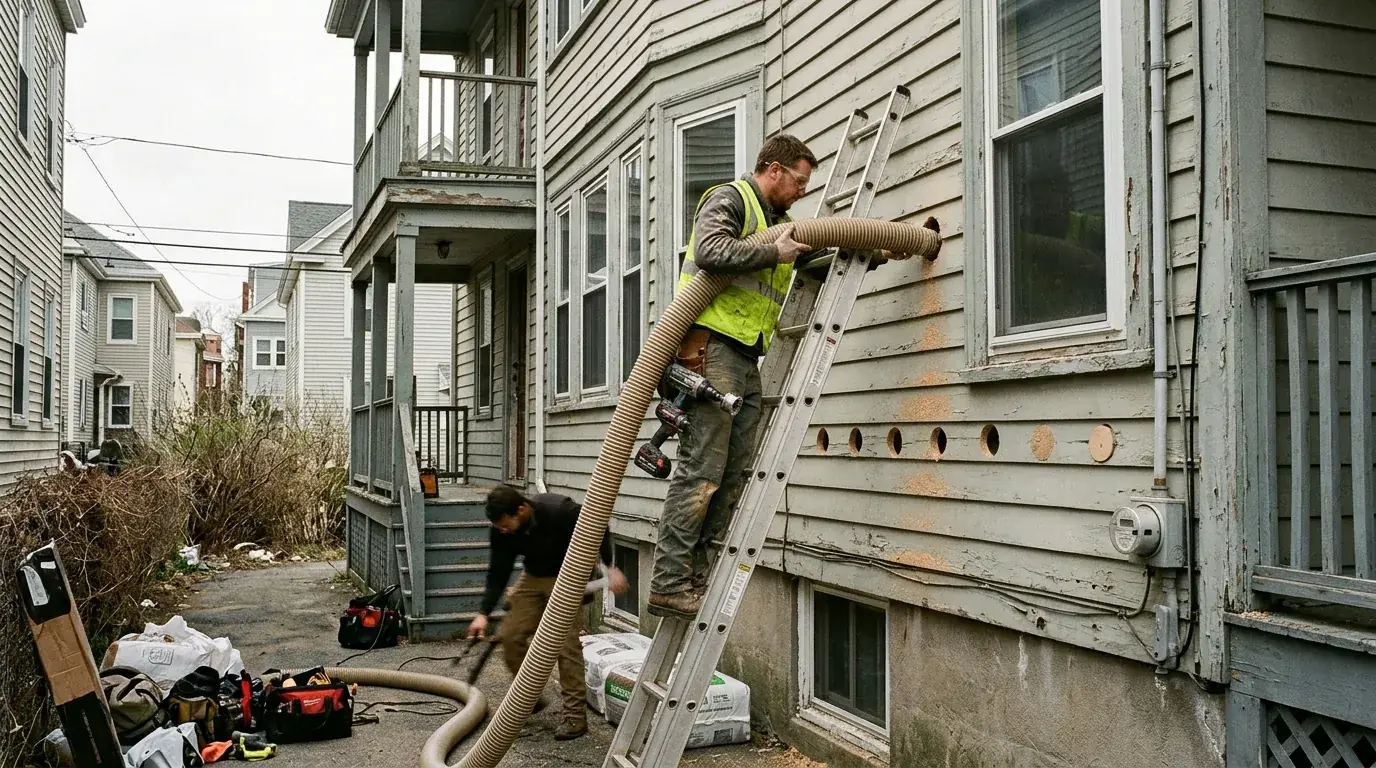
Existing exterior walls
Dense-pack cellulose fills empty walls through small, patched holes.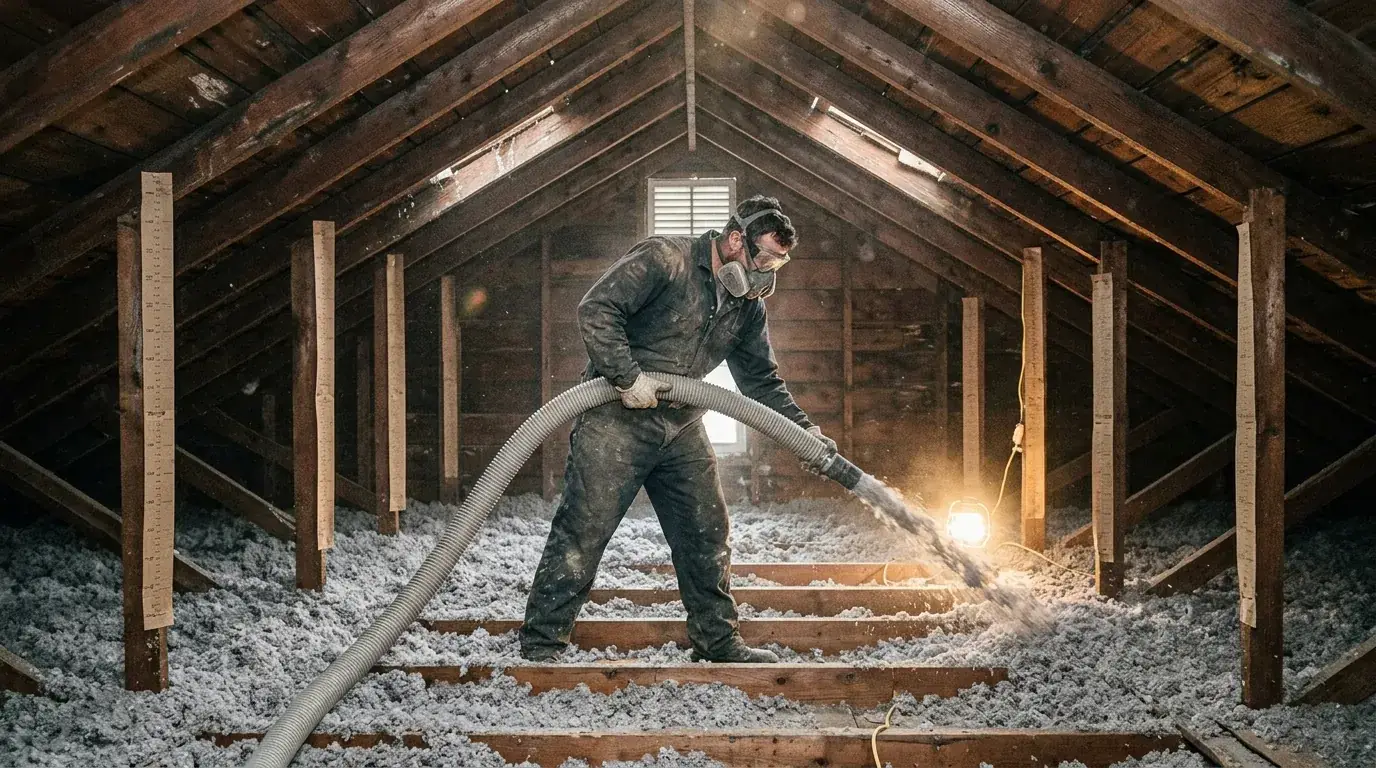
Attic floors
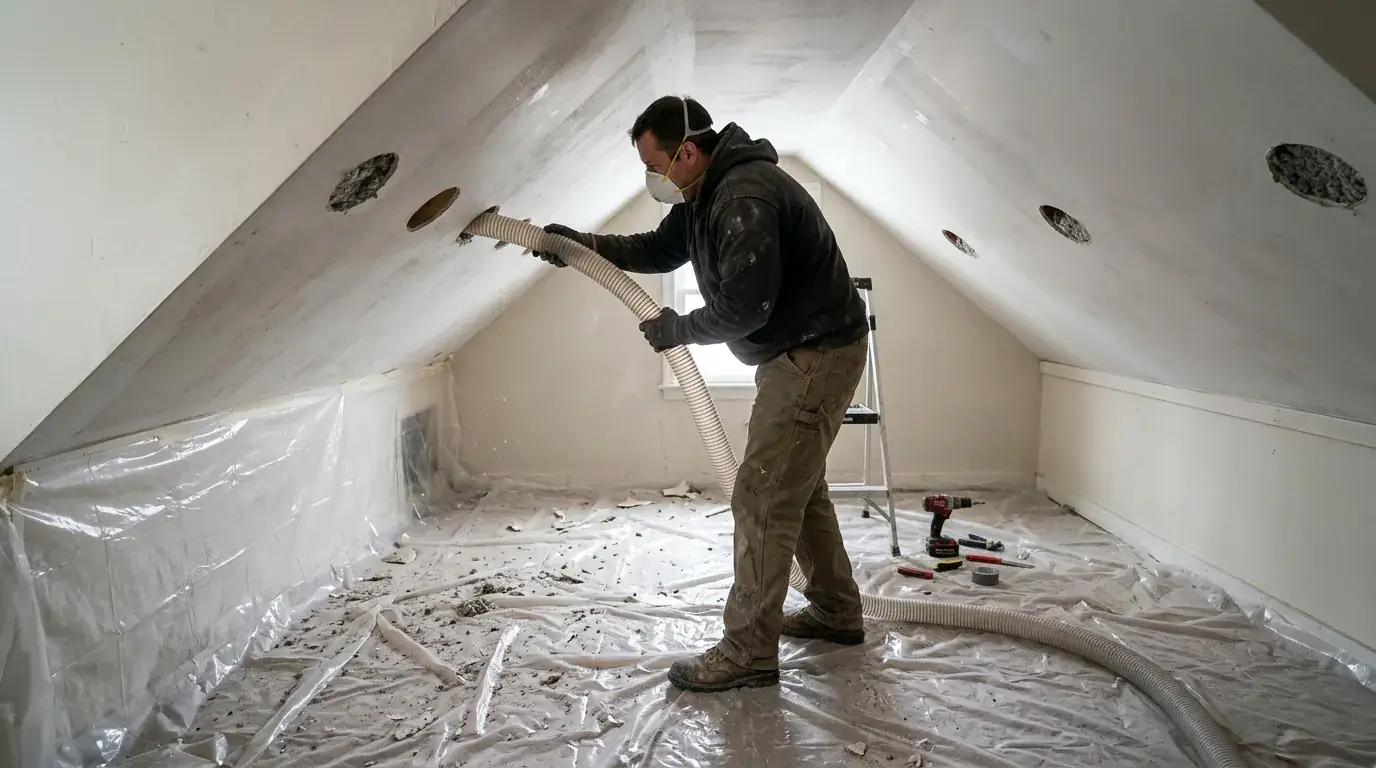
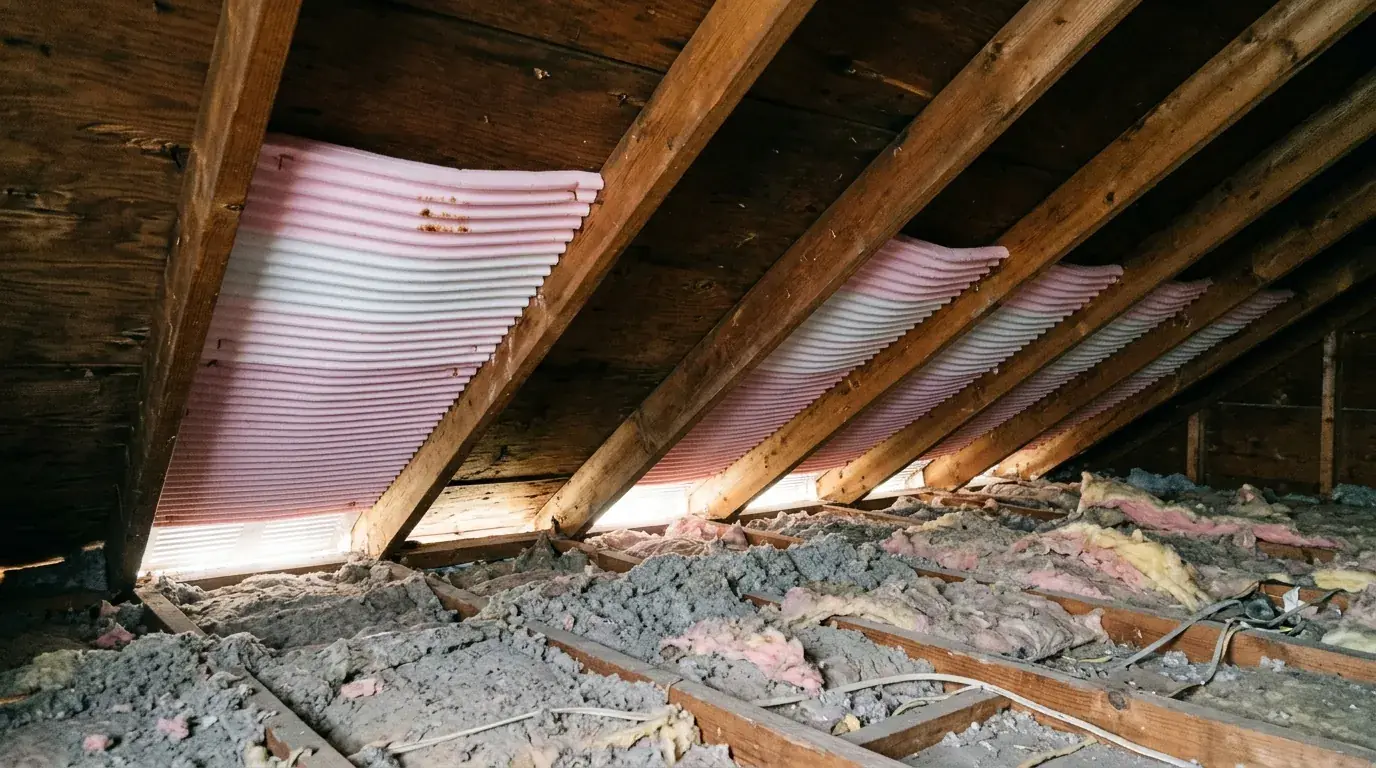
Loose-fill cellulose brings attics up to R-49 or more after air sealing.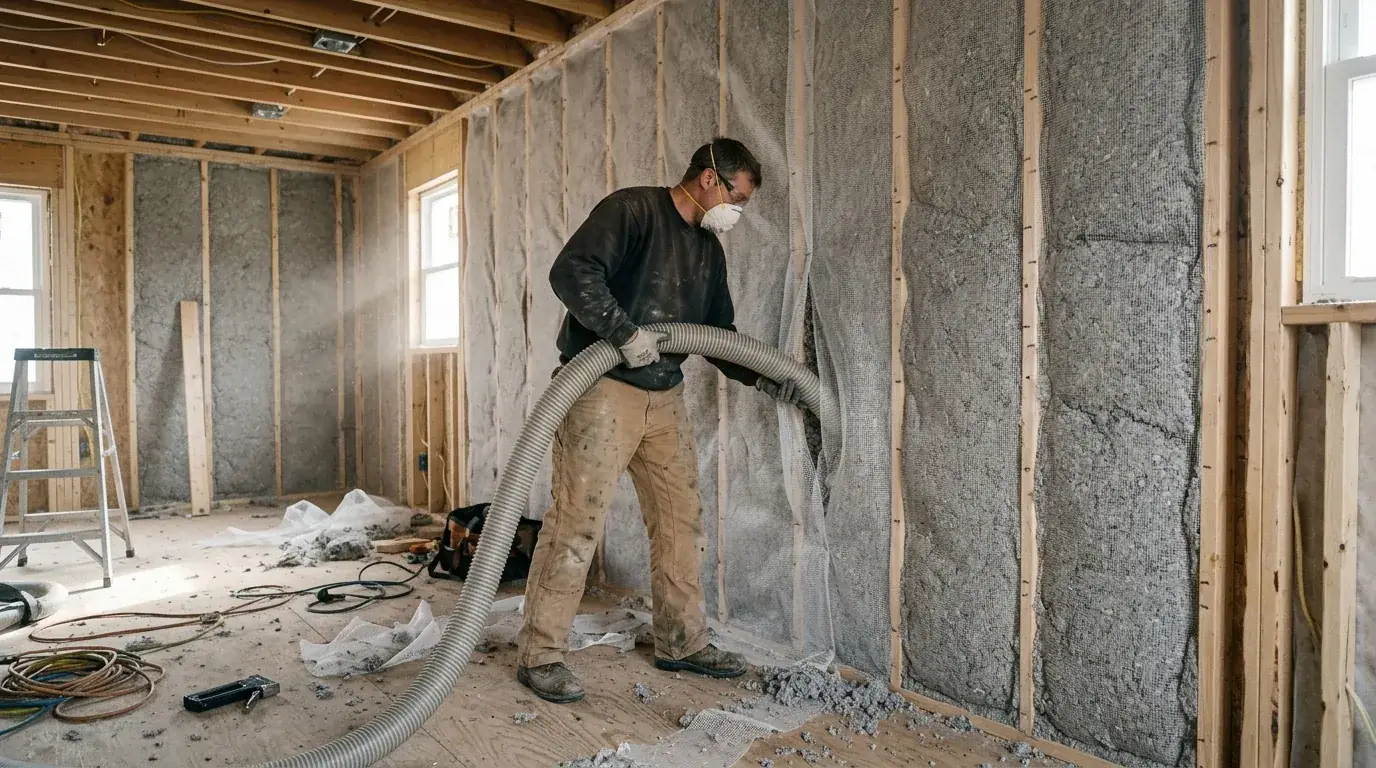
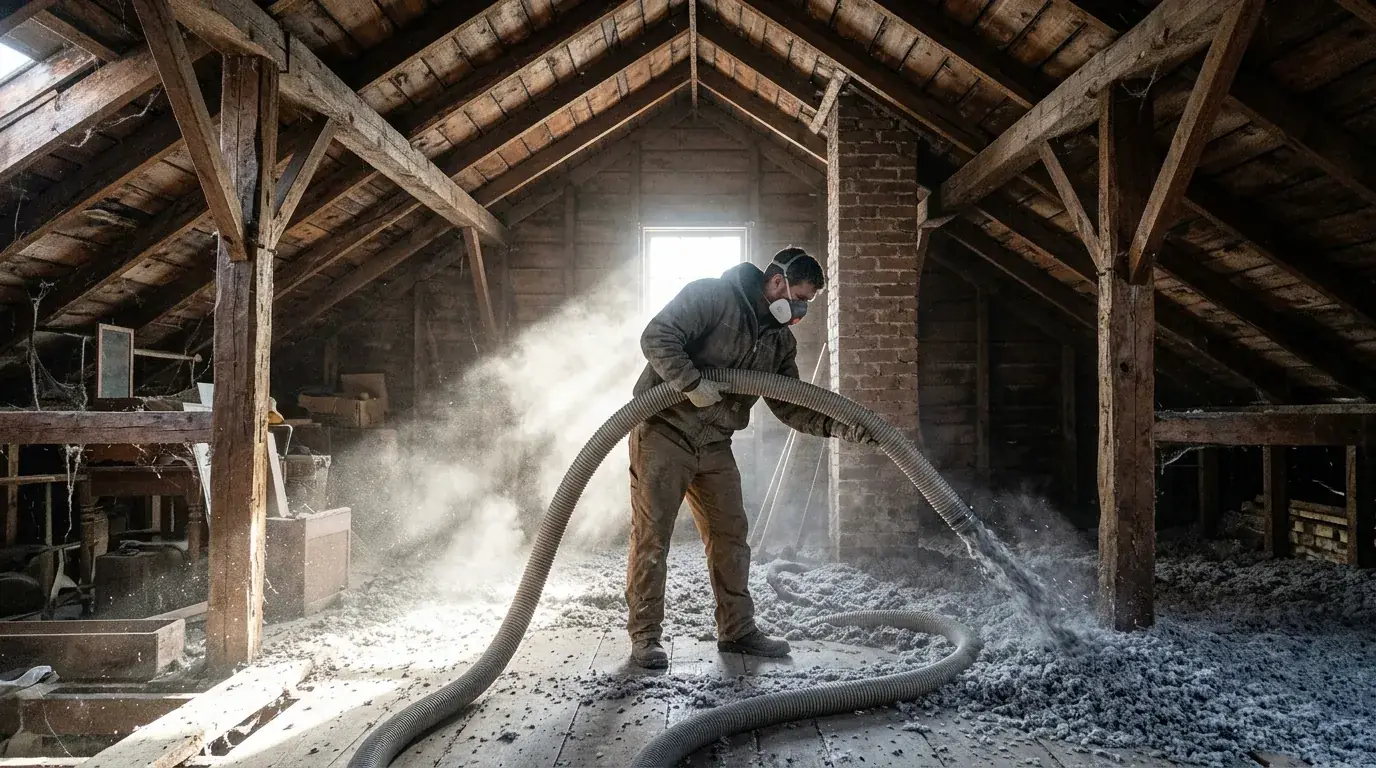
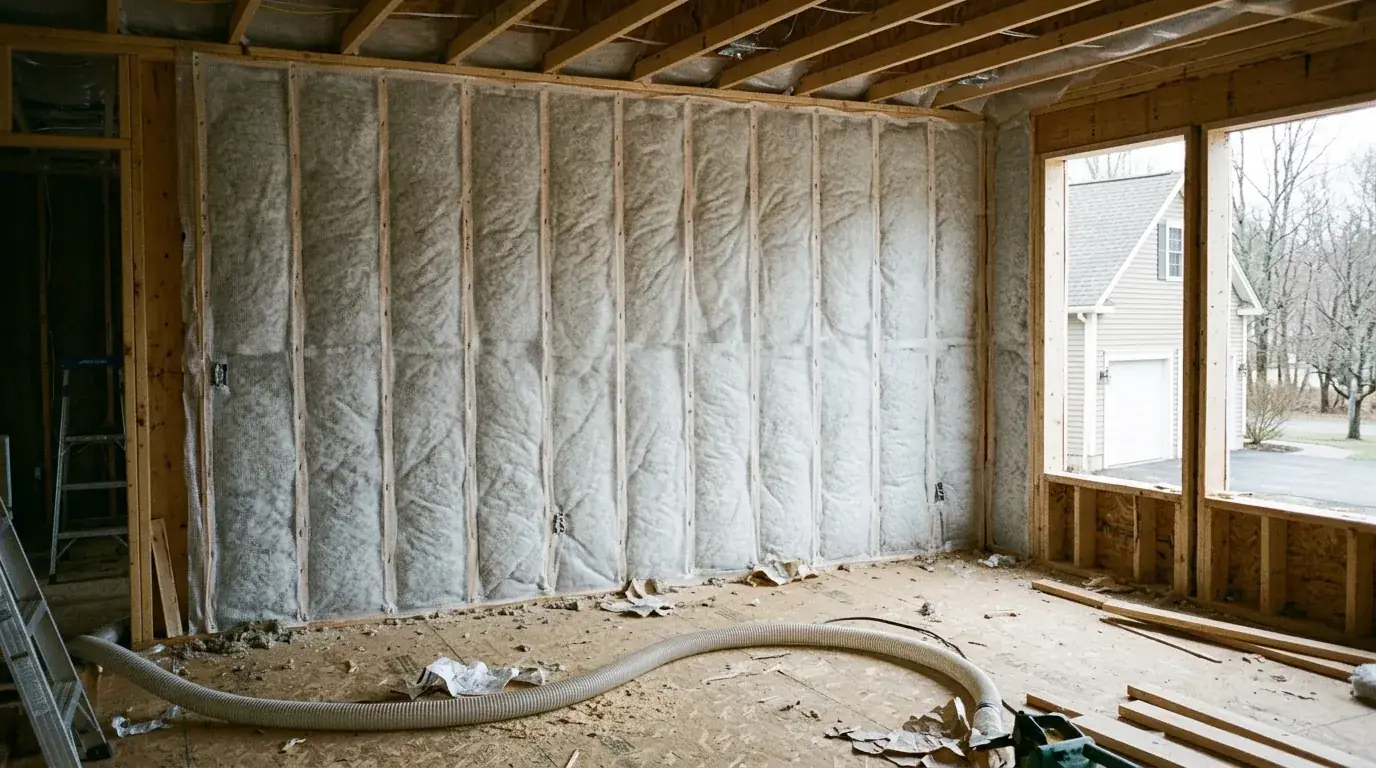
Additions and renovations
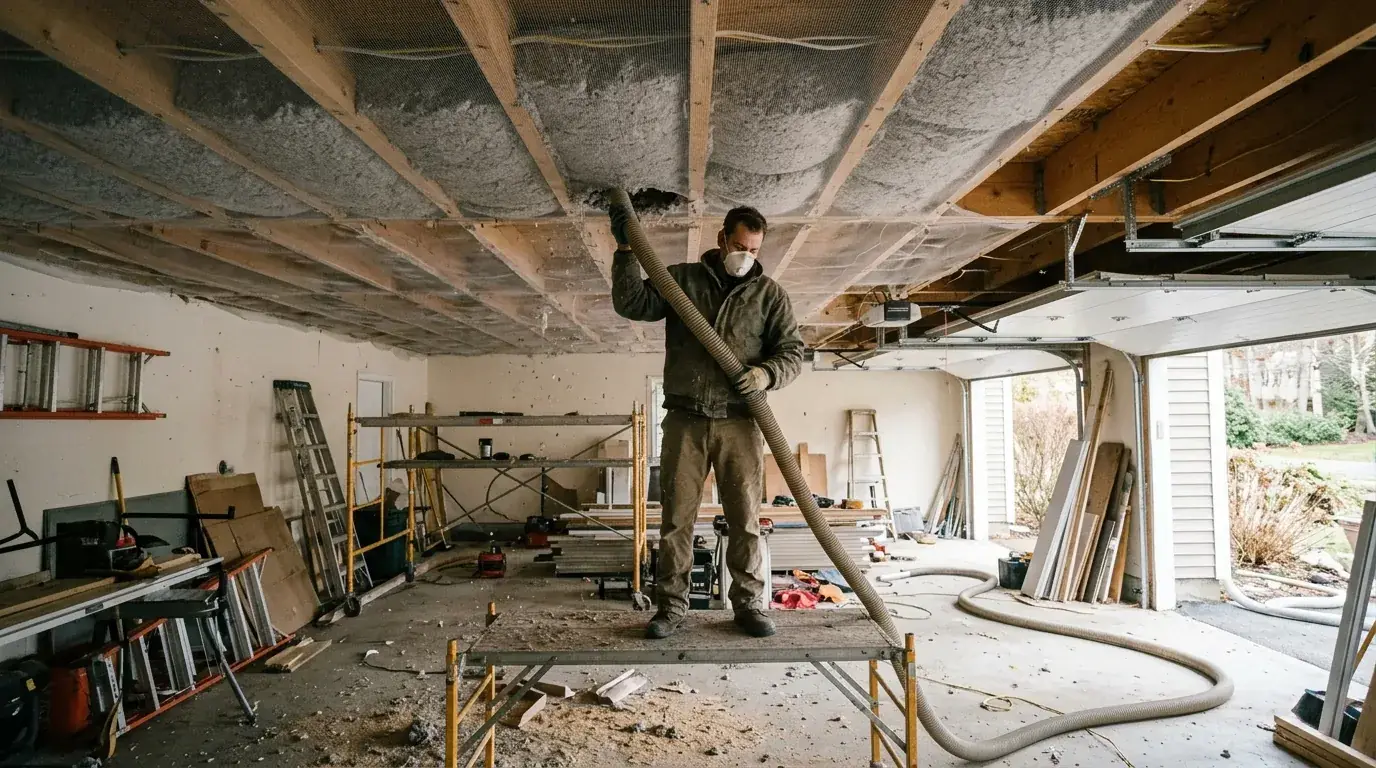
Netted dense-pack fills open walls in additions before drywall.Local homes
Know your Gardner home
Gardner sits on Route 2 and Route 140 in north Worcester County, at a higher elevation than most of Central Massachusetts, so its winters tend to run colder and longer.
Two- to four-unit buildings make up about 25% of the housing in Gardner, roughly 2,372 units. In these we seal the shared attic floor and basement first and then fill exterior walls unit by unit.
Gardner builds under the Stretch Energy Code, adopted in Gardner in July 2011; for existing homes that mostly matters during renovations, when opened walls in Worcester County have to meet current insulation levels.
Gardner is served by National Grid (Massachusetts Electric) for electricity and Unitil (Fitchburg Gas and Electric) for gas, all Mass Save® sponsors, so the no-cost Home Energy Assessment and insulation incentives are open to its roughly 9,488 housing units. That includes the 41% of Gardner households who rent, with the owner on board for the work.
Gardner at a glance
- Region
- North Central Massachusetts
- County
- Worcester County
- Climate zone
- 5A
- From our Westborough office
- About 34 miles
- Efficiency program
- Mass Save®
- Median year built
- 1954
- Homes built before 1940
- 41%
- Most common heating fuel
- fuel oil (51%)
- Electric utility
- National Grid (Massachusetts Electric)
- Energy code
- Stretch (since July 2011)
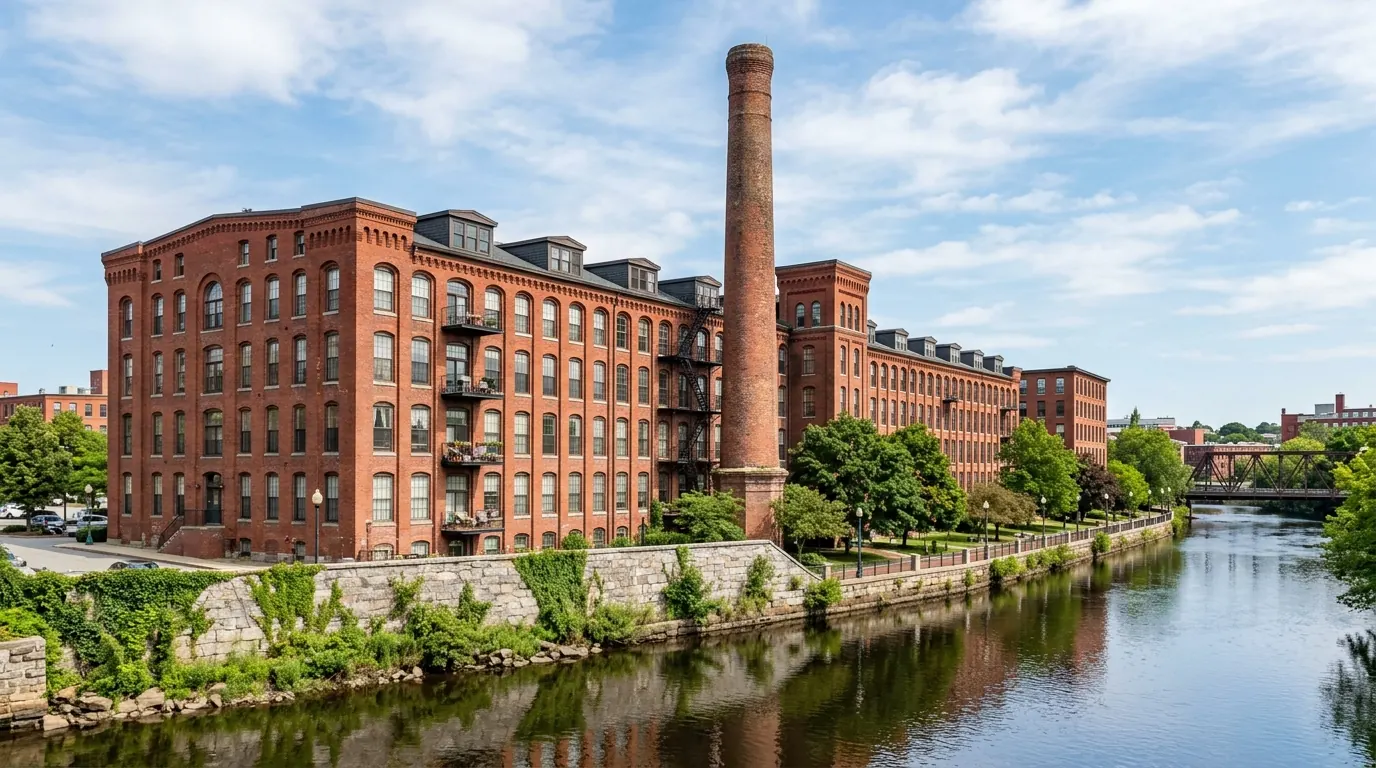
Recommended plan
How we would insulate a typical mill-era building in Gardner with cellulose
Separate units
Cellulose in interior walls cuts noise between living spaces.
Insulate top floors
Attic and roof areas are filled after sealing.
Pair with foam
Masonry walls get foam while framed walls get cellulose.
Meet fire code
Fireblocking is completed where floors and walls meet.
Dense-packing the walls of a triple-decker or two-family can often be done from the outside, one unit at a time, with little disruption for tenants.
Climate, code & rebates
Insulation targets and incentives in Gardner
Climate & code
Climate zone 5A targets
For blown-in cellulose in Gardner, the target is set by IECC climate zone 5A, where ENERGY STAR recommends about R-49 to R-60 in attics; with a median build year of 1954, many of the 9,488 homes there fall well short of that. For new work, Gardner follows the Stretch Energy Code, adopted in Gardner in July 2011 (MA DOER list, November 2026).
Incentives
Mass Save® in Massachusetts
With electricity from National Grid and gas from Unitil, the roughly 9,488 homes in Gardner can pair blown-in cellulose with Mass Save® incentives after a no-cost Home Energy Assessment, and as a Mass Save® partner BCI Group helps with the program steps.
About Mass Save® →How it works
Your cellulose project, step by step
- 01
Inspection
We check walls, attic and wiring and look for moisture.
- 02
Air sealing
Attic bypasses are sealed before insulation goes in.
- 03
Blowing
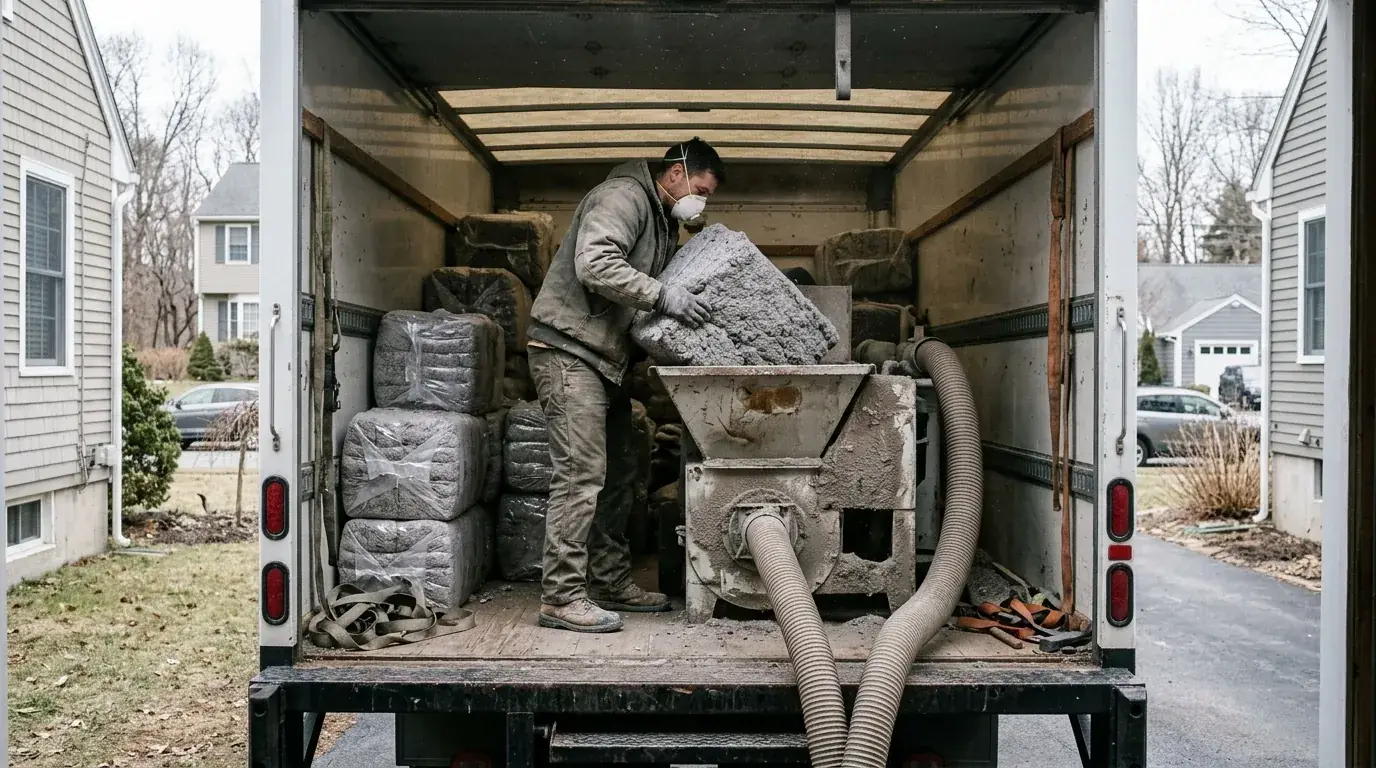
Cellulose is blown to the depth or density in your estimate.
- 04
Patch and clean
Holes are patched, the site is cleaned and we review the job.
Pricing
What affects the cost of cellulose in Gardner
58% of Gardner homes burn oil or propane for heat (Census ACS 2020-2024), so every leak is expensive there, and cellulose also slows air movement through the walls.
- Wall area to dense-pack
- Air sealing before insulating
- Wiring or moisture issues to fix first
- Incentive programs that may apply
- Drilling from inside or outside
Our work
Our cellulose work near Gardner
FAQ
Blown-In Cellulose questions in Gardner, MA
Can I use Mass Save® for blown-in insulation in Gardner?
In most cases, yes. Gardner gets electricity from National Grid and gas from Unitil, all Mass Save® sponsors, and Gardner homes heat with about 17% natural gas, 51% fuel oil, 19% electricity and 7% propane.
Can you blow cellulose into the walls of an old Gardner house?
Yes. With 41% of Gardner homes built before 1940, dense-pack through small holes in siding or plaster is our most common wall method there, with balloon-frame cavities blocked first.
How much attic insulation do Gardner homes usually need?
Gardner is in IECC climate zone 5A, where ENERGY STAR recommends about R-49 to R-60 in attics. The median Gardner home dates from 1954, and homes that old often have far less.
Which utilities serve Gardner?
Electric service in Gardner: National Grid (Massachusetts Electric). Natural gas: Unitil (Fitchburg Gas and Electric). Source: MassGIS and MA Department of Public Utilities listings for Worcester County.
How do most Gardner homes heat?
About 51% of occupied homes in Gardner use fuel oil. The full mix is 17% natural gas, 51% fuel oil, 19% electricity and 7% propane (Census ACS 2020-2024).
Do you work on multifamily buildings in Gardner?
Yes. About 25% of Gardner homes are in two- to four-unit buildings and 24% in buildings with five or more units (Census ACS 2020-2024). We fill walls unit by unit to limit disruption.
How soon can you start a cellulose project in Gardner?
Our crews travel about 34 miles from Westborough, MA to Gardner. We group estimates and jobs by area, and you'll get a start date with your written quote.
Do you also work in towns near Gardner?
Yes. Besides Gardner, we serve nearby communities such as Fitchburg, Leominster and Holden, along with the rest of Worcester County.
Nearby
More from BCI Group in Worcester County and beyond
Free estimate · No commitment
Stop overpaying for energy.
Fill out the form or reach us directly — we respond within one business day.
10+ Years
Serving New England
HERS Certified
In-house ratings
Mass Save®
Rebates handled
5 States
MA · NH · RI · CT · ME