
Key takeaways
- Fireblocking closes concealed openings so fire and smoke cannot travel through walls, floors and soffits.
- Codes require it at floor and ceiling levels in stud walls, at soffits and dropped ceilings, at stairs and around penetrations.
- Approved materials include dimensional lumber, gypsum board, mineral wool and tested sealants and foams.
- Fireblocking is inspected before insulation and drywall are installed.
What fireblocking does
Walls, floors and ceilings contain hidden spaces: stud cavities, joist bays, soffits over cabinets, spaces around chimneys and pipe chases. In a fire, these spaces can act like chimneys, carrying flames and hot gases to other floors and the attic before anyone sees them. Fireblocking closes these concealed paths with materials that resist the passage of flame and smoke.
Where codes require fireblocking
Residential codes based on the International Residential Code (adopted in Massachusetts with amendments) require fireblocking in locations such as:
- Stud walls at ceiling and floor levels, and horizontally at intervals in tall walls.
- Connections between vertical and horizontal spaces, like soffits, dropped ceilings and cove ceilings.
- Stairs: in concealed spaces between stair stringers at the top and bottom of the run.
- Openings around vents, pipes, ducts, cables and wires at ceiling and floor levels.
- Around chimneys and fireplaces, using non-combustible materials where required.
- At the junction of walls and other concealed spaces.
Exact requirements are in the code your town enforces; the local building inspector has the final say.
Approved materials
| Material | Typical use |
|---|---|
| 2-inch nominal lumber | Blocking stud bays |
| Wood structural panels of required thickness | Larger openings |
| 1/2-inch gypsum board | Soffits and larger openings |
| Mineral wool or glass fiber batts, secured in place | Filling cavities and gaps where permitted |
| Fire-rated caulk and foam sealants | Gaps around pipes, wires and ducts |
| Non-combustible materials | Around chimneys and flues |
Products such as fire-rated foams and sealants must be used according to their listings.
Fireblocking is usually inspected at the framing or pre-insulation stage. If it is missed, walls may have to be opened later.
Fireblocking vs. draft stopping
Draft stopping is a related but separate requirement that divides large concealed spaces, such as floor/ceiling assemblies and attics in some buildings, into smaller areas. See draft stopping.
Fireblocking in older homes
Balloon-framed homes, common in Massachusetts before about 1930, often have no fireblocking at all: wall cavities run from the basement to the attic. During renovations and insulation projects, adding fireblocking at floor levels and at the top plates improves fire safety. Dense-pack cellulose in walls also slows the chimney effect.
Common fireblocking problems found at inspection
| Problem | Fix |
|---|---|
| Open pipe or wire penetrations at top plates | Seal with listed fire-rated sealant |
| Dropped soffit open to the wall cavity | Block with approved material |
| Stair stringers without fireblocking | Install blocking at top and bottom |
| Gaps around chimney | Non-combustible fireblocking with required clearances |
| Tall walls without horizontal blocking | Add blocking at required intervals |
Coordinating trades
Plumbers, electricians and HVAC installers make many of the penetrations that need fireblocking. When a dedicated contractor handles fireblocking after the other trades finish, it is easier to make sure every penetration is sealed before the insulation inspection.
Fireblocking and air sealing overlap
Many fireblocking locations, such as top plate penetrations and connections between concealed spaces, are also major air leaks. Sealing them with fire-rated materials accomplishes both goals at once, which helps builders pass both the fire inspection and the blower door test.
Documentation
Photos of fireblocking before insulation, along with product data sheets for sealants and foams used, help inspectors and keep a record for future renovations.
Professional fireblocking
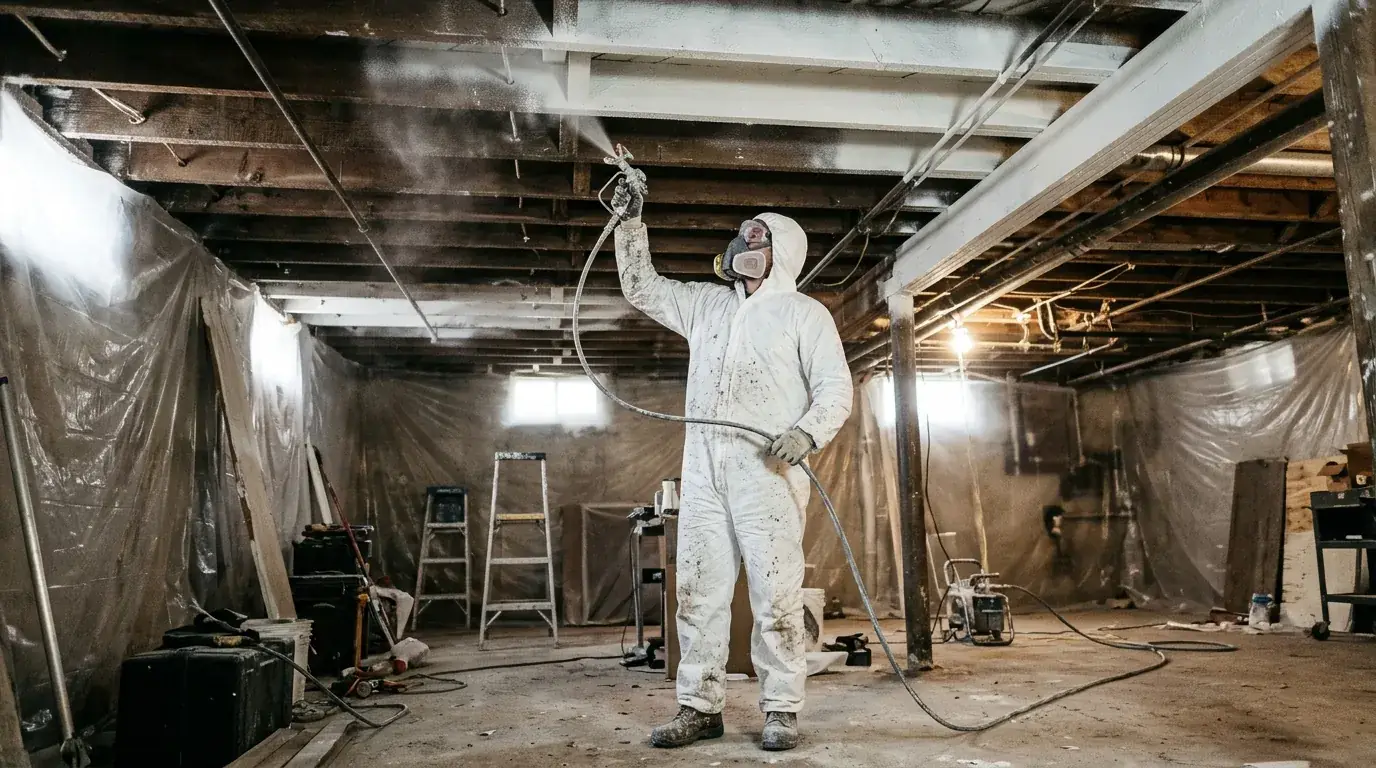
BCI Group installs fireblocking and draft stopping for builders, contractors and homeowners, documented for inspection. We also apply fire retardant coatings. Call (774) 278-8256 or request a free estimate.
Frequently asked questions
What is fireblocking?
Materials installed in concealed spaces to resist the passage of fire and smoke through walls, floors and ceilings.
Where is fireblocking required?
At floor and ceiling levels in stud walls, at soffits and dropped ceilings, at stair stringers and around penetrations, among other locations.
Can spray foam be used for fireblocking?
Only products tested and listed for fireblocking, used according to their listing. Ordinary foam may not qualify.
Is mineral wool approved for fireblocking?
Mineral wool batts secured in place are commonly accepted fireblocking material in many applications.
When is fireblocking inspected?
Typically at the framing or pre-insulation inspection, before walls are closed.
Services mentioned in this article
Fireblocking & Draft Stopping near you in Massachusetts
BCI Group crews work in these communities every week. See local details for fireblocking in your town: