Key takeaways
- For attached garages, the priority is the wall and ceiling shared with the house.
- The fire separation between garage and house must be maintained with the required drywall and sealed doors.
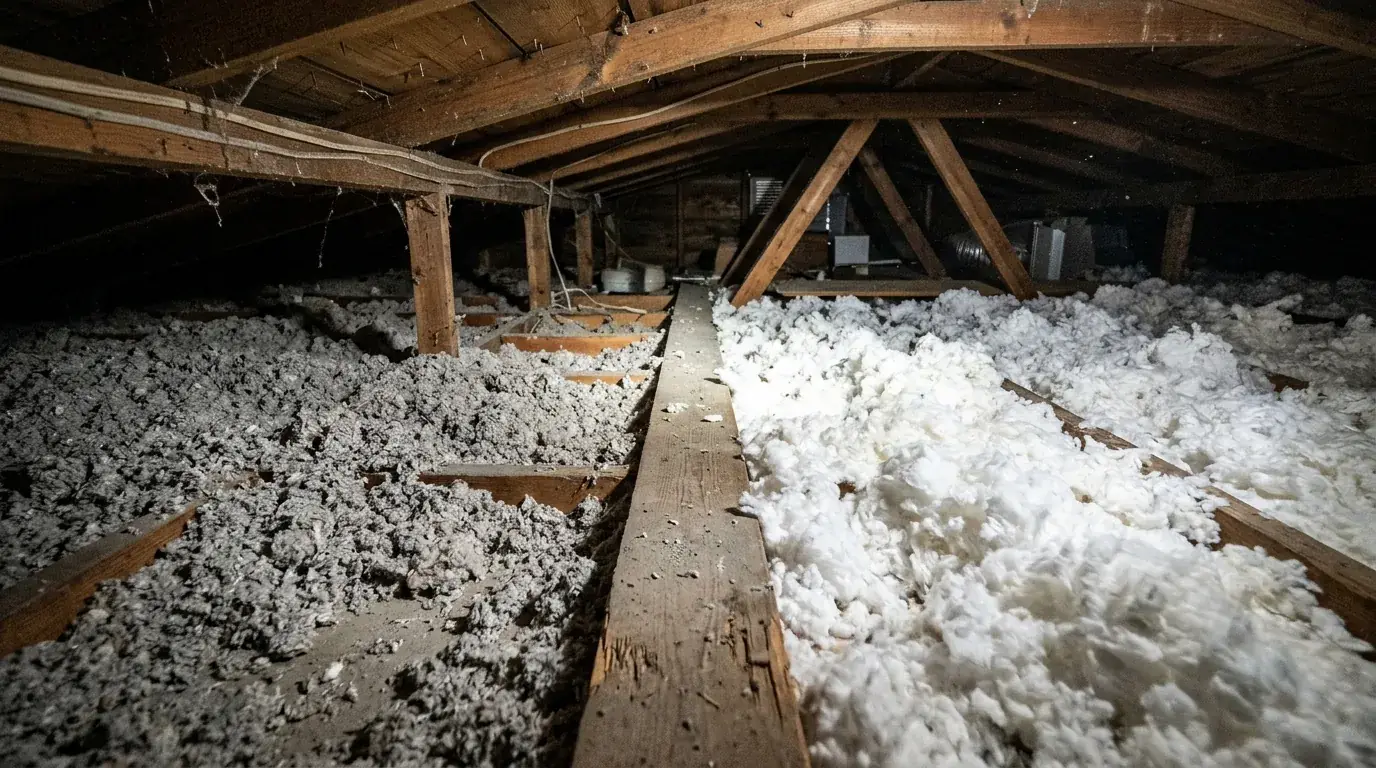
- Rooms over garages need the floor cavities filled and air sealed.
- Insulating the whole garage makes sense if you heat it or use it as a workshop.
Decide what you are trying to do
- Protect the house: keep the rooms next to and above the garage warm. Focus on the shared wall, the ceiling and the door into the house.
- Use the garage: make a workshop, gym or hobby space comfortable. Insulate the exterior walls, ceiling and garage door, and add heat.
The shared wall and ceiling (attached garages)
The wall between the garage and the house, and the ceiling under any living space above, are where insulation pays off most:
- Shared wall: fill with insulation and air seal outlets, pipes and the rim area.
- Ceiling under a bedroom or bonus room: dense-pack cellulose or spray foam the joist bays and seal the ends at the exterior walls. See cold room above the garage.
- Door into the house: weatherstrip and use a door that meets fire code for the garage separation.
Codes require gypsum board between an attached garage and the house, and heavier fire-rated board on ceilings under habitable rooms. Holes made for insulation must be patched to restore the separation. Your local building official has the final say.
Insulating the whole garage
| Area | Common materials | Notes |
|---|---|---|
| Exterior walls | Fiberglass, mineral wool, spray foam | Cover with drywall or approved finish |
| Ceiling (attic above) | Blown insulation on drywall ceiling, or batts | Air seal the ceiling first |
| Garage door | Insulated door or panel kit | Weatherstripping at bottom and sides |
| Slab | Usually left uninsulated in existing garages | Rigid foam under new slabs |
How to insulate a garage ceiling
- Attic above, no living space: install drywall on the ceiling if missing, air seal it, then blow insulation from the attic side, keeping eave ventilation clear.
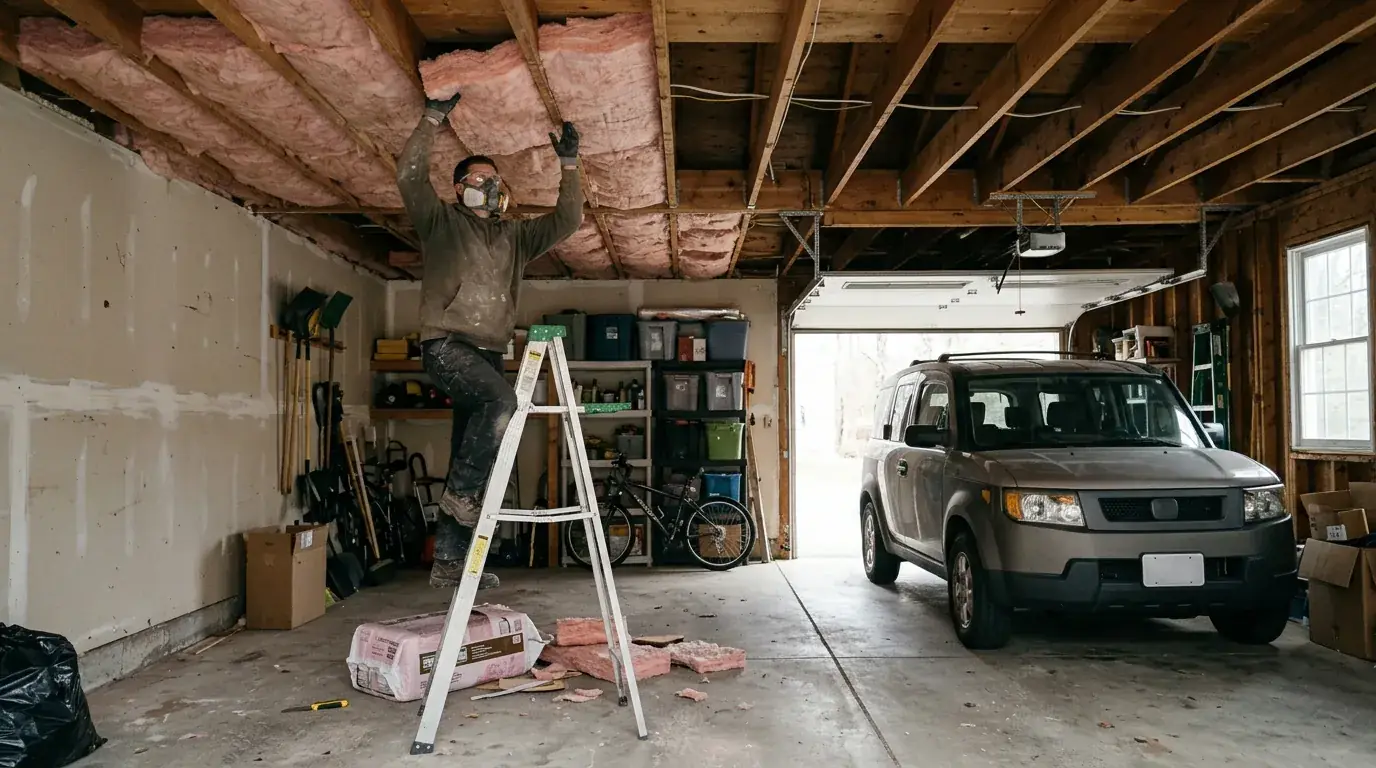
- Living space above: fill the joist bays completely (dense-pack or spray foam), seal joist ends, and restore fire-rated drywall below.
- Open trusses or rafters (bonus storage): batts with a ceiling finish, or spray foam with an approved covering.
Spray foam in garages
Closed-cell spray foam works well on garage walls and ceilings because it air seals and resists moisture, especially in detached metal or wood buildings. Foam must be covered with a thermal barrier or approved coating. See thermal barriers and pole barns and metal buildings.
Heating a garage
If you plan to heat the garage, insulate first. A small ductless heat pump is an efficient option for workshops. Never use unvented fuel-burning heaters in an enclosed garage without proper venting.
Garage doors: the weak link
| Door type | Typical insulation |
|---|---|
| Uninsulated steel | None; very cold |
| Steel with foam backing | Moderate |
| Insulated sandwich panel | Better |
| Wood | Varies; often leaky |
For heated garages, an insulated door with good perimeter seals makes a large difference. Insulation kits for existing doors can help, but seals at the bottom and sides matter just as much.
Attached garages and indoor air quality
Car exhaust, gasoline, paints and chemicals stored in garages can migrate into the house through gaps in the shared wall and ceiling. Air sealing the garage-to-house separation improves indoor air quality as well as comfort. Never run vehicles or generators in a closed garage.
Garage slabs
Existing garage slabs are rarely insulated. If you are building a new garage or pouring a new slab for a heated workspace, rigid foam under the slab and at the edges is worth considering. For existing garages, focus on walls, ceiling and door.
Moisture in garages
Snow melting off vehicles adds moisture to garages. In insulated garages, good drainage and some ventilation help prevent condensation on walls and ceilings.
Typical garage projects we see
- Insulating the floor over the garage under a bonus room.
- Air sealing and insulating the shared wall.
- Spray foam on detached garage walls and roof for a workshop.
- Fire retardant coating over exposed foam.
Insulate your garage
BCI Group insulates garages and the rooms around them across Massachusetts. Call (774) 278-8256 or request a free estimate.
Frequently asked questions
Is it worth insulating an attached garage?
Insulating the shared wall and ceiling protects the house and the rooms above. Insulating the whole garage makes sense if you heat or use it.
How do I insulate a garage ceiling?
Air seal the drywall ceiling and blow insulation from above, or fill joist bays completely when living space is above.
Does garage insulation need drywall?
Generally yes. Codes require gypsum board for fire separation between garage and house, and foam insulation needs a thermal barrier.
Should I insulate my garage door?
If you heat the garage or use it as a workspace, an insulated door with good seals helps.
Can spray foam be used in a garage?
Yes, with a code-approved thermal barrier or coating over it.
Services mentioned in this article
Spray Foam Insulation near you in Massachusetts
BCI Group crews work in these communities every week. See local details for spray foam in your town: