Key takeaways
- Spray foam insulates and air seals in one step; fiberglass insulates but needs separate air sealing.
- Closed-cell foam has the highest R-value per inch; fiberglass batts are the lowest-cost option.
- Fiberglass performance depends heavily on installation quality: gaps and compression reduce it.
- Many homes get the best value by combining foam in key areas with fiberglass or cellulose elsewhere.
The core difference
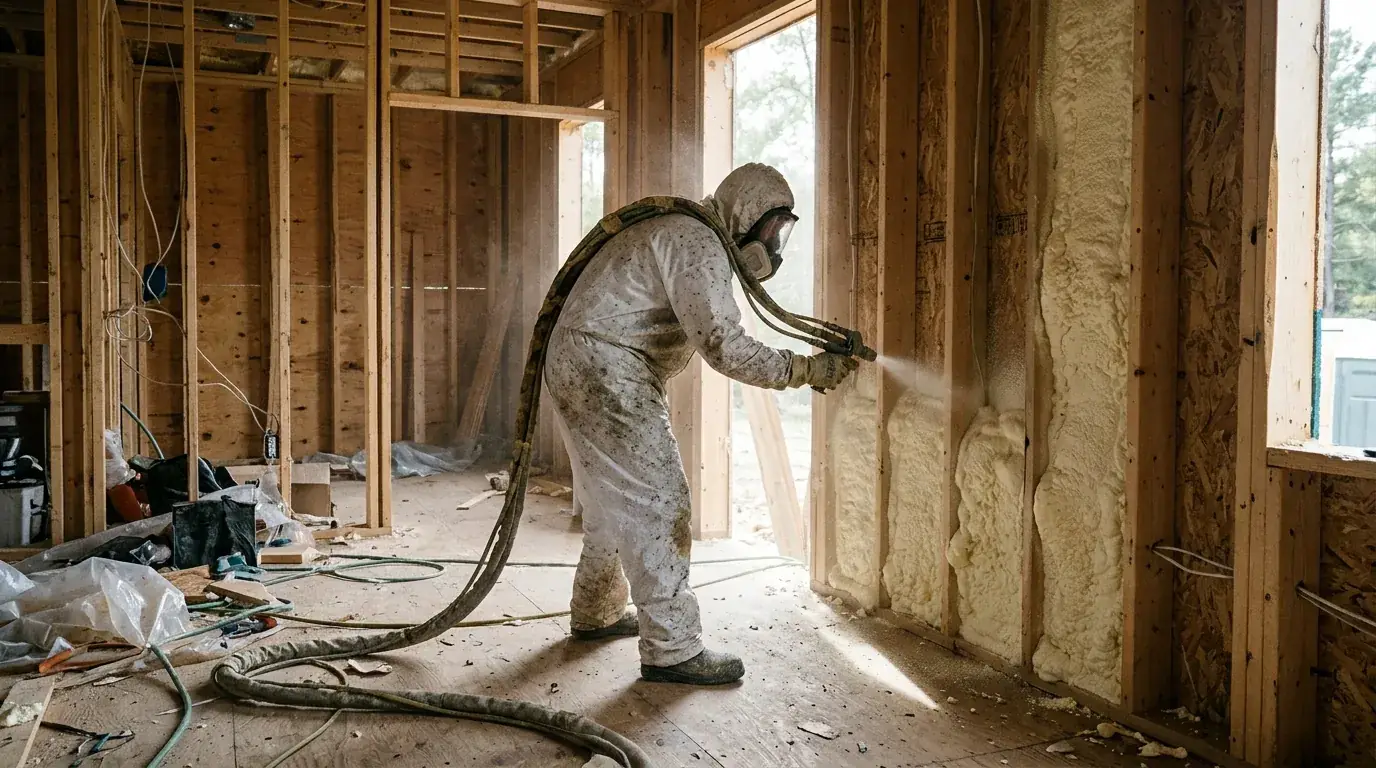
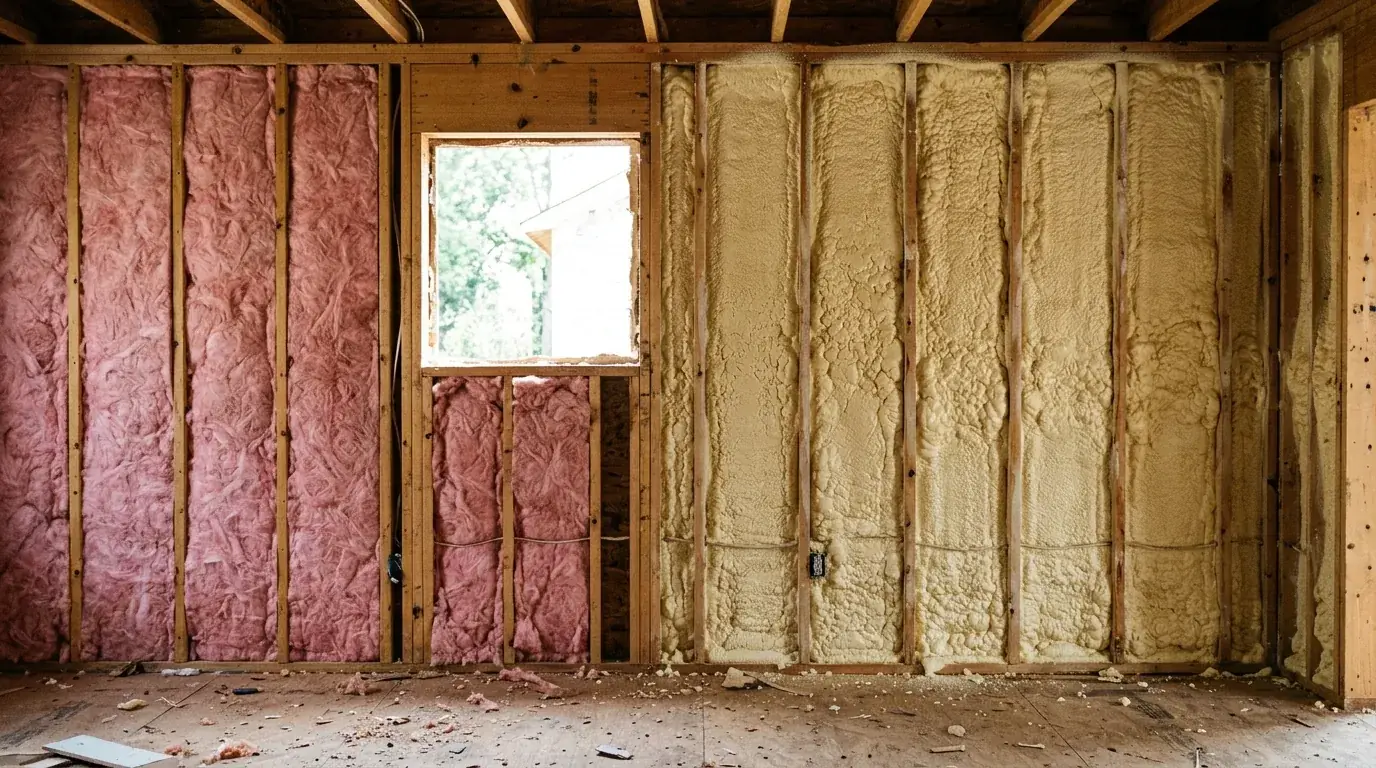
Fiberglass (batts or blown) slows heat by trapping air between glass fibers. It does not stop air from moving through it. Spray foam expands to fill the cavity and becomes an air barrier as well as insulation. That one difference explains most of the comparison.
Side by side
| Spray foam | Fiberglass batts | |
|---|---|---|
| R-value per inch | About R-3.5 to R-7 depending on type | About R-3 to R-4 |
| Air sealing | Yes | No, needs separate sealing |
| Moisture | Closed-cell resists water | Loses performance when wet |
| Irregular cavities | Fills every gap | Hard to fit around obstructions |
| Settling or sagging | None when installed correctly | Can sag or fall out of place |
| Installation | Professional only | DIY possible, but quality varies |
| Cost | Higher | Lowest |
Where spray foam wins
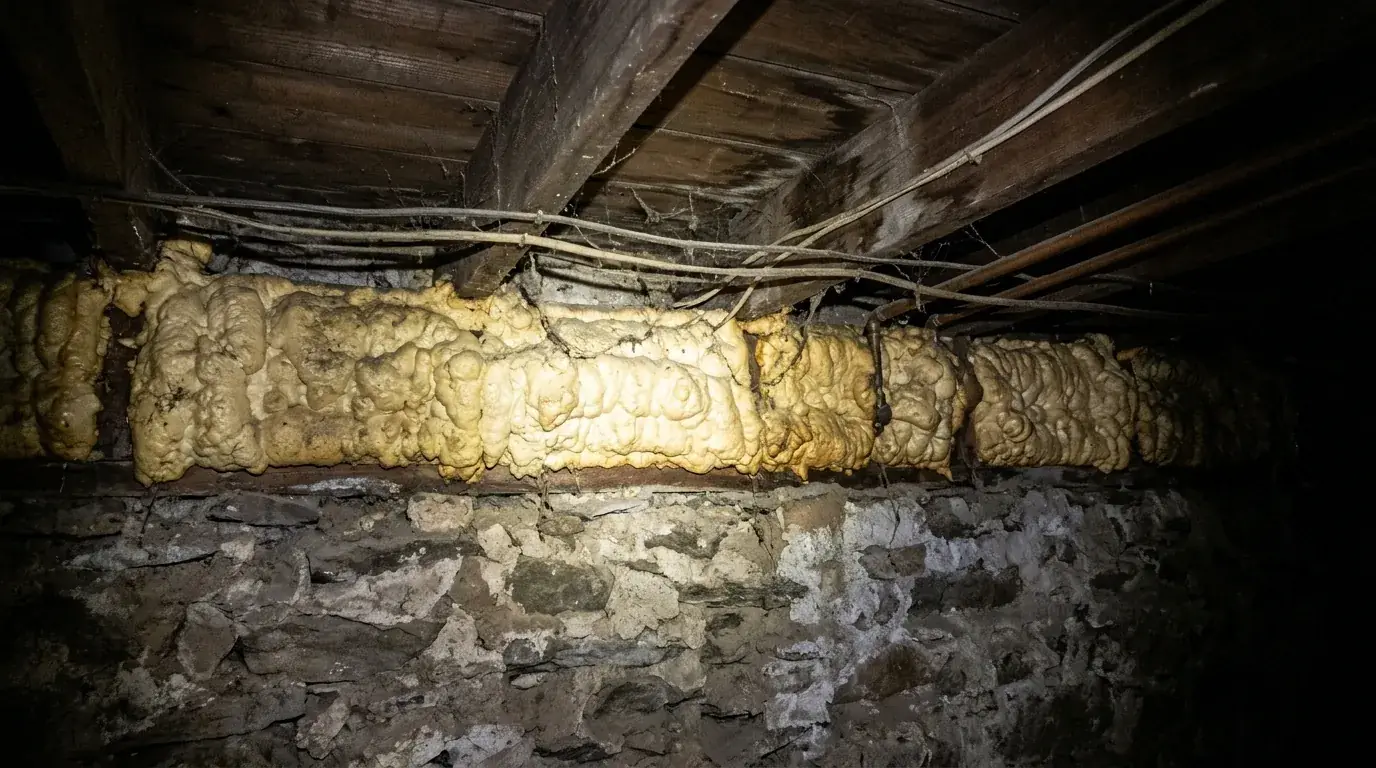
- Rim joists, basements and crawl spaces, where air leaks and moisture are the main problems.
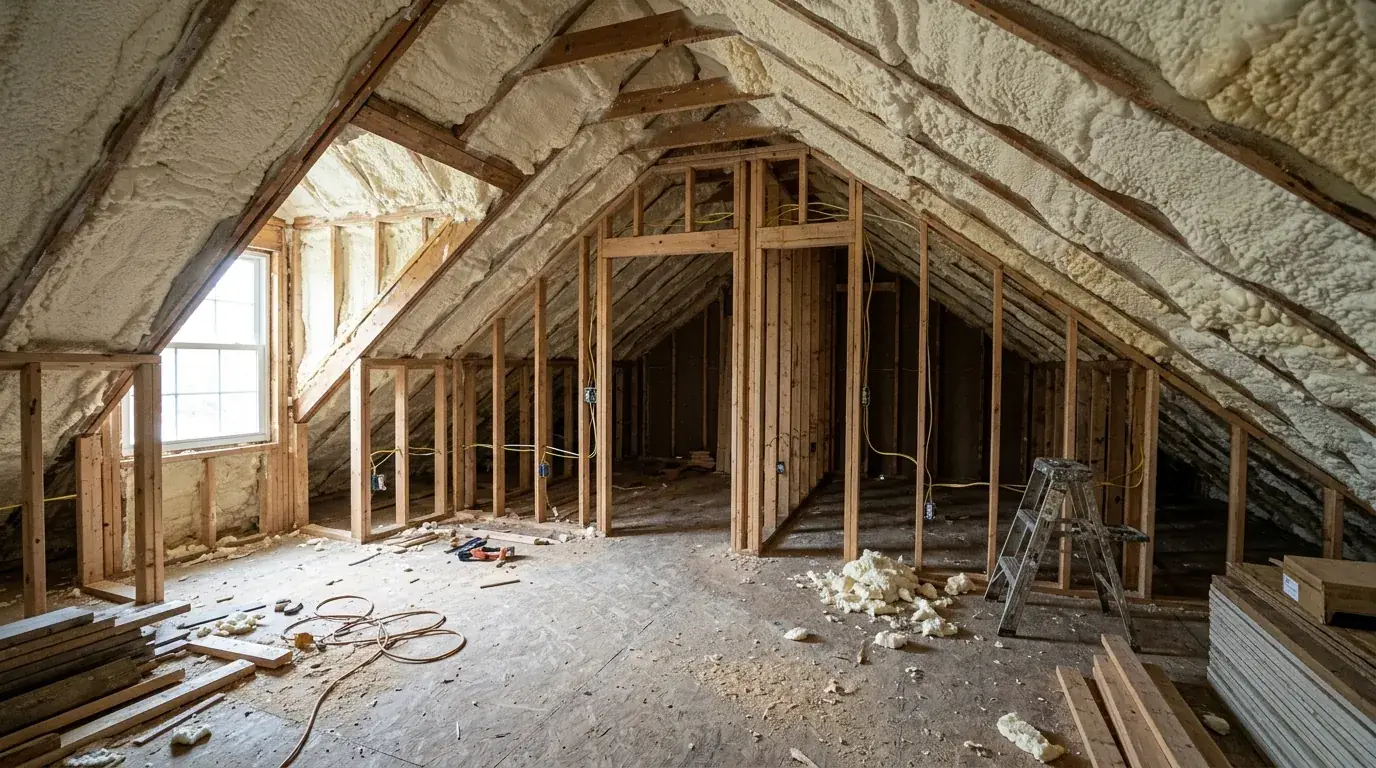
- Roof decks and cathedral ceilings, where depth is limited and condensation must be controlled.
- Bonus rooms and floors over garages, with many irregular gaps.
- New construction aiming to pass a strict blower door test under the Massachusetts Stretch Code.
Where fiberglass wins
- Open stud walls in new construction and renovations on a budget, when air sealing is handled separately (sealing top and bottom plates, penetrations and sheathing seams).
- Interior walls and floors for basic sound control.
- Attic floors, as blown fiberglass, an alternative to cellulose.
The catch is installation quality. Batts that are compressed, cut short or leave gaps around wires and boxes can lose a meaningful part of their rated performance. A professionally installed batt is a very different product from a sloppy one. See fiberglass batt mistakes.
Where cellulose fits in
For existing closed walls and attic floors, blown-in cellulose is often the best value: it fills cavities without opening walls and slows air movement better than loose fiberglass. See cellulose vs. fiberglass.
The hybrid approach
Many of our projects combine materials:
- Closed-cell foam on rim joists and roof decks + fiberglass or mineral wool in walls.
- A thin "flash" coat of closed-cell foam to air seal stud bays + batts or blown insulation to fill the rest (often called flash and batt).
- Air sealing + blown cellulose on attic floors + foam in the basement.
We install foam where it pays off and recommend fiberglass or cellulose where they are the better value. Your estimate should explain why each material was chosen.
A real-world example
Imagine a basement rim joist in a 1960s colonial. With fiberglass batts stuffed in, air still flows around the batts, and moisture can condense on the cold wood behind them. With 2 to 3 inches of closed-cell foam, the gaps are sealed, the wood stays warm and dry, and the drafts stop. Here, foam is the clear winner.
Now imagine an open attic floor in the same house. After air sealing, blowing fiberglass or cellulose to R-49 or more costs far less than spraying foam across the whole floor, and performs very well. Here, blown insulation is the better choice.
Flash and batt explained
"Flash and batt" means spraying a thin layer of closed-cell foam into stud bays to air seal the cavity, then filling the rest with fiberglass or mineral wool batts. It combines foam's air sealing with the lower cost of batts. The foam layer must be thick enough for the assembly to manage condensation properly in a cold climate, according to code and design.
Questions to ask when comparing quotes
| Question | Why |
|---|---|
| How will air sealing be done with batts? | Batts alone do not stop air |
| What thickness and R-value of foam? | Defines performance and price |
| Will the batts be installed to Grade I? | Quality affects real-world R-value |
| What coverings are required? | Foam needs a thermal barrier in living spaces |
| Who installs? | Training and accountability |
DIY considerations
Fiberglass batts are DIY-friendly; spray foam generally is not, beyond small kits. If you are doing part of a project yourself, consider having a professional handle the spray foam areas and air sealing, and installing batts carefully in open walls.
Get an honest recommendation
BCI Group installs spray foam, fiberglass and cellulose with our own crews. Call (774) 278-8256 or request a free estimate. See also open-cell vs. closed-cell.
Frequently asked questions
Is spray foam better than fiberglass?
It is better at air sealing and moisture resistance, and closed-cell has a higher R-value per inch. Fiberglass is the lower-cost option and works well when air sealing is handled separately.
Is spray foam worth the extra cost over fiberglass?
In rim joists, basements, roof decks and other leak-prone areas, usually yes. In open attic floors, blown insulation is better value.
Can fiberglass and spray foam be combined?
Yes. Flash-and-batt and foam-plus-blown-insulation approaches are common.
Does fiberglass insulation lose effectiveness?
Gaps, compression and moisture reduce its performance. Properly installed and kept dry, it performs as rated.
Which is better for soundproofing?
Fiberglass and mineral wool absorb sound well; open-cell foam also performs well and seals air gaps.
Services mentioned in this article
Spray Foam Insulation near you in Massachusetts
BCI Group crews work in these communities every week. See local details for spray foam in your town: