Key takeaways
- Vented attics bring outside air in at the soffits and exhaust it at the ridge or high vents.
- Ventilation keeps the roof deck cold in winter and removes some moisture.
- Ventilation does not stop heat loss; air sealing and insulation do.
- Baffles keep insulation from blocking soffit vents, and bath fans must never end in the attic.
What attic ventilation is for
Most Massachusetts homes have a vented attic: the insulation sits on the attic floor, and the attic above it is meant to be close to outdoor temperature. Ventilation helps by:
- Keeping the roof deck cold in winter, which reduces ice dams.
- Removing moisture that gets into the attic.
- Lowering attic temperatures somewhat in summer.
How it should work
Air enters low and leaves high:
- Soffit vents under the eaves let outside air in.
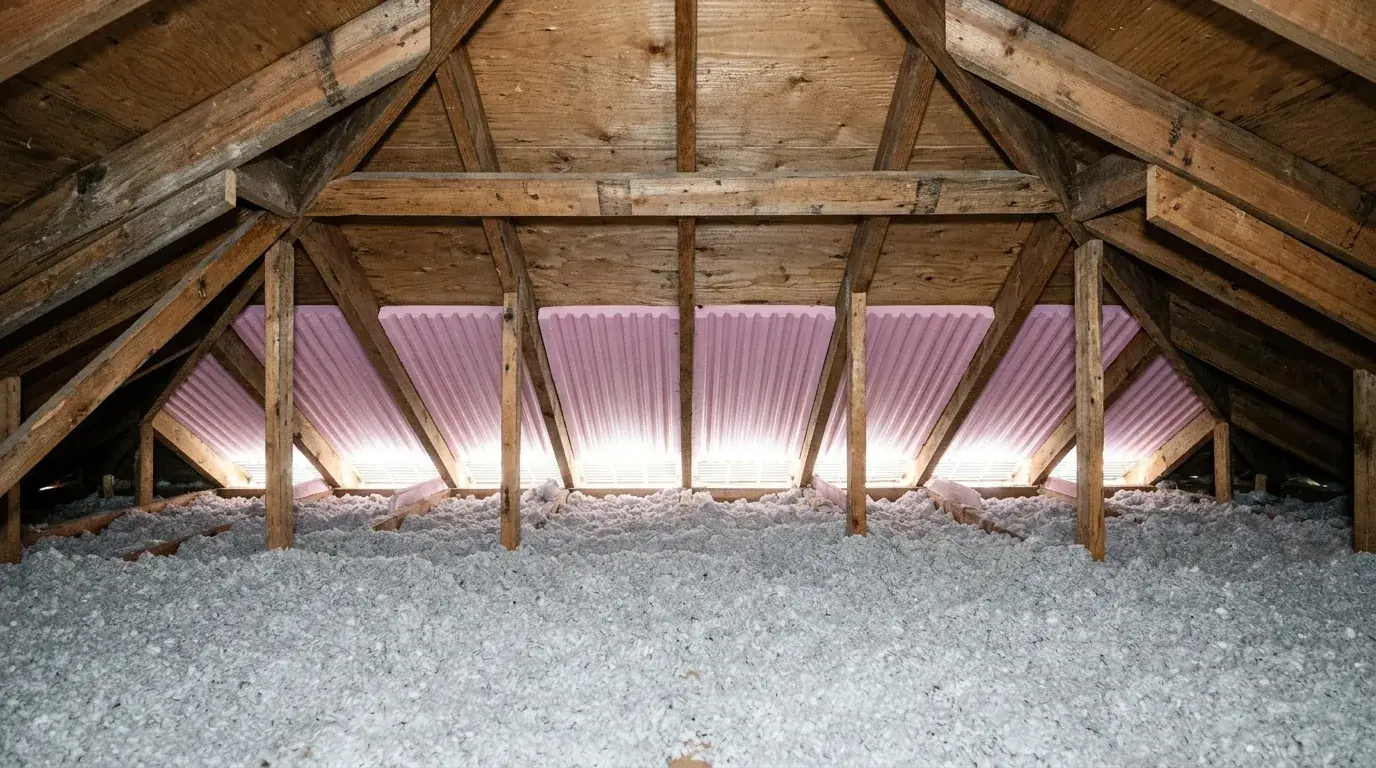
- Baffles (rafter vents) keep a clear channel between the roof deck and the insulation, from the soffit up into the attic.
- Ridge vents or high gable vents let air out at the top.
Warm air naturally rises and exits at the ridge, pulling fresh air in at the soffits. Wind helps too.
| Component | Job | Common problem |
|---|---|---|
| Soffit vents | Intake | Painted over or blocked by insulation |
| Baffles | Keep the air channel open | Missing, so insulation blocks soffits |
| Ridge vent | Exhaust | Combined with gable vents or powered fans, short-circuiting the flow |
| Gable vents | Exhaust in older homes | Uneven air flow |
Ventilation cannot fix air leaks
This is the most common misunderstanding. Adding vents to a leaky attic does not stop warm, moist air from pouring up from the house; it just moves some of it out. If the attic floor leaks heavily, ice dams and moisture problems can continue no matter how many vents you add. The right order is:
- Air seal the attic floor. See air sealing before insulation.
- Install baffles at every rafter bay over the eaves.
- Insulate to R-49 or more.
- Confirm the vent path from soffit to ridge.
Bath and kitchen fans must be ducted outside through the roof or a wall. Fans pointed at a soffit or gable can blow moisture back into the attic.
Mistakes we see often
- Powered attic fans in a leaky attic: they can pull conditioned air (and even combustion gases) up from the house.
- Soffit vents covered by blown insulation because no baffles were installed.
- Mixing ridge vents with gable vents, which can short-circuit the flow.
- Venting a cathedral ceiling without a clear channel above the insulation; see cathedral ceiling insulation.
Vented vs. unvented attics
Some homes, especially those with HVAC equipment in the attic or complex rooflines, are better served by an unvented attic, with spray foam under the roof deck instead of insulation on the floor. That is a different design with its own rules; see spray foam attics.
How much ventilation is enough?
Building codes typically set minimum net free vent area for vented attics as a ratio of the attic floor area, with a lower ratio allowed when vents are balanced between high and low locations and other conditions are met. Your contractor can calculate it for your attic. The bigger practical issues are usually:
- Soffit vents that exist on paper but are blocked by paint, insulation or solid soffit boards.
- Ridge vents installed without enough soffit intake.
- Bath fans blowing moisture into the attic.
Signs of poor attic ventilation
| Sign | Possible cause |
|---|---|
| Frost on nails and sheathing in winter | Moist air leaking from the house; ventilation cannot keep up |
| Ice dams | Warm roof deck, usually from air leaks and thin insulation |
| Very hot attic in summer | Limited intake or exhaust |
| Curled shingles near the bottom of the roof | Heat and moisture issues (also roof age) |
| Musty smell in the attic | Moisture accumulation |
Retrofitting soffit vents
Many older Massachusetts homes have closed soffits or no soffits at all. Options include adding continuous soffit vents, installing small round vents in each rafter bay, or using alternative intake products at the roof edge. Each requires care so that baffles can be installed above.
Ventilating cape and finished-attic spaces
In capes, ventilation paths are interrupted by knee walls and sloped ceilings. If slopes are dense-packed, they become unvented assemblies and need a design that controls condensation. If the roofline is vented, each rafter bay needs a continuous channel from the eave to the top attic. This is one reason capes need a careful plan.
The takeaway
Ventilation is a supporting player. Air sealing and insulation do most of the work; ventilation keeps the roof cold and helps remove small amounts of moisture that get through.
Get your attic right
BCI Group installs baffles, air seals and insulates attics across MetroWest and Central Massachusetts. Call (774) 278-8256 or request a free estimate.
Frequently asked questions
Do I need soffit vents?
Most vented attics need intake at the soffits and exhaust at the ridge or high vents to keep the roof deck cold and dry.
What are attic baffles?
Baffles, or rafter vents, keep a clear air channel from the soffit vents into the attic so insulation does not block air flow.
Will more vents stop ice dams?
Ventilation helps, but air sealing the attic floor and adding insulation are more important.
Are powered attic fans a good idea?
In leaky attics they can pull conditioned air from the house. Air sealing and passive ventilation are usually better.
Can I have a ridge vent and gable vents?
Mixing them can short-circuit air flow. A balanced soffit-to-ridge system is usually preferred.
Services mentioned in this article
Blown-In Cellulose near you in Massachusetts
BCI Group crews work in these communities every week. See local details for blown-in cellulose in your town: