Key takeaways
- Ice dams form when heat escaping from the house melts snow on the roof, and the water refreezes at the colder eaves.
- The root cause is warm air leaking into the attic, plus too little insulation.
- Attic air sealing and insulation stop most ice dams; ventilation helps keep the roof deck cold.
- Heat cables and roof rakes reduce damage but do not fix the cause.
How an ice dam forms
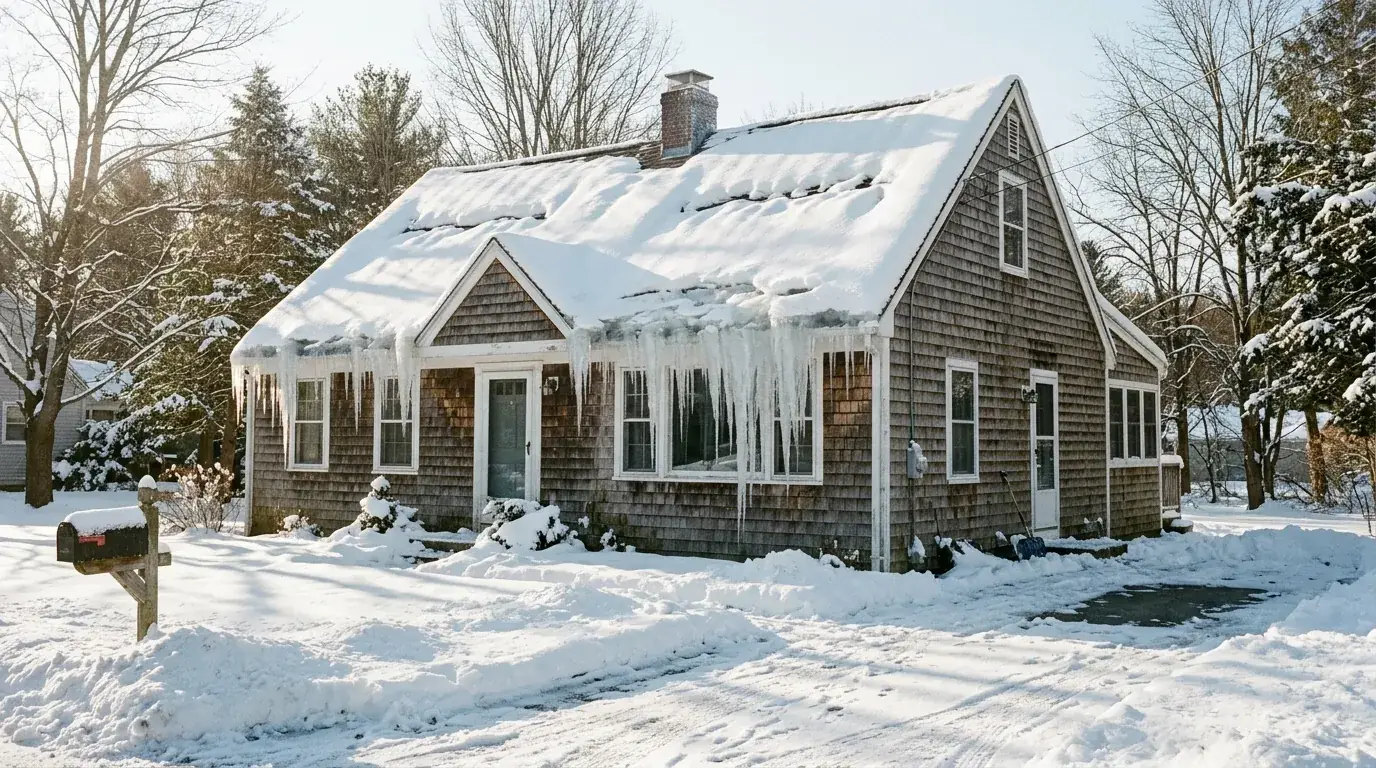
After a snowstorm, a layer of snow sits on your roof. If the roof deck above the attic is warm, the snow touching it melts, even when it is well below freezing outside. The water runs down under the snow until it reaches the eaves, the part of the roof that hangs past the exterior wall. The eaves are not over heated space, so they stay cold. The water freezes there, and a ridge of ice grows along the edge of the roof. More meltwater backs up behind it, under the shingles, and leaks into the walls and ceilings.
That is why ice dams are so common in Massachusetts: plenty of snow, long freeze-thaw cycles, and a huge number of older homes with leaky, under-insulated attics. Capes and homes with finished attics or low-slope roofs are especially prone.
The real cause: heat in the attic
The snow melts because the roof deck is warm, and the roof deck is warm because heat is getting into the attic. It gets there two ways:
- Air leaks. Warm air from the living space rises through gaps around chimneys, plumbing stacks, light fixtures, wiring holes, attic hatches and the tops of interior walls. This is usually the biggest source.
- Too little insulation. Heat conducts through thin or settled insulation on the attic floor.
In capes and finished attics, heat also escapes through knee walls and sloped ceilings, which is why ice dams often appear right above second-floor bedrooms. See our guide on knee wall insulation.
Signs you have an ice dam problem
- Thick ice along the roof edge and gutters.
- Large icicles, especially in the same spots every winter (see what icicles tell you).
- Water stains on ceilings or walls near exterior walls.
- Peeling paint or wet insulation near the eaves.
- Bare patches of roof where snow melts first, a sign of heat escaping below.
Quick fixes vs. the permanent fix
| Approach | What it does | Limitation |
|---|---|---|
| Roof rake | Removes snow from the lower roof | Must be repeated every storm; risk of damaging shingles |
| Heat cables | Melts channels in the ice | Uses electricity; does not stop the melting |
| Ice and water shield | Waterproof membrane under shingles | Limits leaks; does not stop ice dams |
| Attic air sealing + insulation | Keeps heat out of the attic | Fixes the cause |
| Ventilation | Keeps the roof deck cold | Works best after air sealing |
Do not climb on an icy roof or chip ice with tools. If water is coming in, call a roofer for emergency removal, then fix the attic before next winter.
How we stop ice dams
- Find the leaks. A blower door test and an attic inspection show where warm air escapes.
- Air seal the attic floor. We seal top plates, chimney chases (with fire-safe materials), plumbing and wiring holes, recessed lights and the hatch.
- Insulate to modern levels. Blown-in cellulose or fiberglass to R-49 or more across the attic floor.
- Protect the eaves. Baffles keep air flowing from soffit vents, so the roof deck stays cold.
- Handle slopes and knee walls. In capes and finished attics, dense-pack the slopes or use spray foam where space is tight.
Does Mass Save® help?
Yes. Attic air sealing and insulation are core Mass Save® measures, with no-cost air sealing and rebates on approved insulation for eligible customers. See Mass Save® insulation rebates.
Which homes get ice dams most
| Home type | Why it is prone | Where to focus |
|---|---|---|
| Cape (story-and-a-half) | Heat escapes through knee walls and slopes near the eaves | Knee walls, slopes, floor behind knee walls |
| Finished attic or bonus room | Rooms right under the roof | Sloped ceilings, air sealing at the roofline |
| Cathedral ceilings | No attic buffer | Airtight fixtures, deeper insulation, roof deck foam |
| Low-slope roofs | Snow stays longer | Air sealing and insulation; drainage details |
| Homes with recessed lights upstairs | Each light leaks warm air | Airtight covers or replacement fixtures |
| Complex roofs with valleys | Snow and meltwater concentrate | Air sealing under valleys; roofing details |
What to do during an ice dam emergency
- Protect the inside: move belongings, catch drips, and photograph damage for insurance.
- Call a roofing professional who removes ice with steam rather than hammers, which can damage shingles.
- Do not climb on the roof. Icy roofs are dangerous.
- Remove snow from the lower roof with a roof rake from the ground if it is safe to do so.
- Schedule an attic evaluation for spring or summer to fix the cause.
Ice dams and roof replacement
If you are replacing your roof, it is a good moment to address ice dams from both sides:
- Install ice and water shield along the eaves and valleys as required.
- Air seal and insulate the attic floor before the new roof goes on.
- Make sure soffit and ridge ventilation are balanced.
- In cathedral or finished-attic sections, consider insulation at the roof deck or above it.
A new roof alone will not stop ice dams if heat keeps leaking into the attic; the dam will simply form on the new shingles.
Ice dams and insurance claims
Insurers may ask what caused the leak and whether the problem has happened before. Fixing the attic after the first claim helps prevent repeat damage. Keep the invoice and photos of the air sealing and insulation work for your records.
How we measure success
The best proof is the next winter: even snow cover on the roof, no thick ice at the eaves and no new stains inside. A blower door test before and after also shows how much leakage was removed from the house.
Fix it before next winter
The best time to deal with ice dams is the spring, summer or fall before they come back. BCI Group air seals and insulates attics across Worcester County, MetroWest and beyond. Call (774) 278-8256 or request a free estimate.
Frequently asked questions
What causes ice dams?
Heat from the house warms the roof deck and melts snow. The water refreezes at the colder roof edge, forming a dam of ice that traps more water.
Will more attic ventilation fix ice dams?
Ventilation helps keep the roof deck cold, but it works best after the attic is air sealed and insulated. Ventilating a leaky attic alone rarely solves the problem.
Are heat cables a good solution?
Heat cables can limit damage in problem spots, but they use electricity and do not stop heat from escaping into the attic.
Does homeowners insurance cover ice dam damage?
Many policies cover sudden water damage from ice dams, but coverage varies. Check your policy and document any damage.
Can ice dams be prevented in a cape house?
Yes, but capes need attention to the knee walls, sloped ceilings and the small attic spaces, not just the top attic floor.
When is the best time to fix ice dam problems?
Spring through fall, before the next snow season, so the attic can be air sealed and insulated properly.
Services mentioned in this article
Blown-In Cellulose near you in Massachusetts
BCI Group crews work in these communities every week. See local details for blown-in cellulose in your town: