
Key takeaways
- Mass Save® insulation rebates apply to attics, exterior walls, basements, crawl spaces and rim joists when they are approved in your assessment.
- Air sealing is done first and is offered at no cost to eligible customers.
- Most customers pay a fraction of the cost; income-eligible households can pay nothing.
- The rebate is applied to your price by the participating contractor, so you do not wait for a check.
Why insulation gets the biggest incentives
Mass Save® pays for the measures that save the most energy per dollar, and in Massachusetts' older housing stock nothing beats insulation and air sealing. A home built before 1980 often has a few inches of settled insulation in the attic and nothing at all in the walls. Bringing those areas up to modern levels can noticeably reduce heating costs and fix cold rooms at the same time.
Which areas qualify
The energy specialist decides what qualifies during your Home Energy Assessment. The usual candidates are:
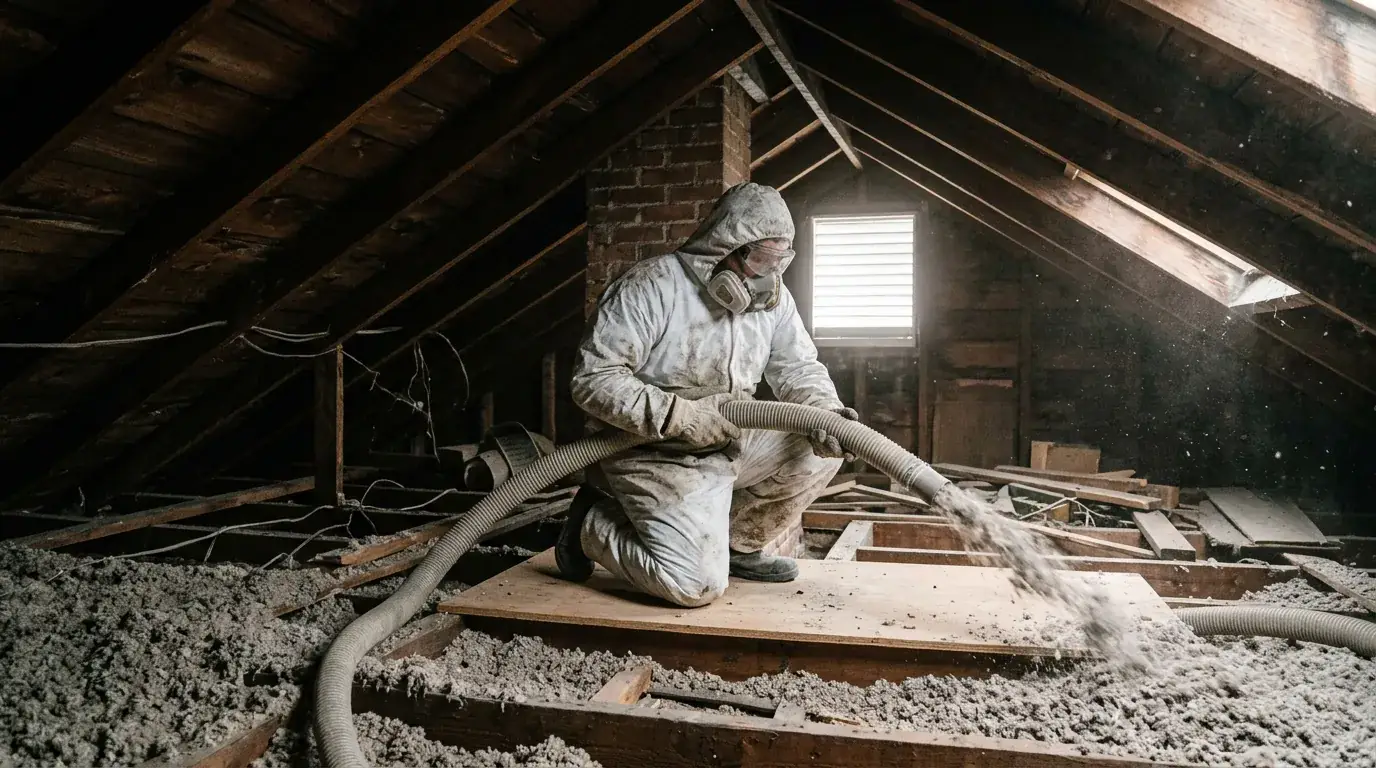
- Attic floors: topped up with blown-in cellulose or fiberglass to the recommended depth.
- Exterior walls: empty wall cavities dense-packed with blown-in cellulose through small holes, then patched.
- Attic slopes and knee walls: in capes and finished attics, where heat escapes behind the short walls. See our knee wall guide.
- Basement walls and rim joists: where cold air enters at the bottom of the house.
- Crawl spaces and floors over unheated spaces, such as a room over a garage.
| Area | Common material | Why it matters |
|---|---|---|
| Attic floor | Blown cellulose or fiberglass | Largest heat loss in most homes |
| Exterior walls | Dense-pack cellulose | Empty walls are common before 1960 |
| Rim joists | Spray foam or rigid board | Major air leak at the foundation |
| Knee walls | Batts plus air barrier or foam | Cold rooms in capes |
| Floor over garage | Dense-pack or batts | Cold floors in bonus rooms |
How much you pay
In recent program years, Mass Save® has covered 75% or more of the cost of approved insulation, with enhanced incentives for moderate-income households and up to 100% for income-eligible households. Air sealing has been offered at no cost. Because the numbers are reset each program year, your assessment report is the place to confirm the exact amounts for your home.
You do not need to pay the full price and then wait for a check. A participating contractor such as BCI Group applies the incentive to your price. If your share is still more than you want to pay up front, the 0% HEAT Loan can spread it out.
Insulation is only rebated when it is part of an approved project. Work done before an assessment, or by a contractor outside the program, usually does not qualify.
What can hold a project up
Some conditions must be fixed before insulation can be installed:
- Live knob-and-tube wiring in the areas to be insulated.
- Vermiculite insulation in the attic (it may contain asbestos).
- Roof leaks, active mold or wet framing.
- Heating equipment that fails a combustion safety test.
These are called pre-weatherization barriers. Some program paths offer help with the cost of fixing them; we explain each one in this guide.
How the work is done
On installation day our crew protects the living space, seals attic bypasses (top plates, chimney chases, plumbing and wiring holes, the attic hatch) and installs baffles at the eaves so the roof keeps venting. Then the insulation goes in to the approved depth, with depth markers so you can see it. For walls, the crew drills small holes from the outside or inside, dense-packs each cavity and plugs the holes. Learn more in what to expect on installation day.
Results you can expect
Every home is different, so we never promise a specific percentage. What homeowners usually notice first is comfort: fewer drafts, warmer upstairs rooms in winter, a cooler second floor in summer and a heating system that cycles less. In homes with ice dams, attic air sealing is often the single most effective fix (see why).
How a rebate shows up on your proposal
A typical Mass Save® insulation proposal lists each approved area, the material, the R-value or depth, the full price, the incentive and your share. Reading it line by line helps you understand exactly what you are paying for:
| Line item | What to check |
|---|---|
| Air sealing | Should be listed separately, usually at no cost to eligible customers |
| Attic floor | Material and target R-value or depth |
| Walls | Square footage and method (dense-pack from outside or inside) |
| Basement / rim joists | Material (often spray foam) and linear feet |
| Knee walls and slopes | Each area listed separately in capes and finished attics |
| Your share | The amount after incentives |
If something you expected is missing, ask why. Sometimes an area is not approved because of a barrier, limited access or because it already meets the program's standard.
Getting more than one area done at once
Many homeowners start with the attic and plan to "do the walls later". In practice, doing everything at once is usually better:
- One assessment, one proposal and one installation visit.
- The crew can seal transitions between areas, like the tops of walls and the attic.
- You get the full comfort benefit in one heating season.
What disqualifies an area
- Existing insulation already at or above the program's level.
- Live knob-and-tube wiring in the cavity.
- Wet or damaged materials that need repair first.
- Inaccessible spaces where installation would cause major damage.
Moderate-income households: check before you sign
Enhanced incentives for moderate-income households can significantly reduce your share. Income verification is usually simple, but it must be done before the project, so ask early. See income-eligible and moderate-income programs.
Keep your paperwork
Save your proposal, invoice and any certificate showing insulation type and depth. They are useful if you sell the house, refinance or apply for other programs, and they document what was installed for future contractors.
Getting started
BCI Group is a Mass Save® partner in Westborough, MA, serving homes across Worcester, Middlesex and Norfolk counties and beyond. Call (774) 278-8256 or request a free estimate, and we will help you start with the assessment.
Frequently asked questions
Does Mass Save® pay for spray foam?
Mass Save® rebates approved insulation measures, which can include foam in some locations such as rim joists. The assessment report lists the approved measures and materials for your home.
Can I get rebates for insulating a finished attic?
Often yes. Knee walls, attic slopes and the floor behind knee walls are common approved measures in capes and finished attics.
Do I need a new assessment if mine is a few years old?
Usually yes. Incentives and program rules change, so an up-to-date assessment is the safest way to confirm what qualifies today.
Will insulating my walls damage my siding or plaster?
Dense-pack cellulose is installed through small holes that are plugged and patched. On vinyl or wood siding, a few courses are lifted and replaced so the holes are hidden.
Is there a limit to how much Mass Save® will pay?
Incentive caps can apply depending on the program year and your income tier. Your assessment report shows the incentive for each approved measure.
Services mentioned in this article
Mass Save® Upgrades near you in Massachusetts
BCI Group crews work in these communities every week. See local details for Mass Save® in your town: