Key takeaways
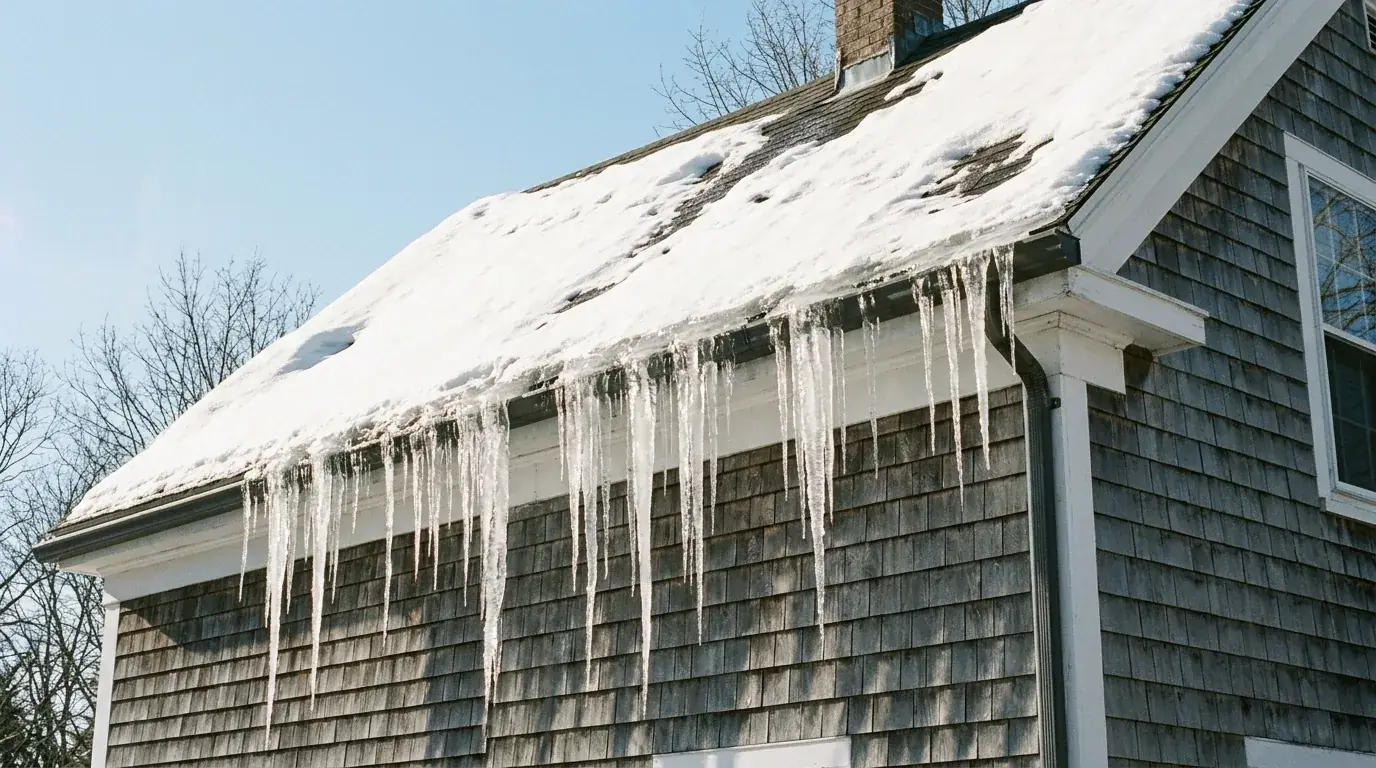
- Large icicles form when snow melts on the roof and refreezes at the edge.
- Melting is usually caused by heat escaping from the house into the attic.
- Icicles and bare patches on a snowy roof point to where heat is leaking.
- Air sealing and insulating the attic reduces icicles and the ice dams that come with them.
Are icicles a bad sign?
A few small icicles after a sunny day are normal: the sun can melt snow even on a well-insulated roof. But big icicles that grow along the same stretch of gutter every winter, especially on cloudy or very cold days, are a sign that heat from the house is warming the roof. That same process creates ice dams, which can force water under the shingles and into your walls and ceilings.
How to read your roof after a snowstorm
The day or two after a snowfall is the best time to look at your roof from the street:
- Even snow cover: a good sign; the roof deck is staying cold.
- Bare patches or stripes: heat escaping below, often over bathrooms, around chimneys or above recessed lights.
- Melted areas over a finished attic or cape bedrooms: heat leaking through knee walls and sloped ceilings.
- Big icicles concentrated in one area: a major leak or thin insulation directly above that wall.
- Your roof melts first on the street: compare with neighbors; it is a simple, free energy test.
Why the attic gets warm
Warm air from the house leaks into the attic through gaps at chimneys, plumbing stacks, wiring holes, light fixtures and the attic hatch. Heat also conducts through thin insulation. Once the attic is warm, the roof deck warms and the snow melts. Insulation alone is not enough if air keeps flowing through it; air sealing comes first. See why air sealing comes before insulation.
Are icicles dangerous?
Large icicles are heavy and can fall without warning, damaging gutters and injuring people below. Keep walkways and entrances clear and do not stand under them. Do not try to knock down large icicles from a ladder.
A roof rake can remove snow from the lower part of the roof, which reduces meltwater. Use it from the ground and be careful near power lines.
The long-term fix
| Step | Effect |
|---|---|
| Find leaks with a blower door and infrared camera | Shows where heat escapes |
| Seal the attic floor | Stops warm air reaching the roof |
| Insulate to R-49 or more | Slows heat conduction |
| Install baffles and keep soffits open | Cold outside air under the roof deck |
| Fix knee walls and slopes in capes | Stops the most common problem area |
Attic air sealing and insulation are Mass Save® measures for eligible customers. See Mass Save® insulation rebates.
Icicles vs. normal snowmelt
| Observation | Normal or a warning? |
|---|---|
| Small icicles on the sunny side after a bright day | Usually normal |
| Large icicles on a north-facing roof | Warning: heat from below |
| Icicles over unheated porches or garages only | Usually sun or roof drainage, not house heat |
| Icicles that grow during cold, cloudy weather | Warning: heat leaking into the attic |
| Icicles behind gutters or under shingles | Warning: possible ice dam |
Gutters and icicles
Clogged gutters can hold water that freezes, forming icicles and making ice dams worse. Clean gutters in late fall. But gutters themselves are not the cause; even homes without gutters get ice dams when heat escapes into the attic.
Using icicles as a free energy audit
Walk around your house after a snowstorm and take photos of the roof and icicle patterns. Compare them with neighbors' homes. Areas with early melting or large icicles often line up with:
- Bathrooms with fans or recessed lights below.
- Rooms under knee walls or sloped ceilings.
- Chimneys and plumbing stacks.
- The attic hatch.
Share these photos with your energy specialist or contractor; they help pinpoint problems quickly.
Protecting people and property
- Mark or block off walkways under large icicles.
- Keep children away from roof edges.
- Do not park vehicles under heavy icicles.
- Avoid pulling icicles that are attached to gutters; you can tear the gutter loose.
The lasting solution
Air sealing and insulating the attic keeps the roof deck cold, so snow melts mainly from the sun and outdoor temperatures, as it should. The result is fewer icicles, fewer ice dams and lower heating bills.
Get your attic checked
BCI Group air seals and insulates attics across Central Massachusetts, where snow and icicles are a fact of life. Call (774) 278-8256 or request a free estimate.
Frequently asked questions
Do icicles mean my house is losing heat?
Large icicles that form repeatedly, especially on cold, cloudy days, usually mean heat is escaping into the attic and melting snow on the roof.
Are icicles the same as ice dams?
They are related. Icicles form at the roof edge from meltwater; ice dams are ridges of ice that trap water on the roof. Both come from the same cause.
Should I remove icicles?
Small icicles can be knocked down safely from the ground. Large ones are dangerous; keep people away and do not climb a ladder to remove them.
Will gutter guards prevent icicles?
Gutter guards do not stop the melting that causes icicles. Fixing attic heat loss does.
How quickly does attic insulation reduce icicles?
The difference usually shows the next winter, once the attic is sealed and insulated.
Services mentioned in this article
Blown-In Cellulose near you in Massachusetts
BCI Group crews work in these communities every week. See local details for blown-in cellulose in your town: