Key takeaways
- Rowhouses share party walls, so most heat is lost through the roof, front and back walls, bays and basement.
- The top floor and roof are usually the biggest opportunity.
- Solid brick walls require careful moisture analysis before interior insulation.
- Historic districts may restrict exterior changes, so most work happens from inside.
How rowhouses lose heat
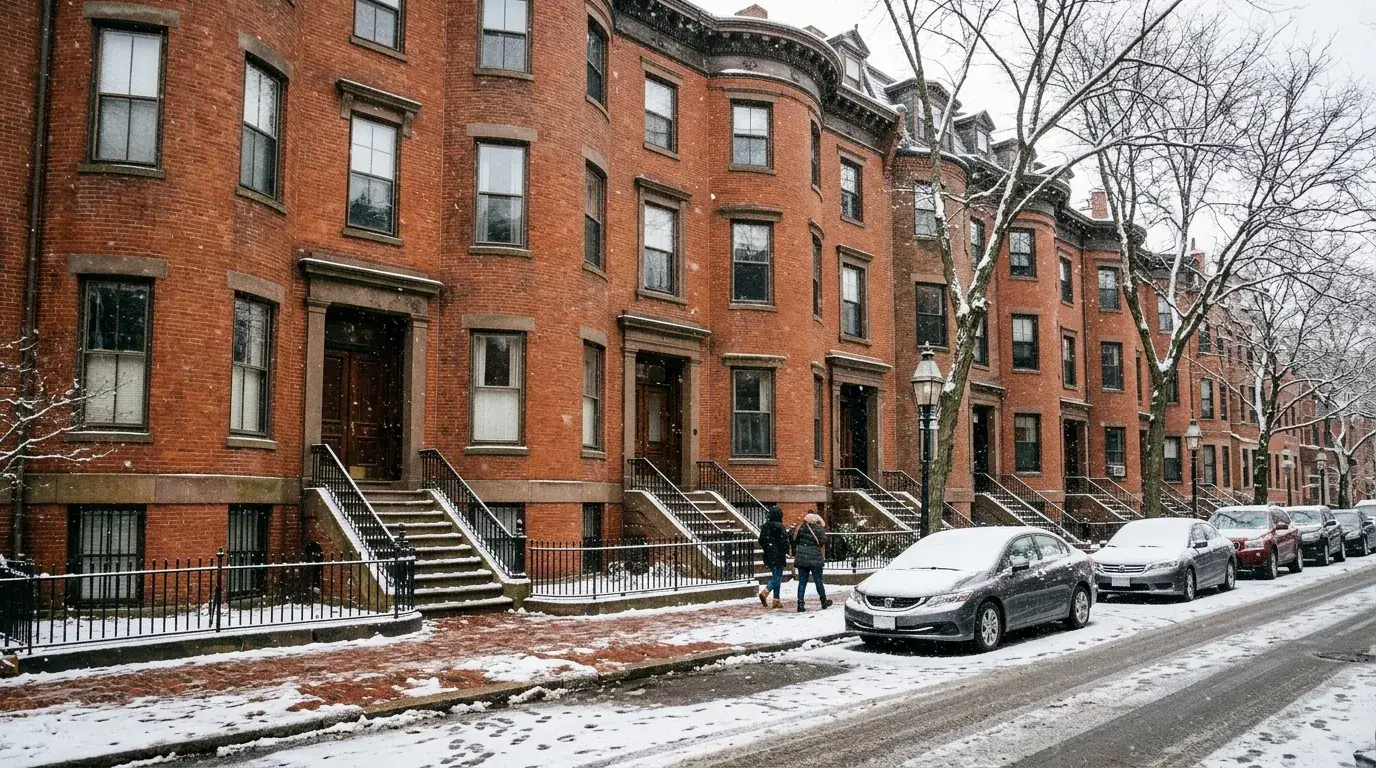
Boston's brick rowhouses and townhouses, in neighborhoods like the South End, Back Bay, Beacon Hill, Charlestown and parts of Cambridge, share party walls with their neighbors. Those shared walls lose little heat. The losses concentrate in:
- The roof and top floor, often a low-slope roof with little insulation.
- Front and rear walls, typically solid brick.
- Bay and bowfront windows, with thin walls, floors and ceilings.
- The basement or garden level, with stone or brick foundations.
- Chimneys and stair halls that connect floors.
The roof: biggest opportunity
Low-slope roofs on rowhouses often have little or no insulation. The best time to insulate is during roof replacement, adding rigid insulation above the deck. Between re-roofs, insulating from below with spray foam under the deck, or dense-packing closed roof cavities, can be options, designed to control condensation. See spray foam roof decks.
Bays and bowfronts
The floors, ceilings and thin walls of bay windows are often open to outdoor air. Sealing and insulating them, from inside or below, improves comfort in front rooms noticeably.
Brick walls
Solid masonry walls dry by passing moisture through the brick. Adding interior insulation makes the brick colder and wetter, which can raise the risk of freeze-thaw damage in some masonry. Interior insulation of brick walls should be based on an assessment of the brick, exposure and drainage. Many owners focus on the roof, bays, basement and air sealing first, which carry less risk. See mill and brick buildings.
Basements and garden levels
Seal and insulate the rim and the top of the foundation, manage moisture and insulate walls with moisture-tolerant materials if the level is finished. See basement insulation.
| Area | Typical approach |
|---|---|
| Low-slope roof | Insulation above the deck at re-roofing, or designed foam below |
| Top-floor ceiling | Air seal and insulate where accessible |
| Bays and bowfronts | Seal and insulate floors, ceilings and walls |
| Brick walls | Assess before interior insulation |
| Basement | Rim sealing, moisture control, foam on walls |
Many Boston neighborhoods are in historic or architectural conservation districts with rules for exterior changes. Most insulation work happens inside and under the roof, but check before changing windows or rooflines.
Codes in Boston
Boston has adopted the Specialized Opt-in Code for new construction and major renovations, so large projects should plan energy compliance early.
Top-floor comfort in rowhouses
Top-floor units and rooms under the roof are typically the coldest in winter and hottest in summer. Improving the roof is the most effective step, often combined with air sealing at skylights, roof hatches and penetrations.
Rowhouse basements and garden levels
Garden-level apartments are common in Boston rowhouses. They can be damp and cold. Sealing the rim, managing moisture and insulating walls with moisture-tolerant materials make these spaces more comfortable and healthier.
Party walls and fire separation
Party walls between rowhouses are typically masonry and serve as fire separation. Penetrations through party walls should be sealed with appropriate fire-rated materials. When renovating, maintain the integrity of these walls.
Condos in converted rowhouses
Many rowhouses are condominiums. Exterior walls, roofs and basements are usually common elements managed by the association. Insulation and roof projects require association approval and coordination among owners.
Heat pumps in rowhouses
Ductless or compact ducted heat pumps are common in rowhouse renovations. Outdoor units are often placed on roofs or rear decks. Historic district rules may affect visible equipment placement, so check before installation.
Talk to us about your rowhouse
BCI Group works in Boston, Cambridge and Somerville. Call (774) 278-8256 or request a free estimate.
Frequently asked questions
Where do Boston rowhouses lose the most heat?
Usually through the roof and top floor, bays, front and rear walls and the basement, since party walls lose little heat.
Can I insulate brick walls from inside?
Possibly, but the masonry should be assessed first because interior insulation changes how brick dries.
When is the best time to insulate a flat roof?
During roof replacement, when insulation can be added above the deck.
Do historic district rules affect insulation?
They mainly affect exterior changes. Most insulation work is inside or under the roof.
Is Mass Save® available in Boston?
Yes, for customers of sponsoring utilities, including Eversource and National Grid.
Services mentioned in this article
Spray Foam Insulation near you in Massachusetts
BCI Group crews work in these communities every week. See local details for spray foam in your town: