Key takeaways
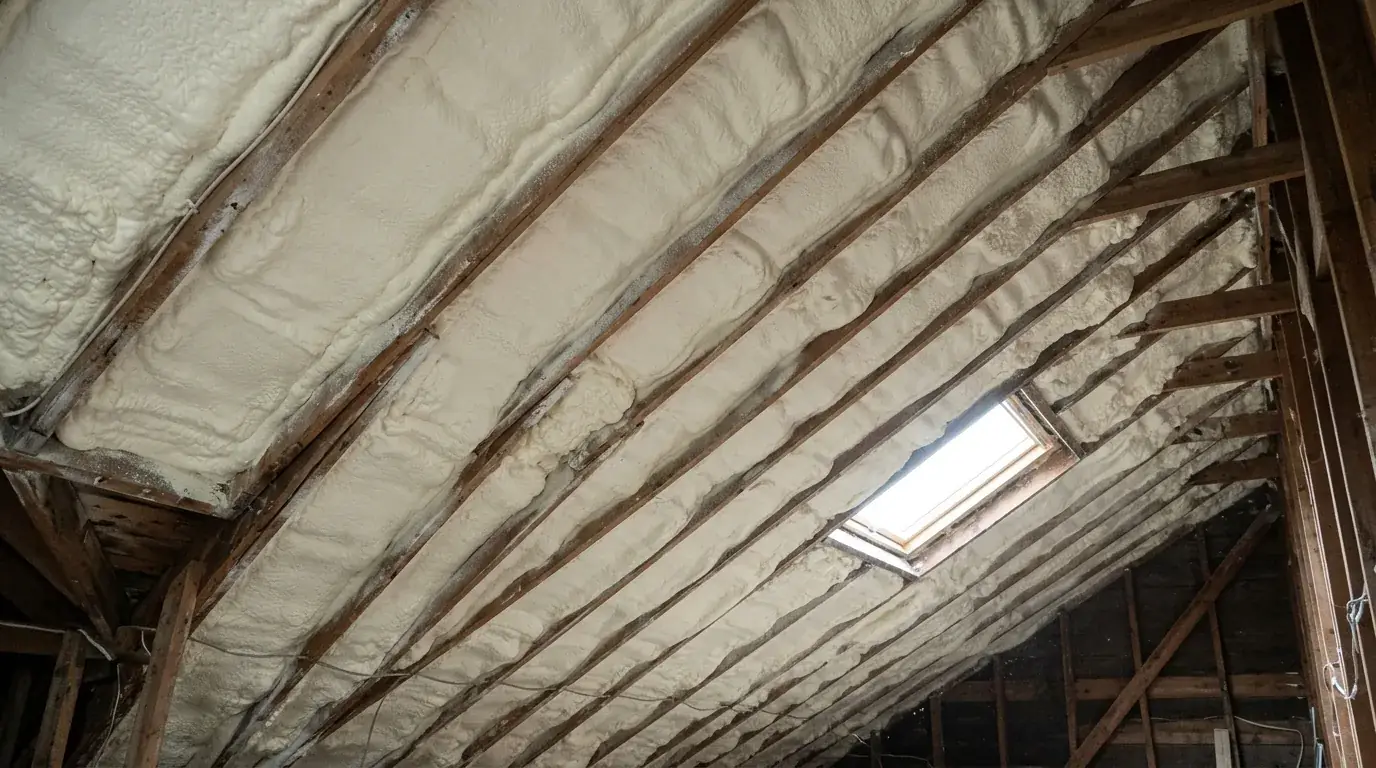
- Roof deck foam is used for unvented attics, cathedral ceilings and finished attic spaces.
- In cold climates, condensation at the roof deck must be controlled; closed-cell foam is the common choice.
- Codes set the minimum foam thickness and the required covering.
- Done right, it stops ice dams, brings ducts inside and makes finished attics comfortable.
When roof deck foam is used
- Unvented attics where HVAC equipment or ducts sit in the attic. See unvented attics.
- Cathedral and vaulted ceilings where the rafter depth is limited. See cathedral ceiling insulation.
- Finished attics and bonus rooms with sloped ceilings.
- Complex roofs with dormers and valleys where air sealing the attic floor is impractical.
Why closed-cell is the usual choice in Massachusetts
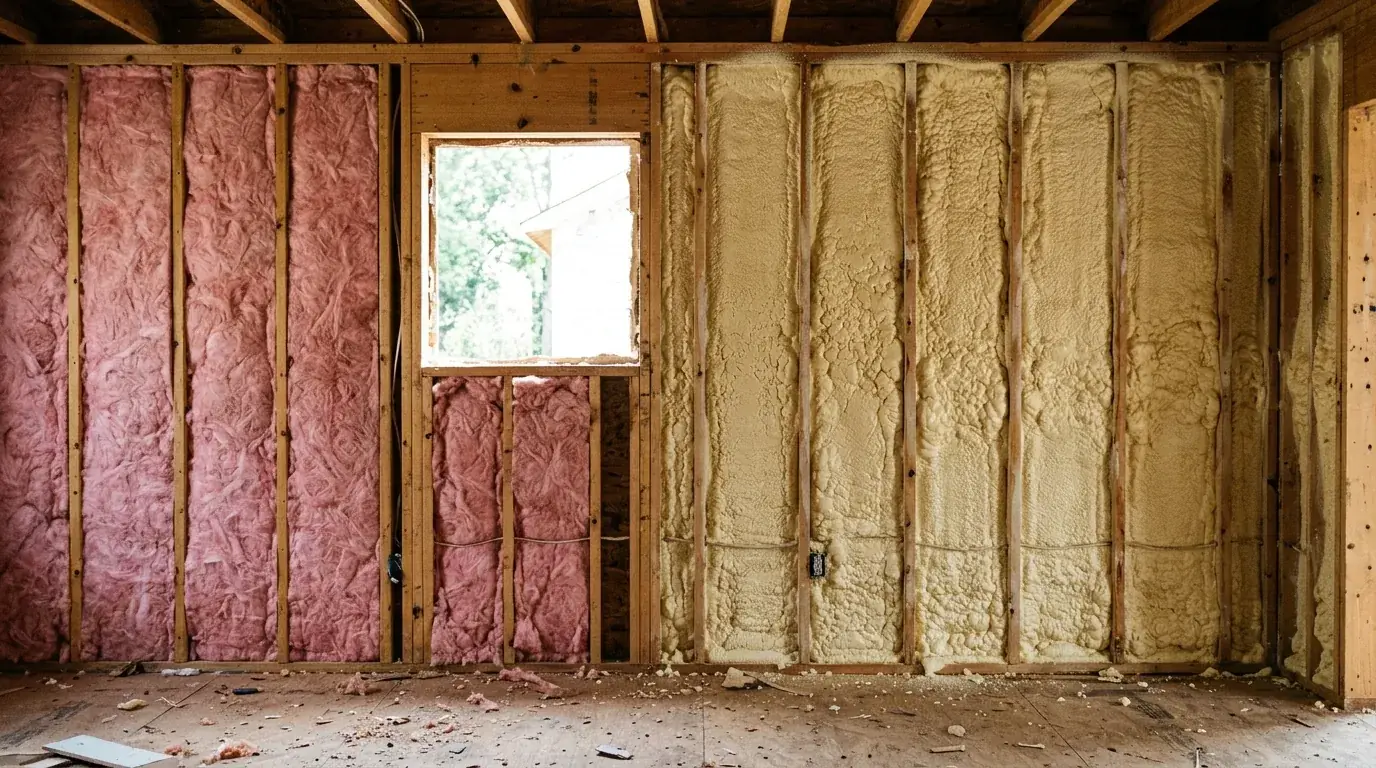
In winter, the roof deck is cold. If warm, moist indoor air reaches it, water condenses and the wood can rot. Closed-cell foam solves that because it is both an air barrier and a vapor retarder, and its high R-value per inch keeps the surface where it meets the wood warm enough to avoid condensation. It also adds some rigidity to the roof.
Open-cell foam can be used in some designs, but it is vapor-open, so cold-climate codes require additional vapor control. See open-cell vs. closed-cell.
How thick?
Code requirements for the climate zone set the total R-value for the roof assembly and, for unvented designs, the minimum amount of air-impermeable insulation at the deck. In shallow rafters, closed-cell foam may be combined with other insulation to reach the target. Your installer should specify thickness and R-value in writing.
| Concern | How it is addressed |
|---|---|
| Condensation at the deck | Air-impermeable foam at code-required thickness |
| Total R-value | Foam alone or foam plus other insulation |
| Fire safety | Thermal barrier (drywall) in living spaces; ignition barrier or coating in attics |
| Roof leaks | Fix roofing before spraying; foam makes leaks harder to find |
What about shingles and roof leaks?
People ask whether foam under the deck "cooks" shingles. Research has generally found that shingle temperatures rise only slightly in insulated-deck assemblies. Follow the shingle manufacturer's guidance and local code. The bigger practical issue is leaks: foam can hide a small roof leak for a while, so the roof should be in good condition before spraying.
If you are replacing the roof soon, consider whether insulation above the deck during the re-roof is an option, and coordinate the work.
Ice dams
Because the roof deck no longer sees heat from the house, foam at the roof deck is very effective against ice dams, especially in capes and finished attics where floor-level fixes are difficult.
Roof deck foam in different roof types
| Roof | Considerations |
|---|---|
| Gable roof with attic | Spray deck and gable walls; attic becomes conditioned |
| Hip roof | More roof area relative to floor; more foam needed |
| Cathedral ceiling | Limited depth; closed-cell or hybrid assemblies |
| Low-slope roof | Often better insulated above the deck during re-roofing |
| Roof with skylights | Careful detailing around skylight wells |
| Metal roof | Closed-cell bonds well; condensation control is key |
Preparing for roof deck foam
- Fix leaks first: look for stains, wet sheathing and daylight at nails.
- Check the sheathing: damaged or delaminated plywood should be replaced.
- Clear the attic: move stored items and protect anything that stays.
- Plan for wiring and fixtures: electrical work at the roofline should be completed before spraying.
- Coordinate ventilation changes: soffit and ridge vents are closed in unvented designs.
Hybrid assemblies
When rafters are deep enough, a layer of closed-cell foam against the deck can be combined with fibrous insulation below it. The closed-cell layer controls condensation; the fibrous layer adds R-value at a lower cost. Codes specify the minimum share of the total R-value that must be air-impermeable insulation in cold climates for these designs to work.
Long-term care
- Inspect the roof every few years and after major storms.
- Watch for stains on the foam surface, which could indicate a roof leak.
- Keep required ignition barriers or coatings intact.
- If the roof is ever replaced, tell the roofer the deck is foamed underneath.
When we recommend something else
If the roof is due for replacement soon, insulation above the deck during re-roofing may be the better long-term solution. If the attic is simple and has no ducts, sealing and insulating the attic floor is usually better value.
Talk to us about your roof
BCI Group designs and installs roof deck foam with code-compliant coverings. Call (774) 278-8256 or request a free estimate. Learn more on our spray foam and fire retardant paint pages.
Frequently asked questions
Is spray foam under the roof deck a good idea?
It can be, especially for unvented attics, cathedral ceilings and finished attics, when designed to code for a cold climate.
Does spray foam under the roof void shingle warranties?
Policies vary by manufacturer. Check the shingle manufacturer’s guidance before spraying.
Can roof deck foam cause rot?
Correctly designed closed-cell assemblies control condensation. Problems arise with the wrong product or thickness, or with roof leaks.
Does roof deck foam stop ice dams?
Yes, it is very effective because heat from the house no longer reaches the roof deck.
Do I need ventilation with roof deck foam?
In an unvented design, the roof vents are closed. The house itself still needs proper mechanical ventilation.
Services mentioned in this article
Spray Foam Insulation near you in Massachusetts
BCI Group crews work in these communities every week. See local details for spray foam in your town: