Key takeaways
- Older homes leak air through countless gaps and usually have empty walls.
- Start with air sealing at the attic and basement, then insulate the attic.
- Dense-pack cellulose insulates plaster walls without demolition.
- Fix water problems and watch moisture: old houses need to dry.
Old houses work differently
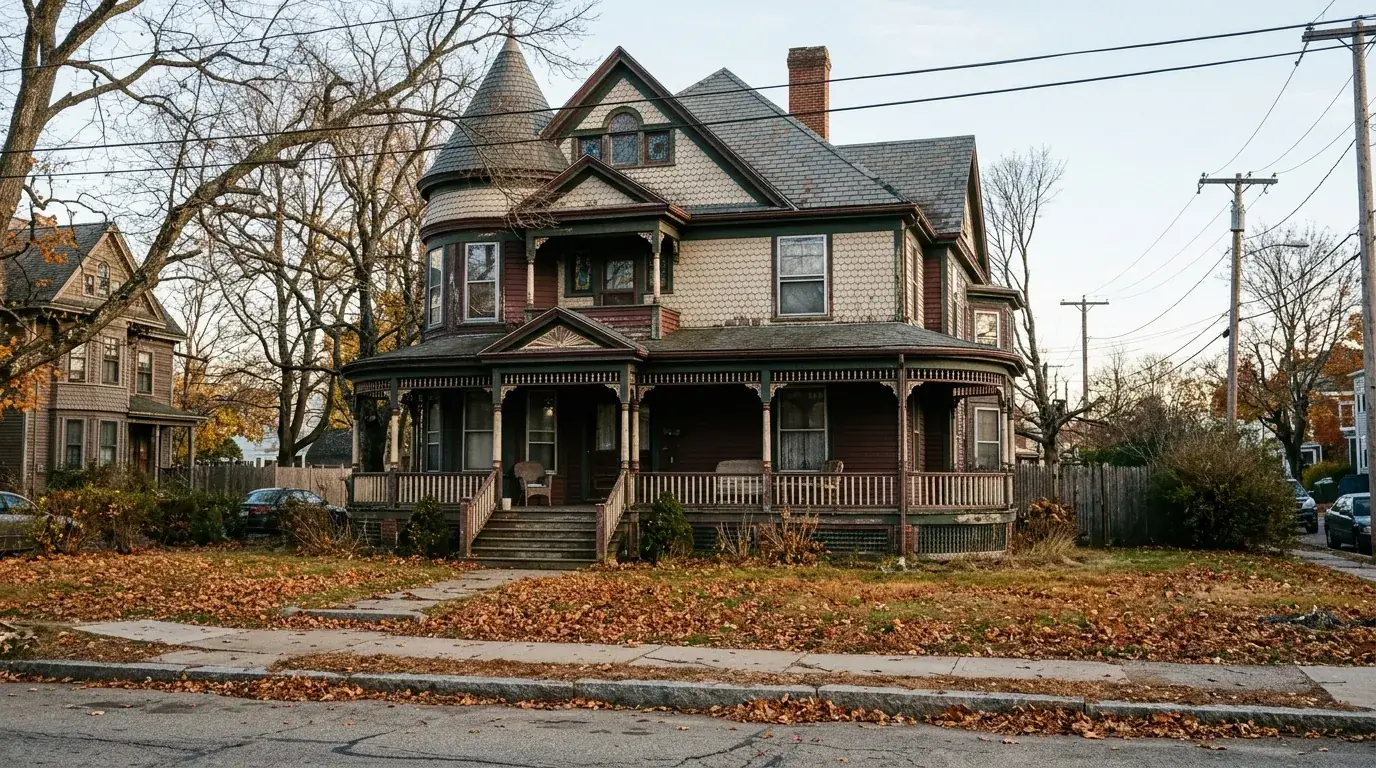
Homes built before the 1940s, from 18th-century capes and farmhouses to Victorian and early 1900s houses, were built without insulation and without air barriers. They stayed dry partly because heat and air moved through the walls freely. Insulating them is safe and very effective, but it should be done in an order that respects how they handle moisture.
The right order
- Fix water: roof leaks, gutters, flashing, grading and failed paint on siding.
- Address barriers: knob-and-tube wiring, vermiculite, combustion safety. See pre-weatherization barriers.
- Air seal the attic floor and the top of balloon-framed walls.
- Insulate the attic to R-49 or more.
- Seal and insulate the basement rim joists and sill.
- Insulate walls with dense-pack cellulose.
- Ventilation checked and added as needed.
Plaster walls
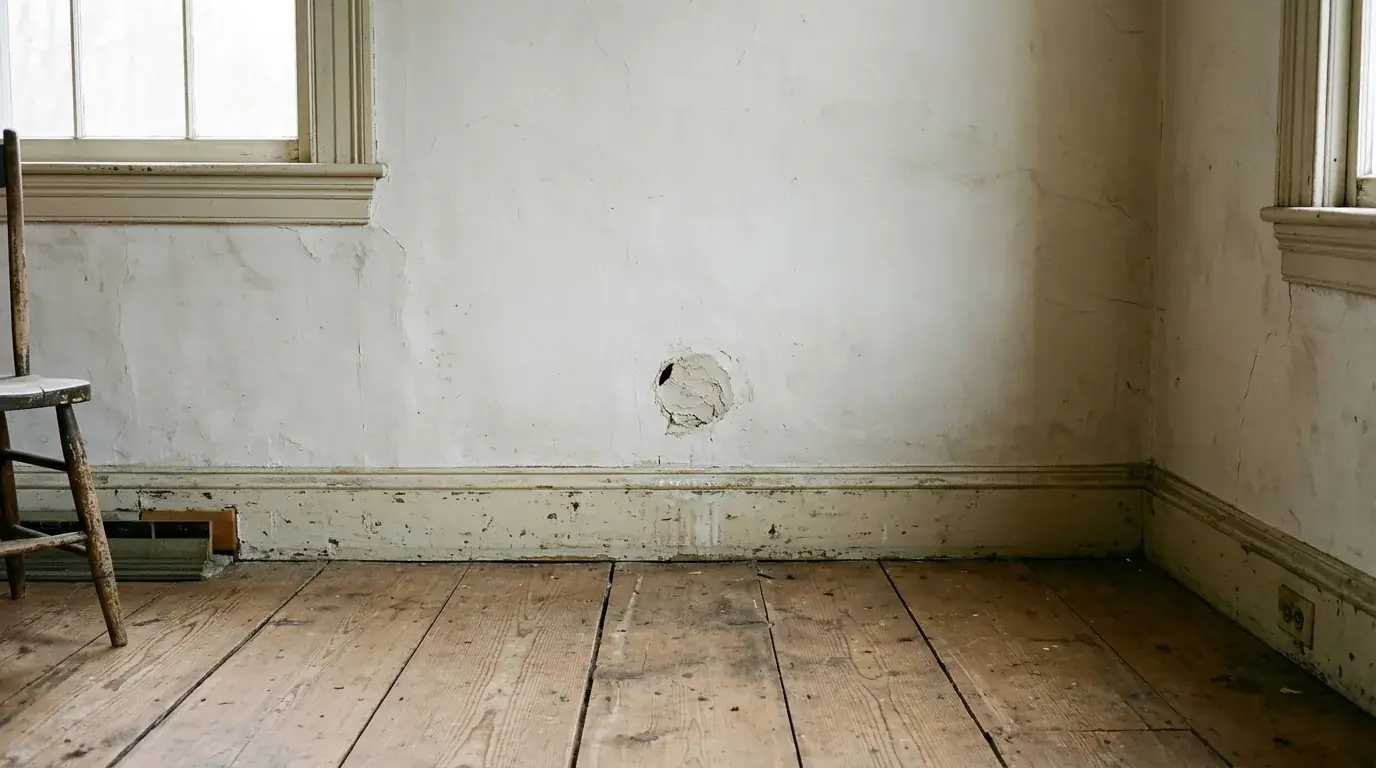
Plaster and lath walls are durable and quiet, and there is no reason to remove them. Dense-pack cellulose fills the cavities through small holes, either from the outside under lifted clapboards or shingles, or from inside through the plaster with careful patching. See dense-pack cellulose.
Stone and brick foundations
Many old Massachusetts homes sit on fieldstone or brick foundations that can be damp. Spray foam on the rim joist and sill seals the worst air leaks. Insulating the stone walls themselves requires managing water first; see basement humidity and spray foam basement walls.
Moisture: the main caution
Insulated walls are colder on the outside, so they dry more slowly. That is why bulk water must be controlled and interior humidity kept reasonable. Cellulose is a good fit because it can absorb and release small amounts of moisture. Bath fans that vent outside and a dry basement help the whole house.
| Old house feature | Insulation approach |
|---|---|
| Plaster and lath walls | Dense-pack cellulose |
| Balloon framing | Dense-pack plus sealing at top and bottom |
| Wide board attic floors | Air seal gaps, then blow insulation |
| Fieldstone foundation | Rim joist foam; water management before wall insulation |
| Original windows | Storm windows and weatherstripping |
Many antique homes have additions with low roofs and no access. These often need creative solutions like dense-packing from the eaves.
Antique homes in Central Massachusetts
Towns like Grafton, Sutton, Upton, Millbury and Holden have many 18th- and 19th-century farmhouses and village homes. Their colder winters make air sealing and insulation especially valuable. See New England farmhouse insulation.
Plaster's benefits
Plaster walls are dense, durable, quiet and relatively airtight compared with gaps around them. Keeping plaster preserves these benefits and avoids the cost and mess of demolition. Insulating behind it with dense-pack cellulose adds thermal performance without losing character.
Typical old-house leak points
| Location | Why it leaks |
|---|---|
| Top of balloon-frame walls | Open to the attic |
| Bottom of walls at the sill | Open to the basement |
| Around chimneys | Gaps in framing at each floor |
| Pocket doors | Open cavities in walls |
| Built-in cabinets on exterior walls | Gaps behind cabinets |
| Old plumbing and gas lines | Holes through floors and walls |
Lead paint and old houses
Many older homes have lead paint. Drilling, sanding or removing painted surfaces must follow lead-safe practices. Professional contractors use containment and cleanup procedures to protect occupants, especially children.
Old houses and heat pumps
Old homes can be electrified successfully after weatherization. The key is reducing the heating load enough that a reasonably sized system can keep up. In very old homes, a hybrid approach with existing radiators as backup is common.
A phased approach
- Water and safety issues.
- Attic and basement air sealing.
- Attic insulation.
- Walls.
- Windows (storms or repair).
- Heating system upgrades.
Insulate your old house the right way
BCI Group has insulated older homes across Massachusetts for years, from our Westborough base. Call (774) 278-8256 or request a free estimate.
Frequently asked questions
Is it safe to insulate an old house?
Yes, when water problems are fixed first, barriers are addressed and moisture is managed.
How do you insulate plaster walls?
Dense-pack cellulose is blown into the cavities through small holes from outside or inside.
Should I remove plaster to insulate?
Usually not. Dense-pack insulates without demolition and keeps the plaster’s benefits.
Will insulation cause rot in my old house?
Not when bulk water is controlled and humidity is managed. Cellulose handles small amounts of moisture well.
Where should I start insulating an old house?
Air sealing and insulating the attic, then the basement rim joists, then the walls.
Services mentioned in this article
Blown-In Cellulose near you in Massachusetts
BCI Group crews work in these communities every week. See local details for blown-in cellulose in your town: