
Key takeaways
- Colonials lose most heat through the attic, the basement and the transitions between spaces.
- Garrisons have a cantilevered overhang whose floor is often poorly insulated and leaky.
- Rooms over attached garages are a common cold spot in newer colonials.
- Air sealing the attic and rim joists plus targeted insulation solves most problems.
The colonial at a glance
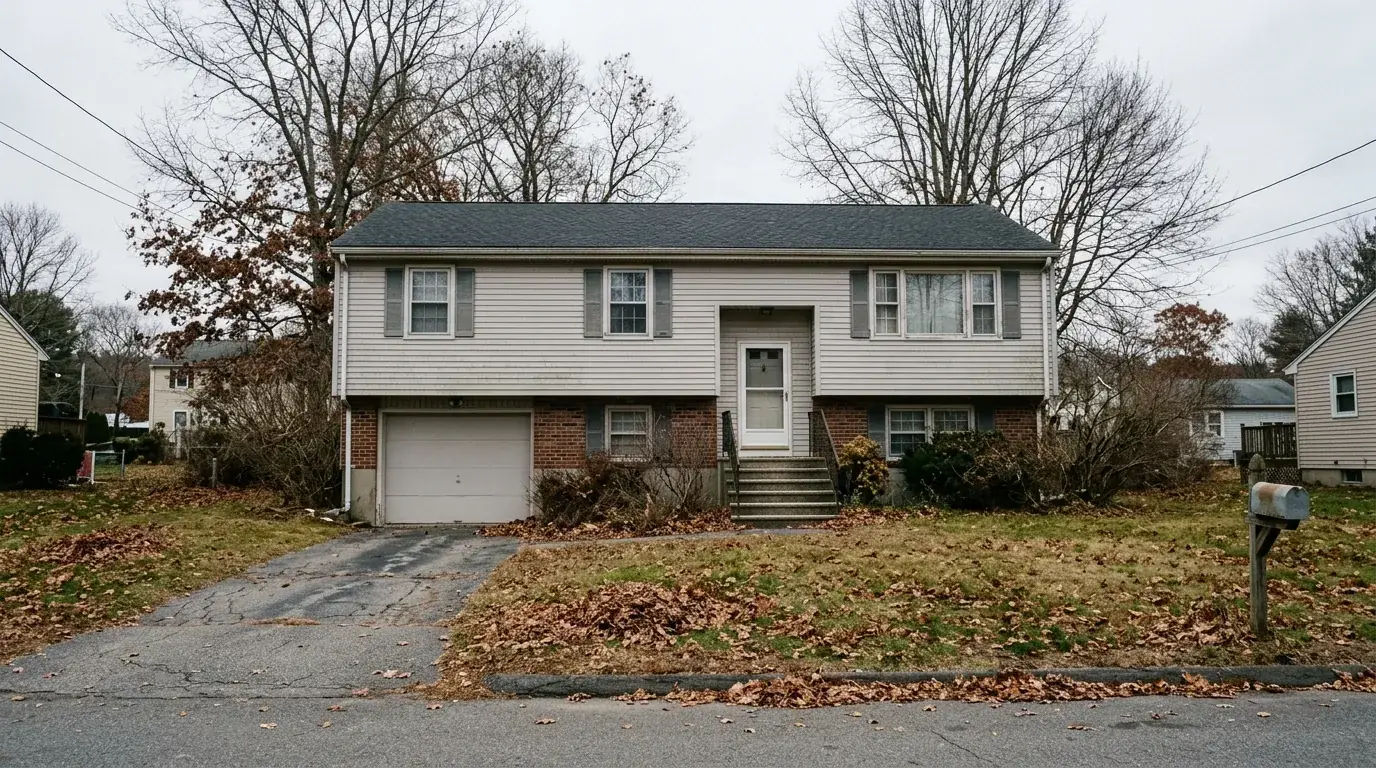
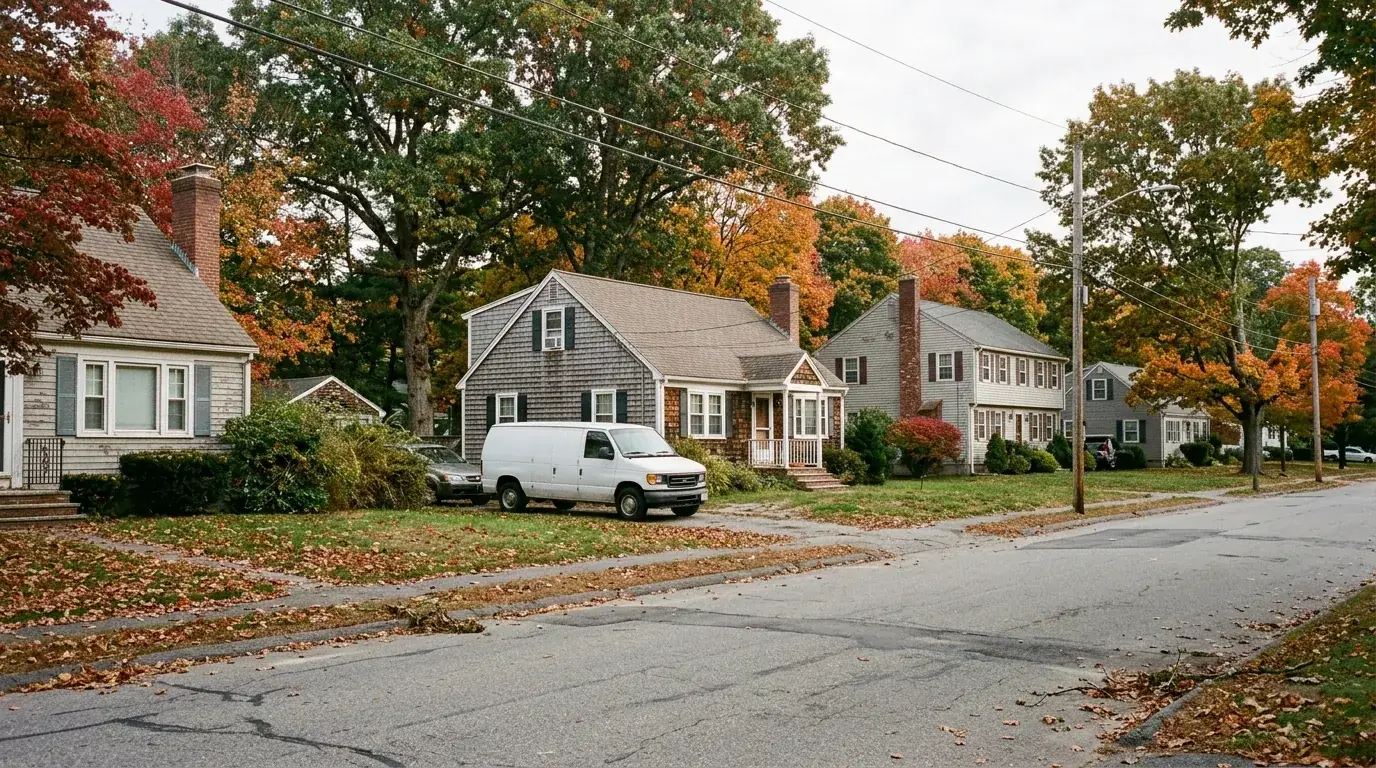
Two full stories, a simple gable roof and a basement: the colonial is the most common house style in many Massachusetts suburbs, from older center-entrance homes to the 1970s through 2000s subdivisions around Westborough, Hopkinton, Sudbury, Franklin and Holliston. Garrison colonials add a second floor that overhangs the first by a foot or so.
Where colonials lose heat
The attic
Large, simple attics are easy to access, which makes them the best place to start. Older colonials often have thin insulation; newer ones often have many air leaks around recessed lights, bath fans and the attic hatch. See attic air sealing.
The basement and rim joists
Long rim joists around the whole house leak cold air. See rim joist insulation.
The garrison overhang
The floor of the overhang sits over outdoor air. It is often filled with a thin batt and open to wind at the ends. Dense-pack cellulose or spray foam through the soffit under the overhang fixes it. See cold floors.
Rooms over the garage
In colonials with attached garages, bedrooms or bonus rooms over the garage are often the coldest rooms. See cold room above the garage.
Walls in older colonials
Pre-1960 colonials often have empty walls. Dense-pack cellulose fills them. See insulating existing walls.
| Problem | Typical fix |
|---|---|
| Cold upstairs, ice dams | Attic air sealing + R-49 to R-60 |
| Cold first-floor floors | Rim joist foam |
| Cold floor at garrison overhang | Dense-pack or spray foam the overhang |
| Cold bonus room | Fill floor over garage, seal knee walls |
| Drafty walls (older homes) | Dense-pack cellulose |
Second floor too hot in summer?
The same attic problems make colonials' second floors hot in summer, especially with ducts in the attic. See upstairs too hot.
Many 1980s to 2000s colonials have decent insulation but large air leaks. A blower door test shows where.
Colonials by era
| Era | Typical features | Common upgrades |
|---|---|---|
| Pre-1940 center-entrance | Plaster walls, balloon framing | Dense-pack walls, attic, rim joists |
| 1950s to 1970s garrisons | Overhangs, modest insulation | Overhang floors, attic top-up, rim joists |
| 1980s to 1990s | Bonus rooms, recessed lights | Air sealing, bonus room floors and knee walls |
| 2000s and newer | Larger homes, attic HVAC | Attic air sealing, duct sealing, targeted fixes |
Front-to-back air paths
Many colonials have a central stairway and chimney that connect the basement to the attic. Sealing around the chimney at each floor where accessible and at the attic reduces the stack effect significantly.
Family room additions
Family rooms added off the back of colonials often sit on crawl spaces or slabs and have cathedral ceilings. They tend to be the coldest rooms in winter. Crawl space encapsulation and cathedral ceiling improvements usually solve the problem.
Attic access in colonials
Attic hatches in closets or hallways are often loose panels. Pull-down stairs are worse, with large gaps around the frame. Insulated, airtight covers make a noticeable difference.
Planning a whole-house upgrade
A typical colonial plan: attic air sealing and insulation, rim joist foam, bonus room floor and knee walls, garrison overhang, and walls if empty. Done together, these upgrades transform comfort throughout the house.
Upgrade your colonial
BCI Group insulates colonials and garrisons across MetroWest and Central Massachusetts. Call (774) 278-8256 or request a free estimate.
Frequently asked questions
Where do colonial houses lose the most heat?
Usually through the attic and basement, plus transitions like garrison overhangs and rooms over garages.
How do you insulate a garrison overhang?
By dense-packing cellulose or spraying foam into the overhang floor from below and sealing its ends.
Why is the bedroom over my garage cold?
The floor over the unheated garage and the knee walls are usually under-insulated and leaky.
Do newer colonials need insulation upgrades?
Many have adequate insulation but significant air leaks that are worth sealing.
Does Mass Save® cover colonial homes?
Yes. Attic, wall, basement and floor insulation are common measures for eligible customers.
Services mentioned in this article
Blown-In Cellulose near you in Massachusetts
BCI Group crews work in these communities every week. See local details for blown-in cellulose in your town: