Key takeaways
- Many older Massachusetts homes have empty exterior walls.
- Dense-pack cellulose through small holes is the most common, least invasive option.
- Re-siding is the best time to add continuous exterior foam over the sheathing.
- Opening walls during a renovation allows spray foam or batts with full air sealing.
Do your walls need insulation?
If your home was built before about 1960, there is a good chance the exterior walls are empty. Signs include cold walls to the touch, drafts at outlets (drafty outlets), and snow melting quickly off the siding. To check, turn off the power, remove an outlet cover on an exterior wall and look beside the box with a flashlight, or have an infrared scan done.
Option 1: Dense-pack cellulose (least invasive)
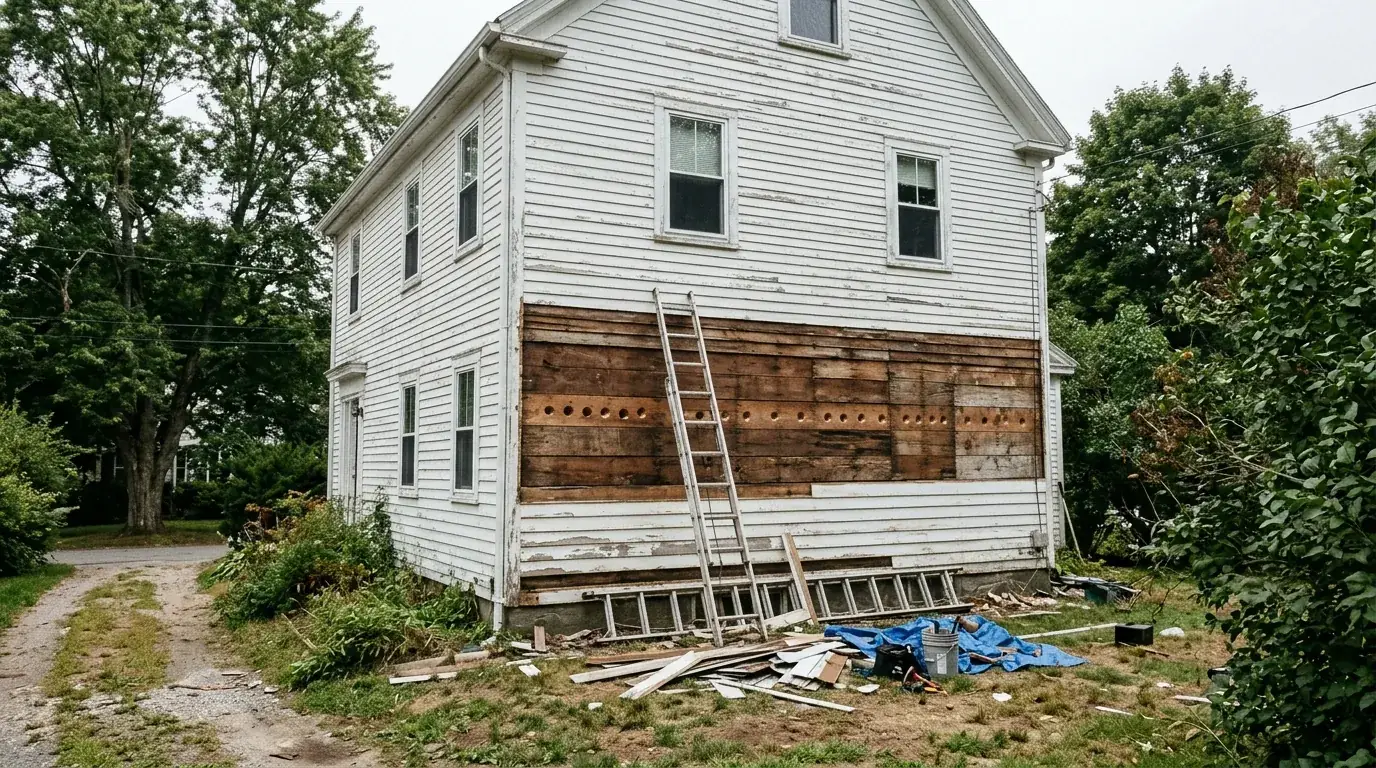
Cellulose is blown at high density through small holes into each wall cavity, from outside under lifted siding or from inside through plaster. Holes are plugged and siding is reinstalled. It fills around wires and blocking, resists settling and slows air movement. It is the standard method in older homes and a common Mass Save® measure. See dense-pack cellulose walls.
Option 2: Injection foam
Some foam products are designed to be injected into closed walls. They can add R-value, but must be installed carefully to avoid gaps and excessive pressure on the wall finishes. For most older Massachusetts homes, dense-pack cellulose is the more common choice.
Option 3: Exterior insulation during re-siding
When the siding is being replaced, rigid foam board can be installed over the sheathing before the new siding goes on. This continuous layer reduces thermal bridging through the studs. Combined with dense-pack in the cavities, it creates a very high-performing wall. It requires attention to window and door trim, flashing and the drainage plane.
Option 4: Opening the walls
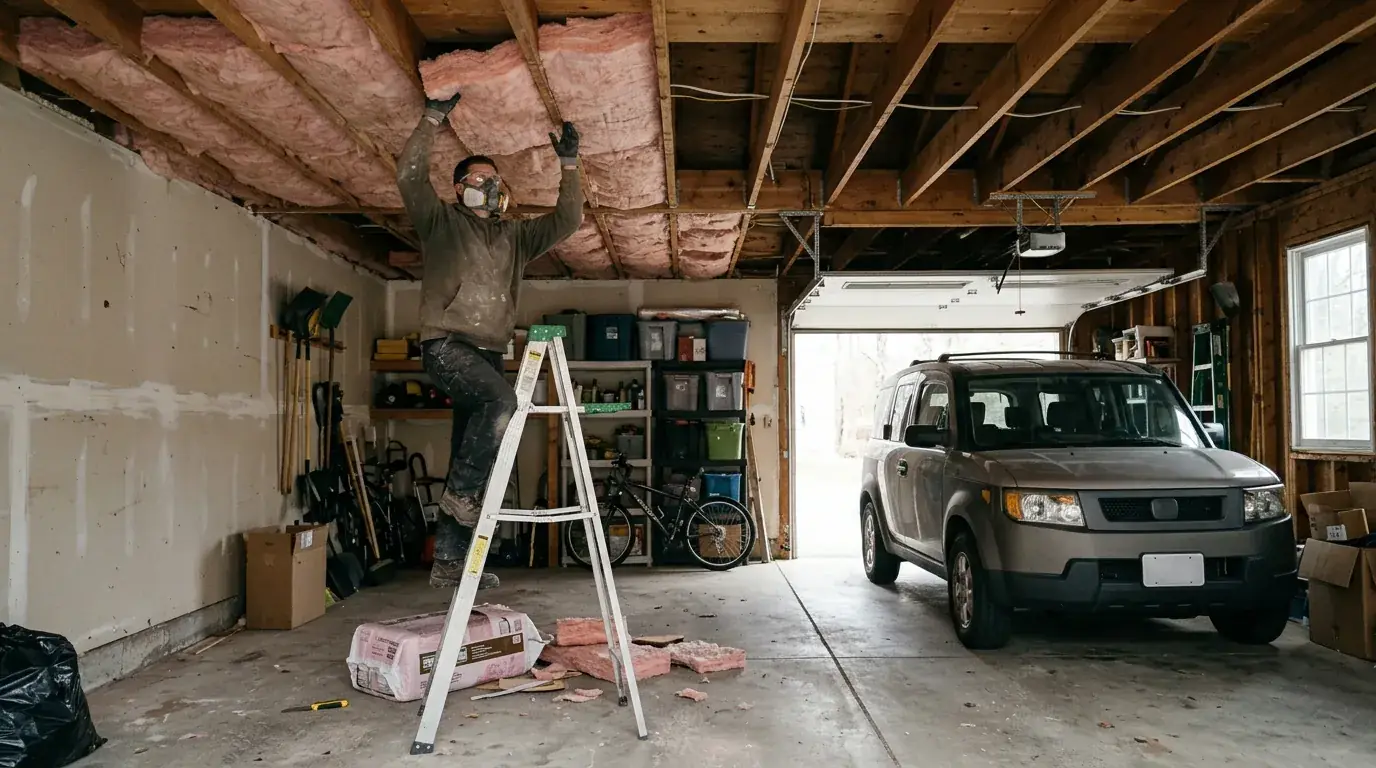
During a major renovation, when plaster or drywall is coming off anyway, walls can be air sealed and insulated with spray foam, mineral wool or fiberglass, just like new construction.
| Option | Invasiveness | Performance | Best time |
|---|---|---|---|
| Dense-pack cellulose | Low | Good; fills and slows air | Any time |
| Injection foam | Low | Varies by product and installer | Any time |
| Exterior rigid foam | Medium | Excellent with cavity insulation | When re-siding |
| Open walls + foam or batts | High | Excellent | During renovation |
Live knob-and-tube wiring must be addressed, and water leaks at windows or siding should be fixed. See pre-weatherization barriers.
Brick and masonry homes
Solid masonry walls, common in older Boston neighborhoods, behave differently and need careful moisture analysis before insulating. See brick rowhouse insulation.
How to check what is in your walls
- Outlet check: with power off, remove an outlet cover on an exterior wall and look into the gap with a flashlight.
- Small inspection hole: in a closet, a small hole can reveal what is inside.
- Infrared scan: on a cold day, shows empty or partially filled cavities.
- Attic or basement view: in balloon-framed homes, you may see into wall cavities from above or below.
Walls with partial insulation
Some walls have old batts that have slumped, leaving the top of the cavity empty. Others have thin batts in deep cavities. Dense-pack cellulose can sometimes be added to fill the voids around old material, depending on what is there. A scan helps decide.
Exterior insulation details
When adding rigid foam during re-siding:
| Detail | Why it matters |
|---|---|
| Window and door extensions | Trim must be extended to the new wall depth |
| Water-resistive barrier | Must be continuous and lapped correctly |
| Flashing | Windows, doors and penetrations need proper flashing |
| Fastening | Longer fasteners for siding through foam |
| Rainscreen gap | Often recommended behind siding |
Lead-safe practices
In pre-1978 homes, any drilling or removal of painted surfaces must follow lead-safe practices. Professional contractors use containment, HEPA vacuums and cleaning procedures.
Wall insulation and moisture
Insulated walls are colder on the outside, so they dry more slowly. Before insulating, make sure siding, trim, windows and flashing keep water out, and that interior humidity is controlled.
Get your walls insulated
BCI Group insulates existing walls across Massachusetts with dense-pack cellulose and spray foam. Call (774) 278-8256 or request a free estimate.
Frequently asked questions
Can you insulate walls without removing drywall or plaster?
Yes. Dense-pack cellulose is blown through small holes from outside or inside and the holes are patched.
What is the best insulation for existing walls?
Dense-pack cellulose is the most common and cost-effective choice for closed walls in older homes.
Is injection foam better than cellulose?
Both can work. Dense-pack cellulose is more common in older New England homes and is less likely to stress wall finishes.
Should I add foam when I replace my siding?
Re-siding is the best time to add continuous rigid foam over the sheathing, if trim and flashing details are planned.
Will wall insulation help with noise?
Yes. Filled cavities reduce outside noise noticeably.
Services mentioned in this article
Blown-In Cellulose near you in Massachusetts
BCI Group crews work in these communities every week. See local details for blown-in cellulose in your town: