
Key takeaways
- Attic insulation cost depends on area, target R-value, existing insulation, air sealing scope and access.
- Air sealing is labor-intensive but gives much of the benefit.
- Removing old or contaminated insulation adds cost; adding on top of clean, dry insulation saves it.
- Mass Save® can cover a large share of approved attic insulation and air sealing for eligible customers.
What you are paying for
An attic insulation project has several parts, and quotes differ mainly in what they include:
- Air sealing the attic floor: chimneys, plumbing stacks, wiring holes, top plates, lights and the hatch.
- Prep work: baffles at the eaves, dams around the hatch and equipment, covering or protecting recessed lights.
- Insulation material blown to the target depth.
- Removal, if the old insulation is wet, moldy, contaminated or needs to come out for access.
- Safety and ventilation items, like venting bath fans outside.
The main cost factors
| Factor | Effect on cost |
|---|---|
| Attic floor area | More area, more material and time |
| Target R-value | R-60 needs more material than R-38 |
| Existing insulation | Adding on top of clean insulation costs less |
| Air sealing complexity | Many penetrations, dropped soffits or balloon framing take more time |
| Access | Tight attics, low slopes and no floor boards slow the work |
| Removal | Adds labor and disposal |
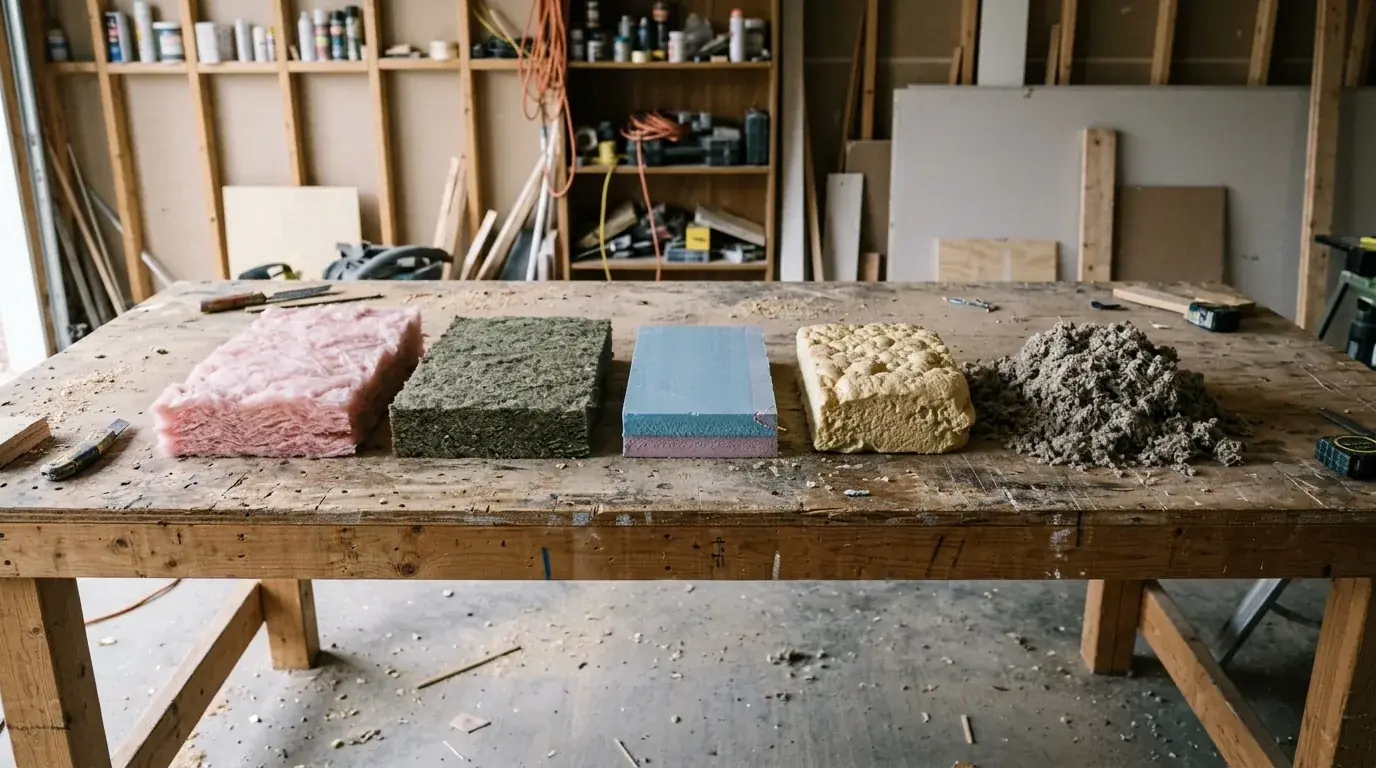
| Material | Cellulose and fiberglass are both economical; spray foam costs more |
Why air sealing deserves its share of the budget
Air sealing is mostly labor: a crew working in the attic to find and seal dozens of gaps. It does not show in the finished attic, so it is tempting to skip it to lower the price. Do not. Air leaks are often responsible for a large share of attic heat loss, as well as ice dams and moisture problems. See why air sealing comes first.
When removal is needed
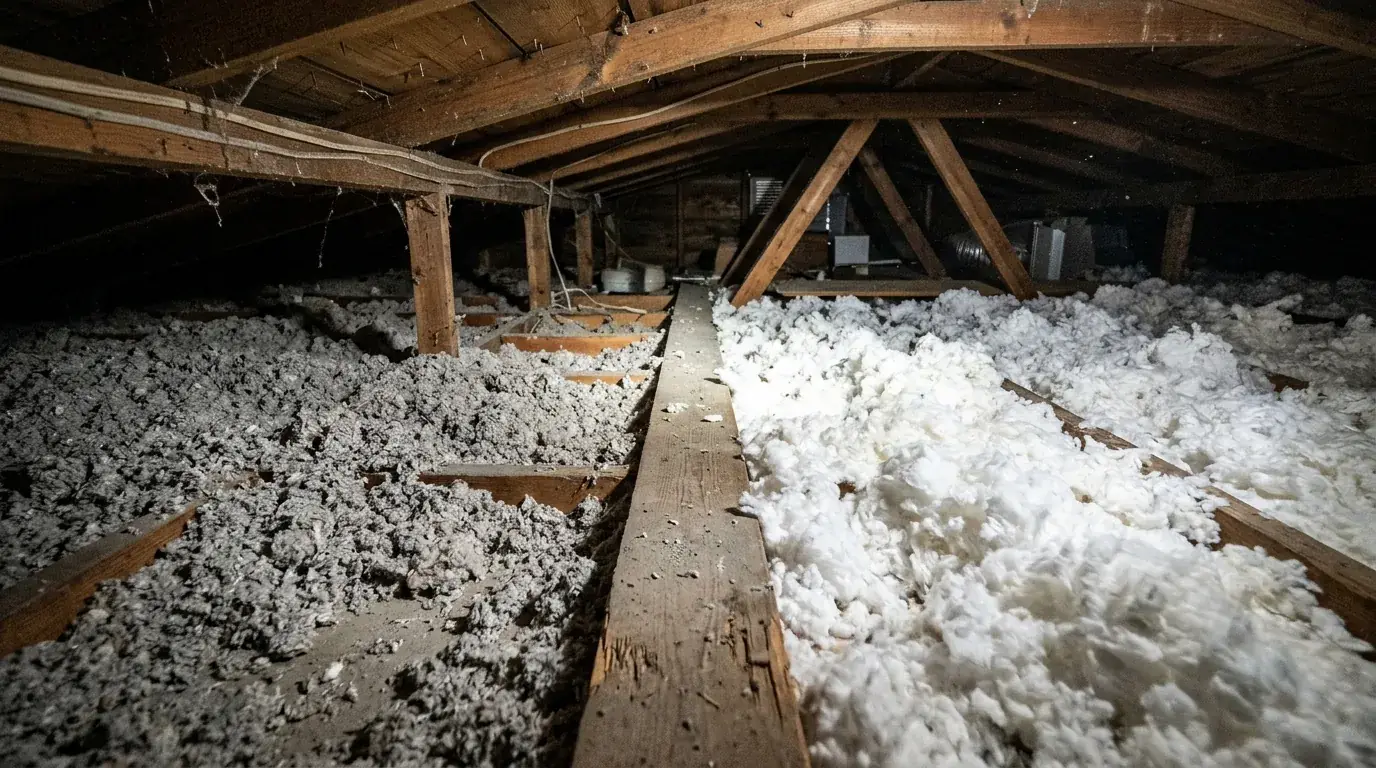
Old insulation does not always have to come out. Clean, dry insulation can stay and new insulation goes on top, after air sealing. Removal is needed when insulation is:
- Wet, moldy or contaminated by animals.
- Vermiculite that may contain asbestos (handled by licensed professionals). See vermiculite.
- Blocking major air sealing work that cannot be done otherwise.
How Mass Save® changes the math
For eligible customers, Mass Save® offers no-cost targeted air sealing and rebates of 75% or more on approved insulation, up to 100% for income-eligible households. The rebate is applied to your price by the participating contractor. See Mass Save® insulation rebates.
Ask each contractor for the R-value, depth, material, air sealing scope, baffles and any removal in writing.
What you get for it
A properly sealed and insulated attic typically means lower heating and cooling bills, warmer upstairs rooms in winter, cooler ones in summer and fewer ice dams. It is one of the few home improvements that pays you back every month.
A sample scope, described
For a typical 1,000-square-foot attic floor in an older home, a complete project might include:
- Sealing a dozen or more top plates, wire and pipe penetrations.
- Sealing the chimney chase with metal and fire-rated sealant.
- Covering a dropped kitchen soffit with rigid foam.
- Installing baffles at every rafter bay over the eaves.
- Weatherstripping and insulating the attic hatch.
- Rerouting a bath fan duct to a roof cap.
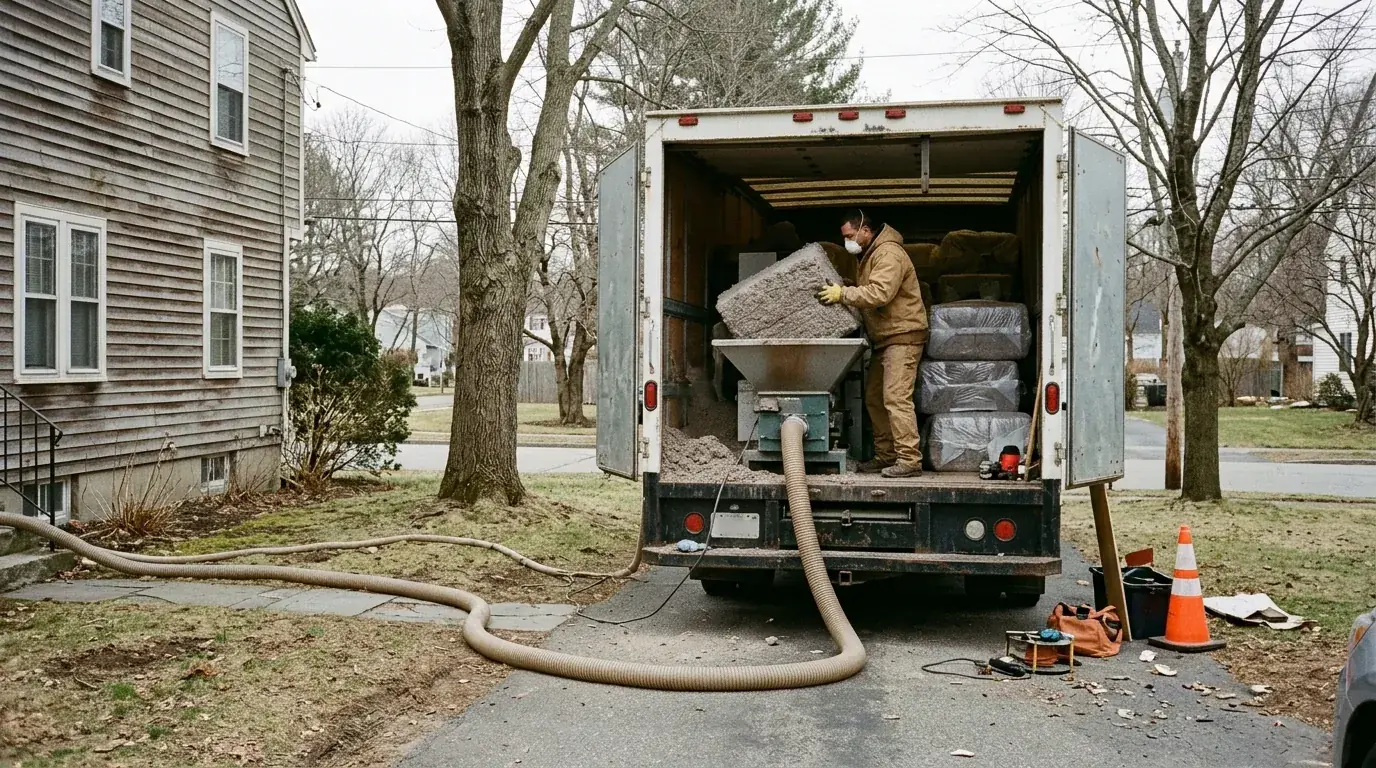
- Blowing cellulose to the target R-value.
- Installing depth rulers and a certificate.
Each item adds value; leaving any out reduces performance.
Cost vs. value
| Option | Upfront cost | Performance |
|---|---|---|
| Insulation only, no air sealing | Lower | Leaks remain; ice dams may continue |
| Air sealing + insulation | Moderate | Strong comfort and savings |
| Air sealing + insulation + removal | Higher | Best when old material is contaminated |
| Spray foam at the roof deck | Highest | Best for complex attics with HVAC |
Getting multiple quotes
When comparing contractors, use the same scope for each: same R-value, same air sealing items, same baffles and same removal assumptions. The lowest price often leaves something out.
Financing and incentives
For eligible Mass Save® customers, incentives and the 0% HEAT Loan can make attic projects very affordable. In municipal light plant towns, check local rebates. See Mass Save® insulation rebates and municipal light plant towns.
Timing
Late spring through early fall is the most comfortable time to work in attics, and it gets the job done before ice dam season. Summer attics are hot, so crews often start early in the day.
Get a clear quote
BCI Group insulates attics across Massachusetts with our own crews. Call (774) 278-8256 or request a free estimate. See also how much attic insulation you need.
Frequently asked questions
What affects attic insulation cost the most?
Attic size, target R-value, the amount of air sealing needed, access and whether old insulation must be removed.
Should old attic insulation be removed?
Not always. Clean, dry insulation can stay; wet, moldy or contaminated insulation should come out.
Is air sealing worth paying for?
Yes. It is a large part of the benefit and is offered at no cost to eligible Mass Save® customers.
Does Mass Save® pay for attic insulation?
Approved attic insulation is rebated for eligible customers, typically 75% or more and up to 100% for income-eligible households.
How long does attic insulation last?
Blown cellulose and fiberglass last for decades when kept dry and undisturbed.
Services mentioned in this article
Blown-In Cellulose near you in Massachusetts
BCI Group crews work in these communities every week. See local details for blown-in cellulose in your town: