Key takeaways
- Massachusetts is in climate zone 5, where ENERGY STAR recommends R-49 to R-60 in attics.
- That is roughly 14 to 20 inches of blown insulation, depending on the material.
- Many older attics have 3 to 6 inches, around R-10 to R-19.
- Air seal before adding insulation, and keep the eaves open for ventilation.
The target: R-49 to R-60
Massachusetts falls in climate zone 5. For attics in this zone, ENERGY STAR recommends:
- Uninsulated attic: R-49 to R-60.
- Existing 3 to 4 inches of insulation: add R-38 to R-49.
Massachusetts' energy code, based on the IECC, also requires high ceiling R-values for new construction. For existing homes, R-49 to R-60 is the practical goal.
What that means in inches
| Material | Approx. R per inch | Approx. depth for R-49 | Approx. depth for R-60 |
|---|---|---|---|
| Blown cellulose | R-3.2 to R-3.8 | 13 to 15 inches | 16 to 19 inches |
| Blown fiberglass | R-2.2 to R-2.9 | 17 to 22 inches | 21 to 27 inches |
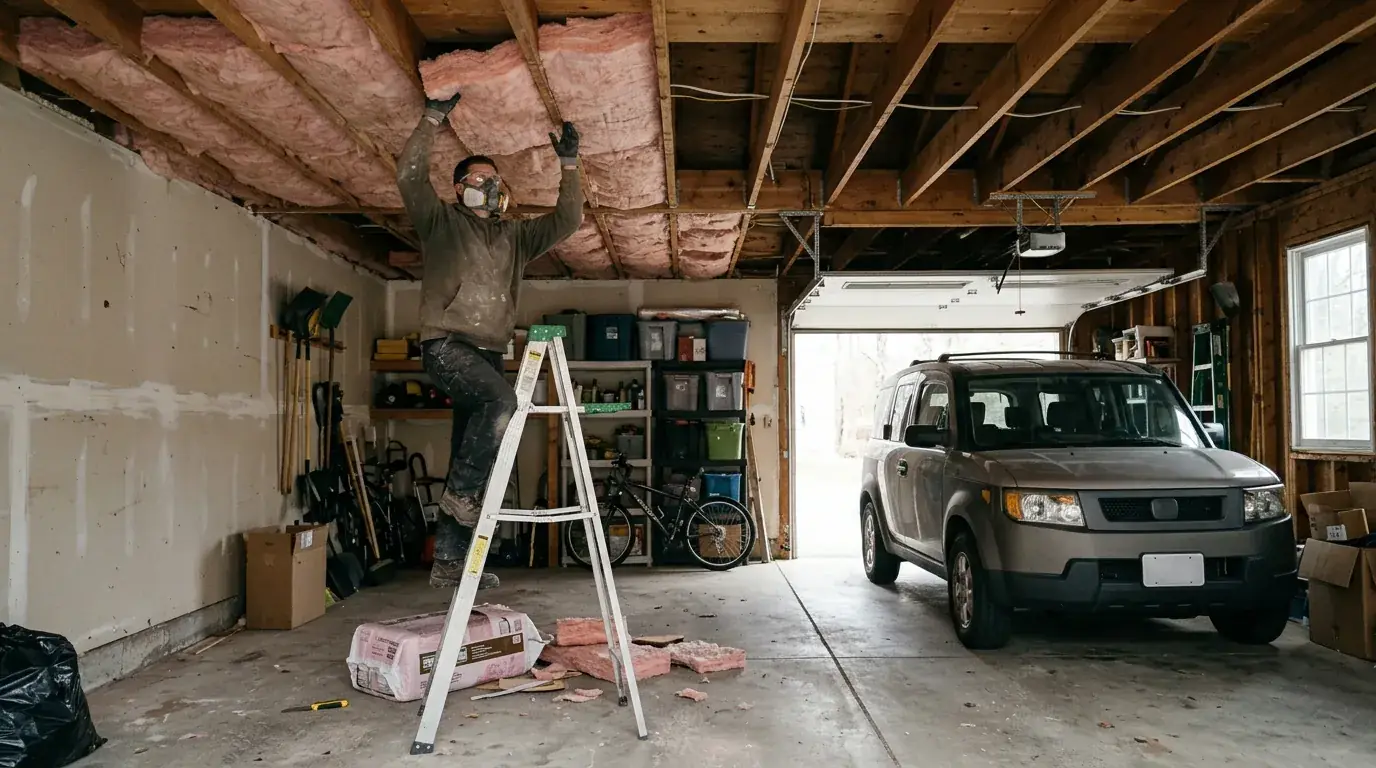
| Fiberglass batts | R-3 to R-4 | Multiple layers | Multiple layers |
Exact depths depend on the product. The bag label and the installer's certificate show the settled thickness for each R-value.
How to check what you have
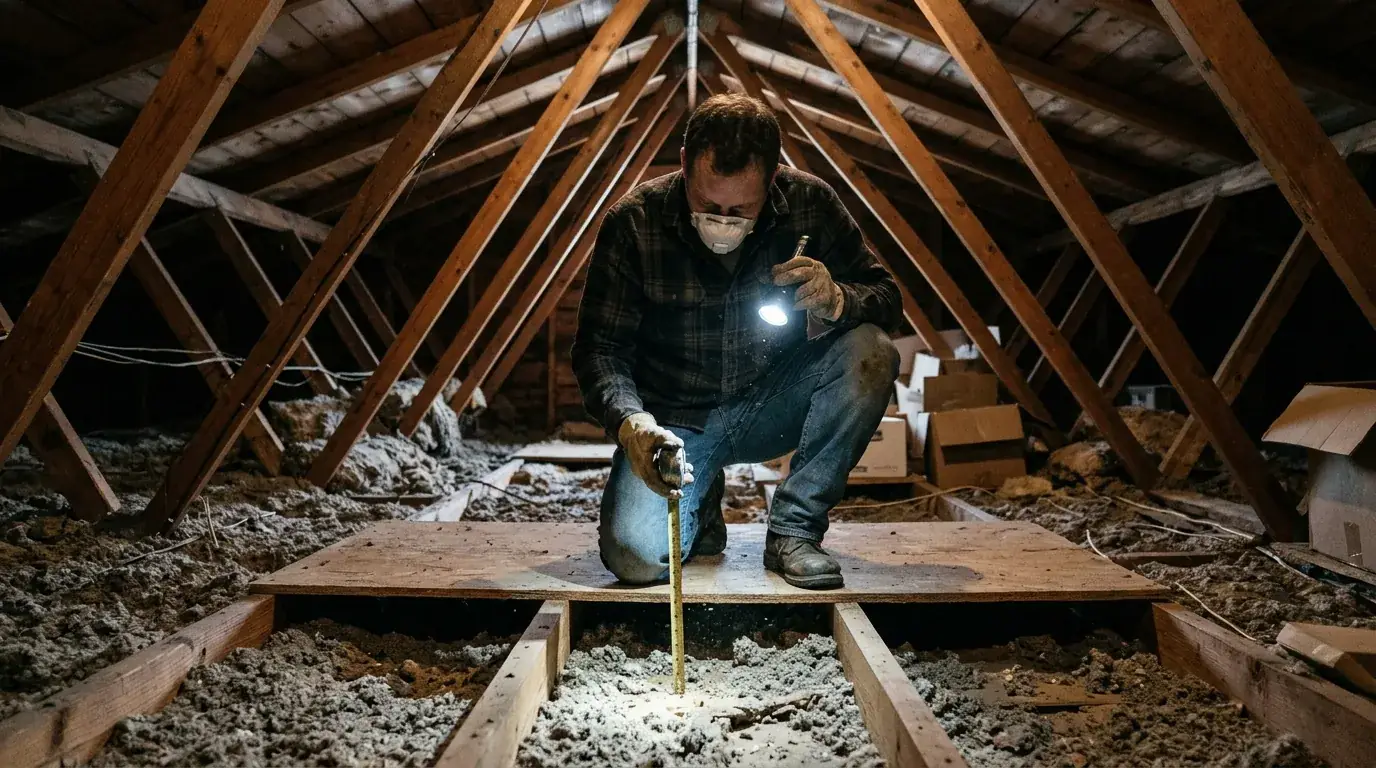
- Go into the attic with a flashlight and a tape measure, staying on the joists.
- Measure the depth in several places, away from the eaves and the hatch.
- Note the type: gray fluffy (cellulose), pink, yellow or white fibers (fiberglass), gray-brown pebbles (possibly vermiculite; do not disturb it, see vermiculite).
- If you can see the tops of the joists, you almost certainly need more.
Typical findings in Massachusetts homes
| House era | What we often find |
|---|---|
| Before 1940 | Little or none; sometimes old rock wool or vermiculite |
| 1950s to 1970s | 3 to 6 inches of fiberglass batts or rock wool |
| 1980s to 1990s | 6 to 10 inches, often settled or uneven |
| 2000s and newer | Closer to code at the time, but often with air leaks |
Before you add more
- Air seal first. Insulation does not stop air leaks. See air sealing before insulation.
- Install baffles at the eaves so new insulation does not block soffit vents. See attic ventilation.
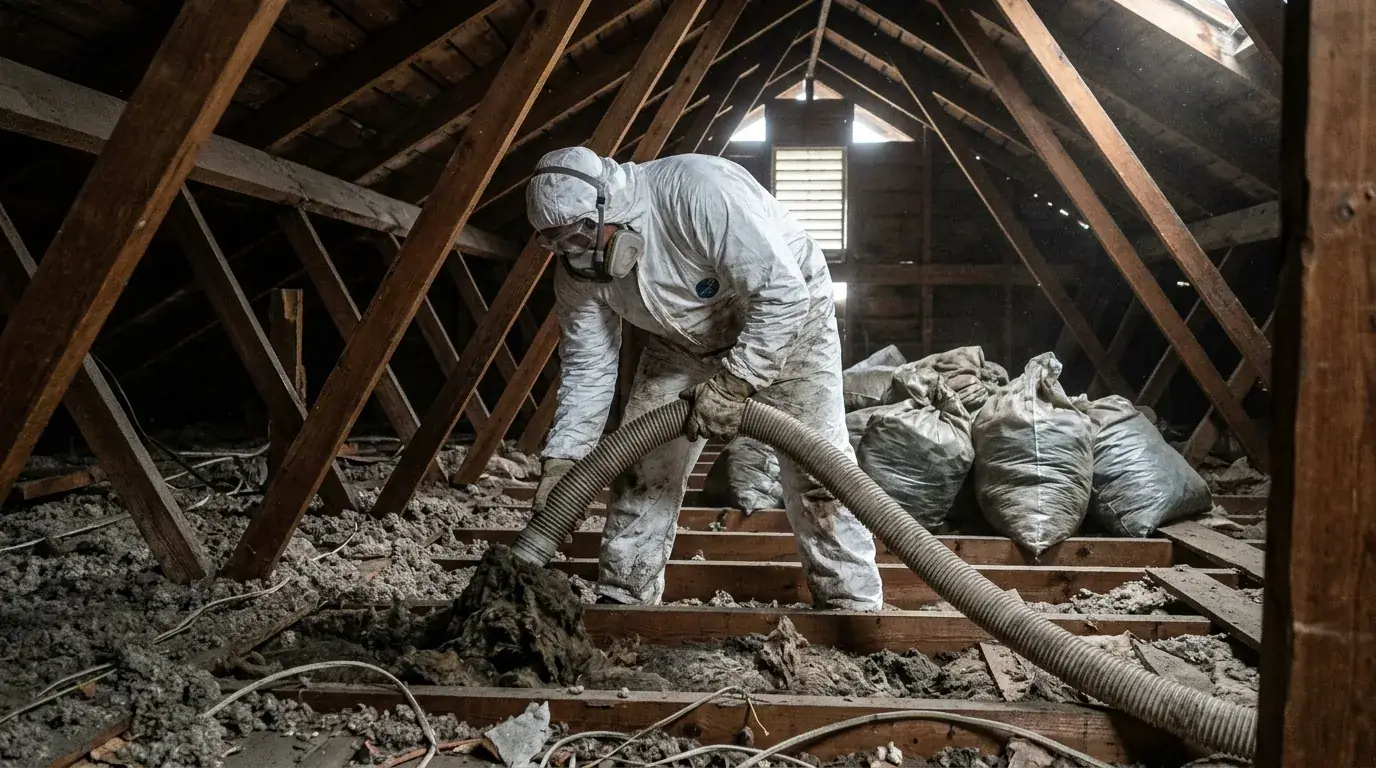
- Deal with problems: wet insulation, mold, animal contamination, vermiculite, knob-and-tube wiring.
- Protect heat sources: chimneys and non-IC-rated recessed lights need clearance or covers.
Going from R-11 to R-49 makes a big difference. Going from R-49 to R-80 adds much less. That is why R-49 to R-60 is the sweet spot.
Mass Save® helps
For eligible customers, attic air sealing is offered at no cost and approved insulation is heavily rebated. See Mass Save® insulation rebates.
Signs your attic needs more insulation
- You can see the tops of the attic floor joists.
- Your upstairs is cold in winter and hot in summer.
- You get ice dams or large icicles.
- Snow melts off your roof faster than neighbors' roofs.
- Your heating bills are higher than similar homes.
Common attic obstacles and how they are handled
| Obstacle | Solution |
|---|---|
| Floor boards for storage | Raise the floor on platforms or blow insulation under boards |
| Recessed lights | Airtight covers or IC-rated airtight fixtures |
| Chimney | Clearance and non-combustible damming |
| Attic hatch | Insulated, weatherstripped cover; dam around opening |
| HVAC equipment | Platforms and access paths; seal ducts |
| Low eaves | Baffles and careful placement for depth over walls |
Storage in a well-insulated attic
Deep insulation and attic storage compete for the same space. Raised storage platforms built above the target insulation depth let you keep both. Compressing insulation under boards reduces its R-value.
What R-value do capes and finished attics need?
For knee walls, slopes and small attics in capes, the targets differ by area. Slopes are limited by rafter depth; knee walls by stud depth. Programs and contractors set practical targets for each area. See knee wall insulation.
Verifying the installation
After the job, look for:
- Depth rulers showing even coverage.
- A certificate near the hatch with material, R-value and depth.
- Baffles at the eaves.
- A sealed and insulated hatch.
Bring your attic up to R-49+
BCI Group insulates attics across Massachusetts with blown-in cellulose and fiberglass. Call (774) 278-8256 or request a free estimate. See also attic insulation cost.
Frequently asked questions
What R-value should my attic be in Massachusetts?
ENERGY STAR recommends R-49 to R-60 for attics in climate zone 5, which includes Massachusetts.
How many inches of insulation is R-49?
Roughly 13 to 15 inches of blown cellulose or 17 to 22 inches of blown fiberglass, depending on the product.
Can I add new insulation on top of old?
Yes, if the old insulation is dry and clean. Air seal first and do not cover vermiculite.
Is it possible to have too much attic insulation?
Not in a harmful way if ventilation is kept clear, but the benefit of each extra inch gets smaller beyond R-60.
Does Mass Save® pay for adding attic insulation?
Approved attic insulation is rebated for eligible customers, and air sealing is offered at no cost.
Services mentioned in this article
Blown-In Cellulose near you in Massachusetts
BCI Group crews work in these communities every week. See local details for blown-in cellulose in your town: