Key takeaways
- Infrared cameras show surface temperature differences, revealing missing insulation and air leaks.
- Scans work best with a large indoor-outdoor temperature difference, typically in the heating season.
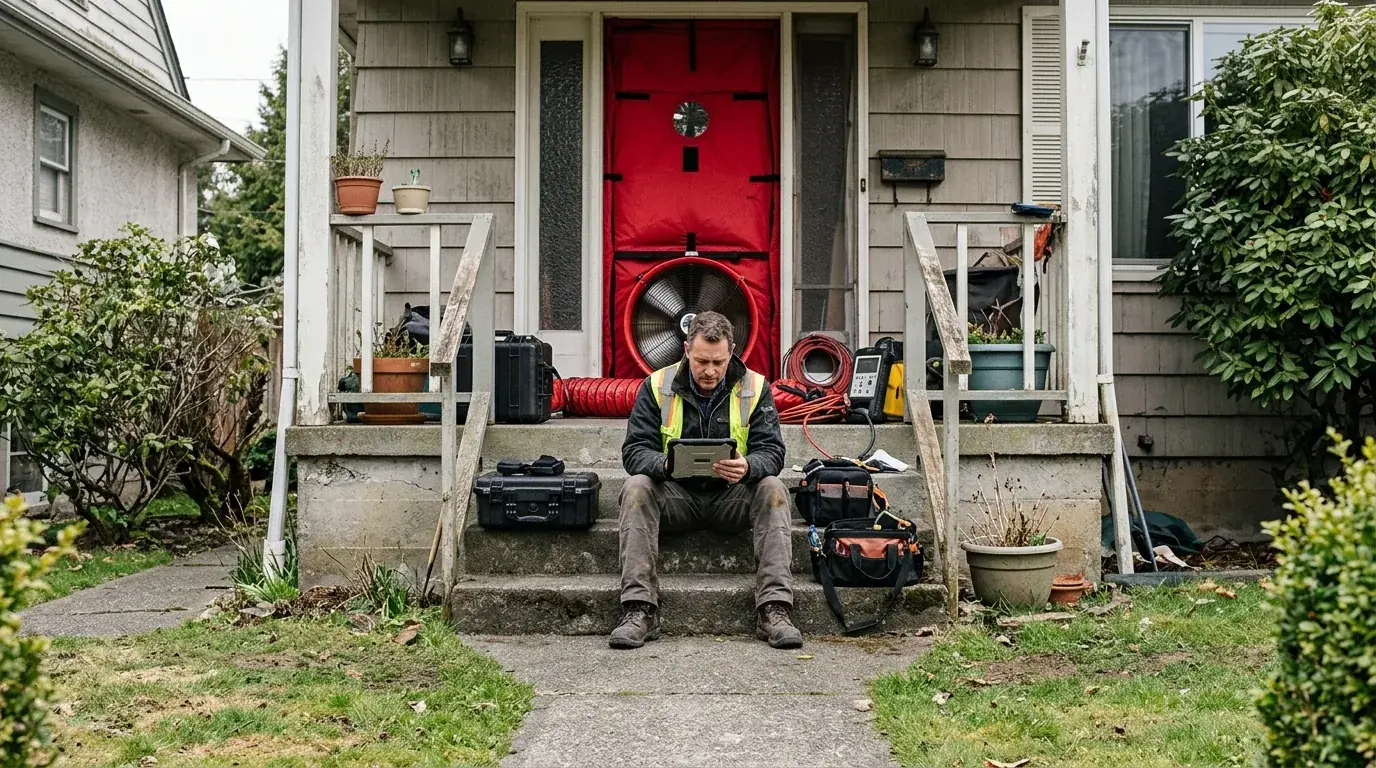
- Combining a scan with a blower door test makes air leaks much easier to see.
- Images must be interpreted by a trained professional; not every color difference is a problem.
What an infrared camera sees
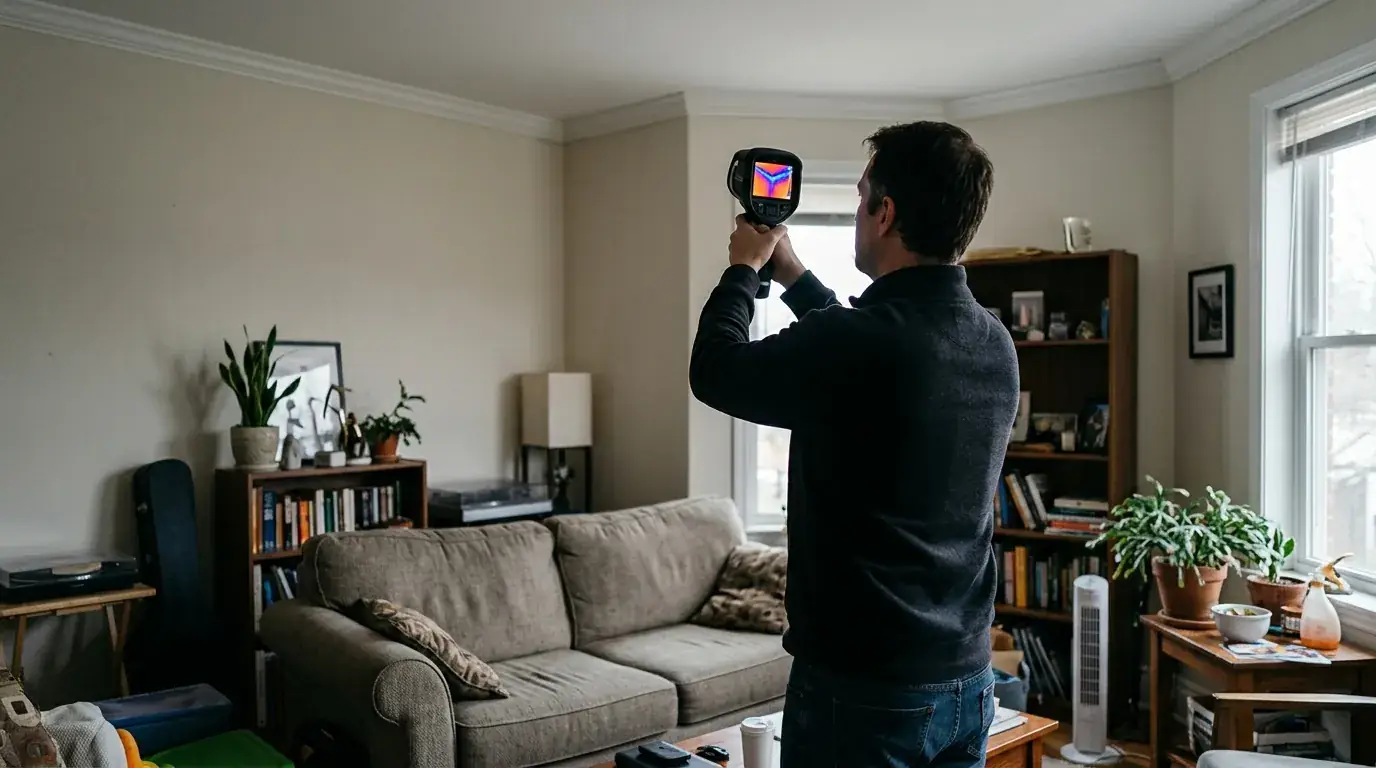
An infrared (thermal) camera does not see through walls. It measures the surface temperature of what it is pointed at and displays it as colors. In winter, a section of wall with missing insulation, or a spot where cold air leaks in, is colder than the surrounding surface, and the camera shows it.
What scans reveal
- Missing or settled insulation in walls and ceilings: cold rectangles between studs.
- Air leaks at baseboards, outlets, windows, ceiling edges and the attic hatch: streaky, feathered cold patterns.
- Thermal bridging through studs, headers and corners.
- Moisture: wet areas can appear cooler due to evaporation.
- Duct and pipe locations and some electrical hot spots.
When scans work best
Thermal imaging needs a temperature difference across the wall, ideally at least 18°F (10°C). That is why most energy scans are done in the heating season, and early in the morning or on cloudy days to avoid solar heating of exterior surfaces.
Scans + blower door = clear answers
Running a blower door test during the scan depressurizes the house, so cold air is pulled through every leak. Leaks that are invisible at normal pressure show up clearly. Many energy professionals scan both before and during depressurization to separate insulation problems from air leaks.
| Pattern | Likely meaning |
|---|---|
| Uniform cold rectangle between studs | Missing insulation in that cavity |
| Cold at top of wall cavity only | Settled loose insulation |
| Streaky cold patterns near edges | Air leakage |
| Cold stripes at regular spacing | Thermal bridging through framing |
| Irregular cold patch with no clear shape | Possible moisture; needs investigation |
Reflective surfaces, sunlight and furniture can create misleading images. A trained professional confirms findings before recommending work.
After insulation: quality check
Infrared scanning after dense-pack cellulose installation can confirm that every cavity was filled, including cavities with hidden blocking.
Common thermal images and what they mean
| Image | Common cause |
|---|---|
| Dark band along the ceiling of an upstairs room | Missing insulation or air leak at top plate |
| Cold corners where walls meet ceilings | Air leakage and thin insulation at edges |
| Cold floor edges along exterior walls | Rim joist air leaks |
| Cold recessed lights | Air leaking around fixtures |
| Cold outlets on exterior walls | Air leakage and empty cavities |
| Cold patches on slopes in capes | Thin or missing slope insulation |
Outdoor thermal scans
Scanning from the outside on a cold night shows warm areas where heat escapes: around windows, at roof edges, through empty walls. Outdoor scans are affected by wind, sky radiation and materials, so interior scans are usually more useful for diagnosis.
Thermal imaging for other problems
Thermal cameras are also used to locate radiant heating pipes, find plumbing leaks in some cases and spot overheating electrical components. Electrical issues should always be evaluated by a licensed electrician.
Getting the most from a scan
- Schedule during a cold period, with heat running normally.
- Avoid scanning sun-facing walls during sunny afternoons.
- Combine with a blower door test.
- Ask for annotated images in your report.
Using images to plan work
Images make conversations with contractors concrete: "this cold band is the empty cavity above the window" or "this streak is air leaking at the top plate". They also serve as before photos to compare after insulation.
Get a thermal scan
BCI Group uses infrared imaging as part of energy audits and to verify our insulation work. Call (774) 278-8256. See also what a home energy audit includes.
Frequently asked questions
Can a thermal camera see inside walls?
No. It shows surface temperatures, which reveal problems inside the wall indirectly.
When is the best time for a thermal scan?
In the heating season, with a large indoor-outdoor temperature difference, often early morning or on cloudy days.
Can thermal imaging find air leaks?
Yes, especially when combined with a blower door test.
Can I use a phone thermal camera?
Phone attachments can show obvious problems, but professional cameras and training give more reliable results.
Does thermal imaging show moisture?
Wet areas can appear cooler, but moisture must be confirmed with a moisture meter.
Services mentioned in this article
Energy Audits & HERS Ratings near you in Massachusetts
BCI Group crews work in these communities every week. See local details for energy audits in your town: