Key takeaways
- A home energy audit measures how a house uses and loses energy, instead of guessing.
- Core tests include a blower door test, an infrared scan and inspections of insulation, heating and ventilation.
- Combustion safety testing protects the family when the house is tightened.
- The result is a prioritized list of upgrades, from no-cost fixes to major projects.
Audit vs. assessment
In Massachusetts, the Mass Save® Home Energy Assessment is the no-cost entry point for incentives. A comprehensive energy audit goes deeper, with diagnostic testing that measures performance. BCI Group's HERS raters perform both kinds of work: see energy audits and HERS ratings.
What a comprehensive audit includes
Interview and bill review
Which rooms are uncomfortable? Ice dams? Condensation? Twelve months of energy bills show how the house performs over the seasons.
Blower door test
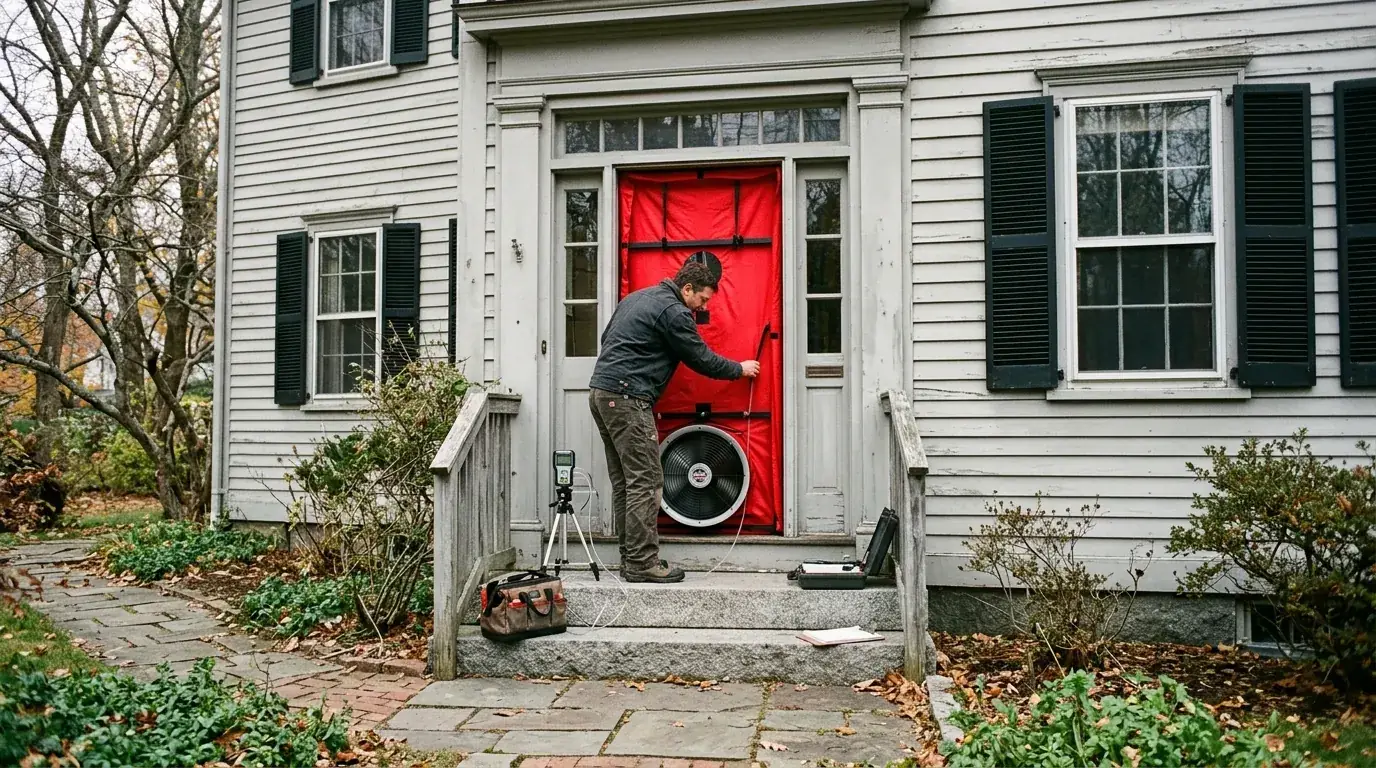
A calibrated fan in an exterior door depressurizes the house and measures air leakage. The result, often expressed as CFM50 and ACH50, tells you how leaky the house is. See blower door testing and ACH50 explained.
Infrared thermography
With the blower door running, an infrared camera shows cold air entering and missing insulation in walls and ceilings. See infrared scans.
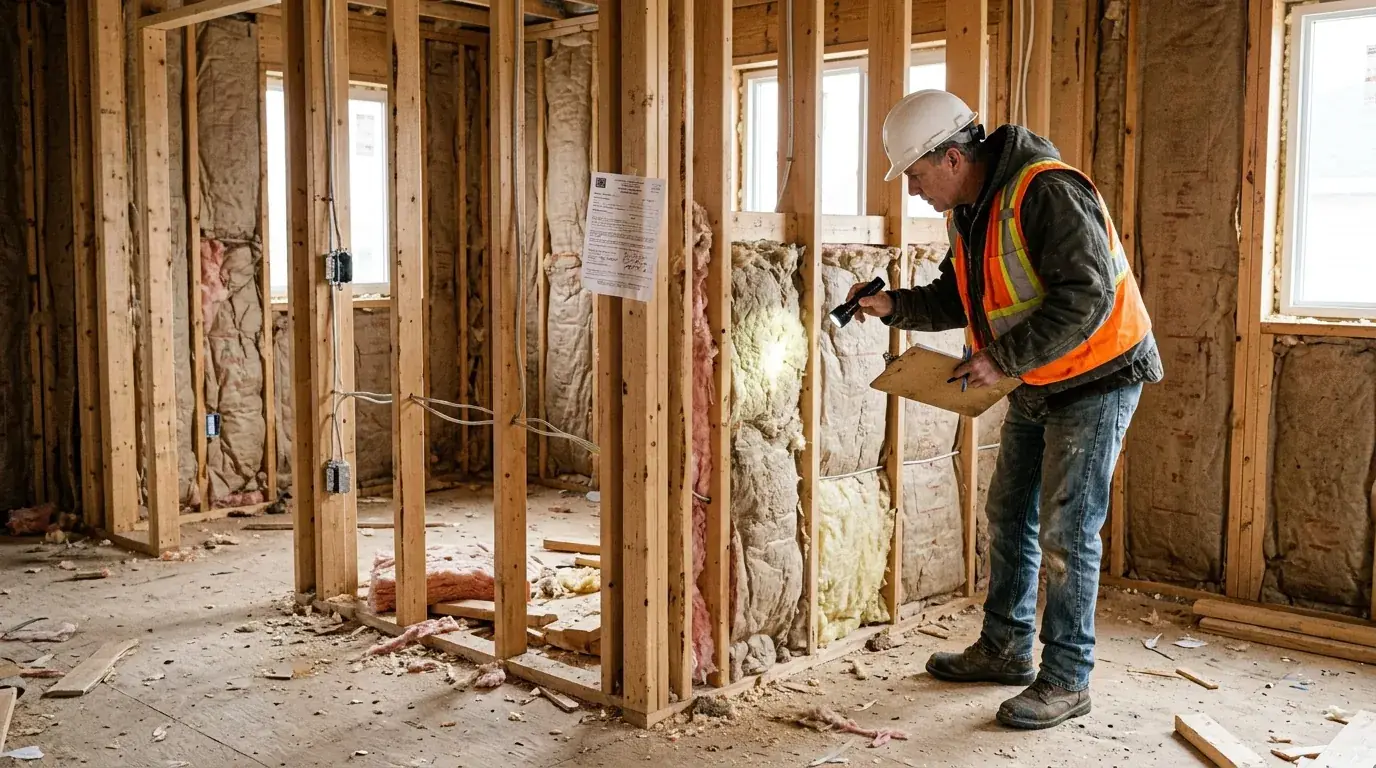
Attic, walls and basement inspection
Insulation type and depth, air leaks, moisture, ventilation and barriers like knob-and-tube wiring or vermiculite.
Heating, cooling and hot water
Equipment age, efficiency and condition, duct leakage where relevant. See duct sealing.
Combustion safety
Testing of fuel-burning appliances for proper draft and carbon monoxide, so that tightening the house does not create a hazard.
Ventilation
Bath and kitchen fans, and whether the house needs mechanical ventilation. See ventilation for tight homes.
What you get
| Deliverable | Use |
|---|---|
| Test results (CFM50, ACH50) | Baseline to measure improvements |
| Thermal images | Show exactly where problems are |
| Prioritized recommendations | What to do first for the best return |
| Safety findings | Issues to fix before or during work |
| Incentive guidance | Mass Save® or other programs that apply |
How to use the results
- Fix safety issues first.
- Air seal the attic and basement.
- Insulate the attic, walls and basement.
- Address ducts and ventilation.
- Upgrade equipment, sized for the improved house.
- Re-test to confirm the improvement.
A test-in before and a test-out after work is the best proof that the money was well spent.
How to prepare for an audit
| Before the visit | Why |
|---|---|
| Close all windows and exterior doors | Needed for the blower door test |
| Clear access to attic, basement and mechanicals | The auditor needs to inspect them |
| Close fireplace dampers and remove ashes | Prevents ash from blowing into the house |
| Turn off fuel-burning appliances when asked | Safety during depressurization |
| List comfort problems by room | Directs the inspection |
| Gather 12 months of energy bills | Baseline for usage |
What a good report looks like
- Clear photos and thermal images tied to specific recommendations.
- Test results with explanations in plain language.
- Recommendations ranked by priority, with rough cost ranges where possible.
- Safety issues highlighted separately.
- Guidance on incentives and next steps.
Audits for home buyers
Buying an older Massachusetts home? An energy audit during the inspection period can reveal insulation levels, air leakage, heating system condition and potential barriers like vermiculite. That information helps plan upgrades and budgets before you move in.
Audits for renovation planning
If you are planning a major renovation or addition, an audit before design helps the architect and contractor integrate insulation, air sealing and right-sized mechanicals. It is far cheaper to plan these items than to fix them later.
Re-testing after improvements
A test-out after air sealing and insulation documents the improvement and confirms safety. It also gives you a new baseline if you plan further upgrades, like heat pumps.
Book an audit
BCI Group's in-house HERS raters perform energy audits and blower door tests across Massachusetts. Call (774) 278-8256 or request a free estimate. See also energy audit cost.
Frequently asked questions
What does a home energy audit include?
Typically a blower door test, infrared scan, insulation and air leakage inspection, heating and ventilation review and combustion safety testing.
How long does an energy audit take?
Usually two to four hours for a typical single-family home.
Is a Mass Save® assessment the same as an energy audit?
The Mass Save® assessment is a no-cost evaluation for incentives. A comprehensive audit adds more diagnostic testing.
Do I need to prepare for an energy audit?
Clear access to the attic, basement and heating equipment, close windows and have your energy bills available.
Will an energy audit tell me what to do first?
Yes. The main deliverable is a prioritized list of improvements.
Services mentioned in this article
Energy Audits & HERS Ratings near you in Massachusetts
BCI Group crews work in these communities every week. See local details for energy audits in your town: