Key takeaways
- Air sealing reduces random leaks, which also reduces accidental fresh air.
- Homes still need controlled ventilation to remove moisture, odors and pollutants.
- Programs and standards such as ASHRAE 62.2 are used to decide when mechanical ventilation is needed.
- Bath fans must vent outside, never into the attic, to avoid moisture and mold.
"Build tight, ventilate right"
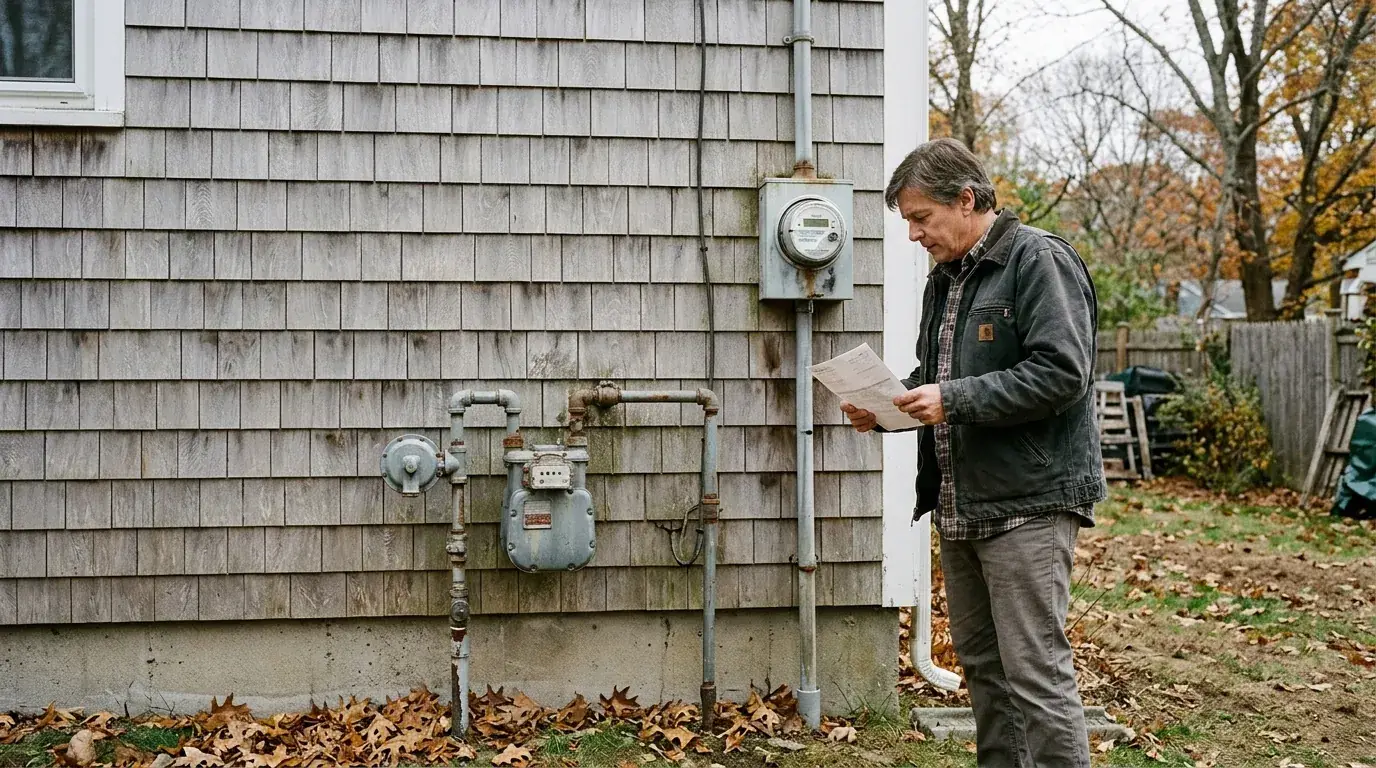
Older Massachusetts homes are leaky. Air pours in through the basement and out through the attic, and that uncontrolled air flow brings a lot of fresh air along with the drafts and high bills. When we air seal a house, we cut most of those leaks. That is exactly what saves energy, but it also means the house no longer "breathes" by accident. The solution is to ventilate on purpose: remove moisture and pollutants where they are created, with fans that are controlled and sized correctly.
What ASHRAE 62.2 is
ASHRAE 62.2 is the national standard for ventilation and indoor air quality in homes. It sets a minimum amount of fresh air for a home based on its size and number of bedrooms, plus local exhaust in kitchens and bathrooms. Energy programs, including weatherization programs like Mass Save®, use calculations based on this standard after air sealing to decide whether mechanical ventilation should be added.
Why the bath fan is so important
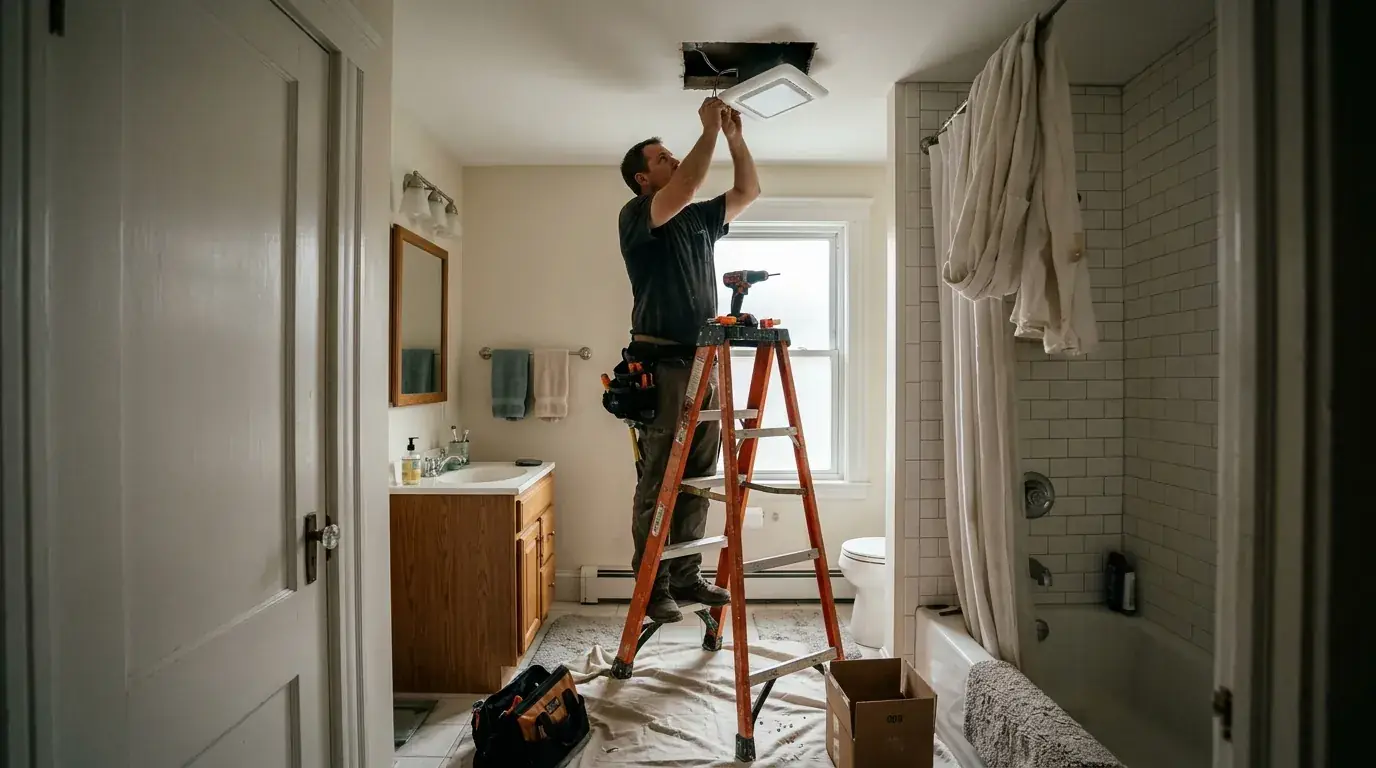
Showers produce a lot of moisture. Without a working fan, that moisture condenses on cold surfaces, feeds mold on ceilings and around windows, and can migrate into the attic. A good bath fan:
- Is ducted to the outdoors through the roof or a wall, never into the attic or a soffit where it can blow back in.
- Is quiet enough that people actually use it.
- Moves the right amount of air for the room.
- Can run continuously at a low speed to provide whole-house ventilation, or with a timer or humidity sensor.
In many attics we find bath fans that blow into the insulation. That moisture can cause mold on the roof sheathing. Fixing it is part of a proper insulation job; see attic mold causes.
Other ways to ventilate
| Approach | How it works | Good for |
|---|---|---|
| Continuous bath fan | A quiet fan runs at low speed all the time | Most existing homes |
| Exhaust plus timers | Fans run on a schedule | Smaller homes |
| ERV or HRV | Balanced system that recovers heat or energy | Very tight homes, new construction |
Our guide to ERV vs. HRV covers balanced systems in detail.
Signs your house needs better ventilation
- Condensation on windows in winter (see window condensation).
- Lingering cooking or shower odors.
- Mold on bathroom ceilings or closet walls.
- A musty basement smell (see musty smell causes).
How to tell if your bath fan is working
- Tissue test: hold a single square of toilet paper near the grille with the fan on. A working fan should hold it against the grille.
- Listen and look: a fan that is very loud but moves little air may have a blocked or crushed duct.
- Check the attic: follow the duct. It should end at a roof cap or wall cap, not loose in the insulation.
- Mirror test: if the mirror stays fogged long after a shower with the fan on, the fan is undersized or blocked.
Choosing a good fan
| Feature | Why it matters |
|---|---|
| Low noise rating (sones) | Quiet fans get used |
| Rated airflow for the room size | Removes moisture effectively |
| ENERGY STAR or efficient motor | Low cost for continuous use |
| Humidity sensor or timer | Runs when needed automatically |
| Backdraft damper | Stops cold air coming back in |
Kitchen ventilation
Cooking produces moisture, odors and combustion byproducts from gas stoves. A range hood that vents outside is far better than a recirculating hood. If you cook with gas, use the hood every time.
Dryer vents
Dryers must vent outside through a short, smooth duct. A disconnected dryer vent in a basement or attic adds large amounts of moisture and lint. Check it as part of any insulation project.
Ventilation and combustion safety
Large exhaust fans, like powerful range hoods, can depressurize a tight house and affect how fuel-burning appliances vent. That is one reason combustion safety testing is part of weatherization, and why makeup air is sometimes required for large hoods.
The bottom line
A tight house with good ventilation is healthier, drier and more comfortable than a leaky house that relies on drafts for fresh air. Ventilation is not a sign that air sealing went too far; it is the other half of doing it right.
How BCI Group handles it
When we air seal a home, we look at ventilation as part of the same job. Our HERS raters can measure air leakage with a blower door test and calculate ventilation needs. If a new fan is needed, we explain why and make sure it vents properly to the outside. Call (774) 278-8256 to talk with our team.
Frequently asked questions
Why would an insulation project include a bath fan?
Air sealing reduces accidental air leaks. Mechanical ventilation, often a quiet bath fan, replaces that air in a controlled way so moisture and pollutants are removed.
Can a bath fan vent into the attic?
No. Bath fans should be ducted to the outdoors. Venting into the attic adds moisture that can lead to mold.
What is ASHRAE 62.2?
It is the national standard for residential ventilation and indoor air quality, used to calculate how much fresh air a home needs.
Will running a fan all the time waste energy?
A properly sized continuous fan uses little electricity and moves a controlled amount of air. A tight, ventilated house still uses far less energy than a leaky one.
Do I need an ERV or HRV?
Most existing homes are well served by exhaust ventilation. ERVs and HRVs are common in very tight homes and new construction.
Services mentioned in this article
Energy Audits & HERS Ratings near you in Massachusetts
BCI Group crews work in these communities every week. See local details for energy audits in your town: