Key takeaways
- Attic mold grows when moisture condenses on the cold roof sheathing in winter.
- The moisture usually comes from the house: air leaks, bath fans and dryer vents that end in the attic.
- Ventilation helps, but air sealing the attic floor is the most important prevention step.
- Mold should be evaluated before insulation is added, and the moisture source must be fixed.
How attic mold starts
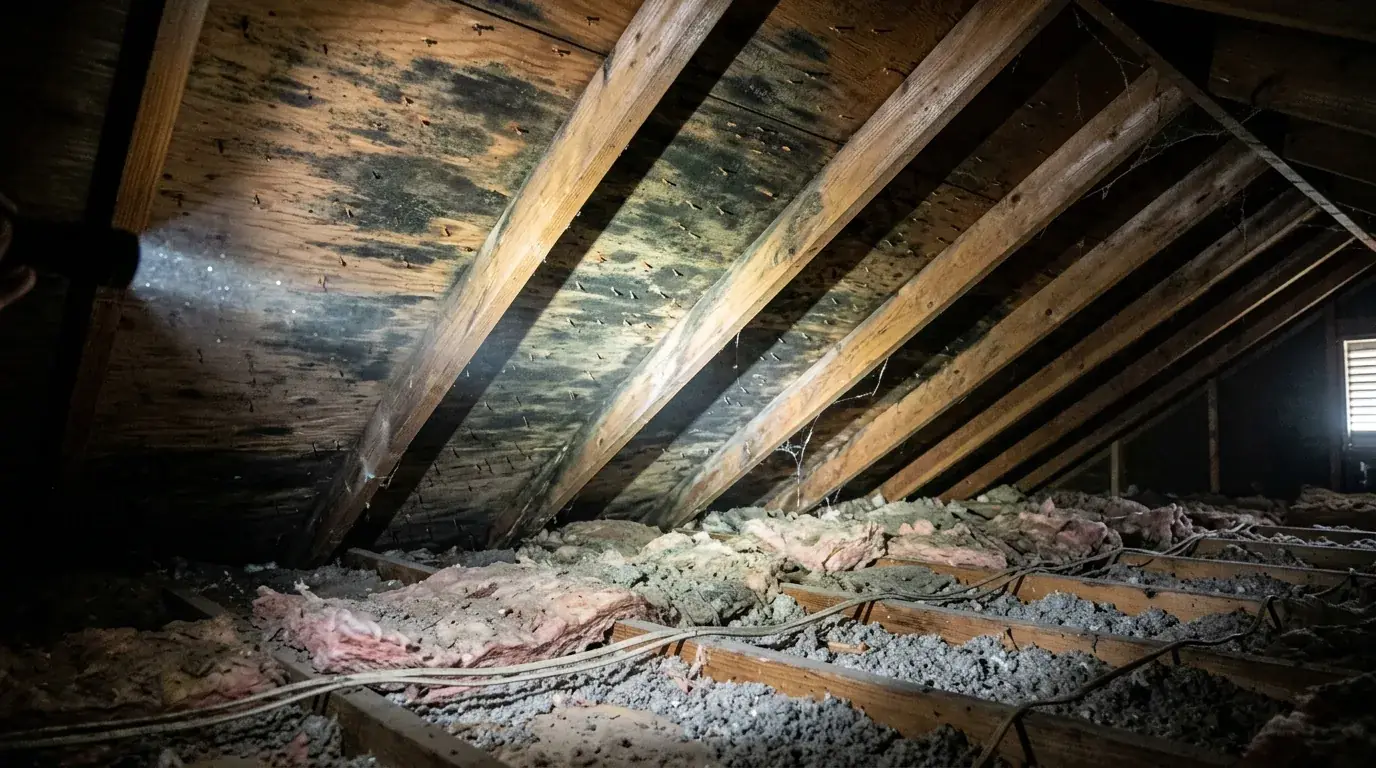
In winter, the roof sheathing (the plywood or boards under the shingles) is very cold. When warm, humid air from the house reaches it, water condenses on the wood, just like on a cold glass of water in summer. Day after day, that moisture feeds mold. It often appears as black or gray staining on the north side of the roof, where the sheathing stays coldest, and near the bottom of the roof.
Where the moisture comes from
Air leaks from the house
The same leaks that cause high heating bills and ice dams carry moisture into the attic: gaps around chimneys, plumbing stacks, light fixtures, the attic hatch and the tops of interior walls.
Bath and kitchen fans that end in the attic
This is one of the most common problems we find. A bath fan duct that ends in the insulation, or just points at a roof vent, dumps shower moisture right into the attic.
Dryer vents
A disconnected dryer vent can put a large amount of water vapor into an attic or crawl space.
Roof leaks and ice dams
Water that gets under the shingles wets the sheathing directly.
Poor ventilation
Blocked soffit vents or too little roof venting can let moisture build up. But ventilation is usually not the root cause; it just cannot keep up with the moisture coming from below.
Is attic mold dangerous?
Mold on attic sheathing is generally separated from the living space, but it is still a sign of a moisture problem that can damage the roof deck over time. It can also affect the air if the attic is leaky. If you see significant mold, have it evaluated by a qualified professional. Massachusetts homeowners selling a home will also find buyers' inspectors flag it.
Cleaning mold without fixing the moisture source means it will come back. Insulating over an attic with active moisture problems can make things worse.
How to prevent attic mold
| Step | What it does |
|---|---|
| Air seal the attic floor | Stops warm, moist air from reaching the roof deck |
| Vent bath fans and dryers outside | Removes major moisture sources |
| Open soffit vents and add baffles | Lets outside air flow under the roof |
| Fix roof leaks and ice dams | Stops liquid water |
| Control basement humidity | Less moisture in the whole house |
The right order of work
- Fix roof leaks and reroute fans and dryer vents to the outside.
- Have existing mold evaluated and treated as needed.
- Air seal the attic floor thoroughly.
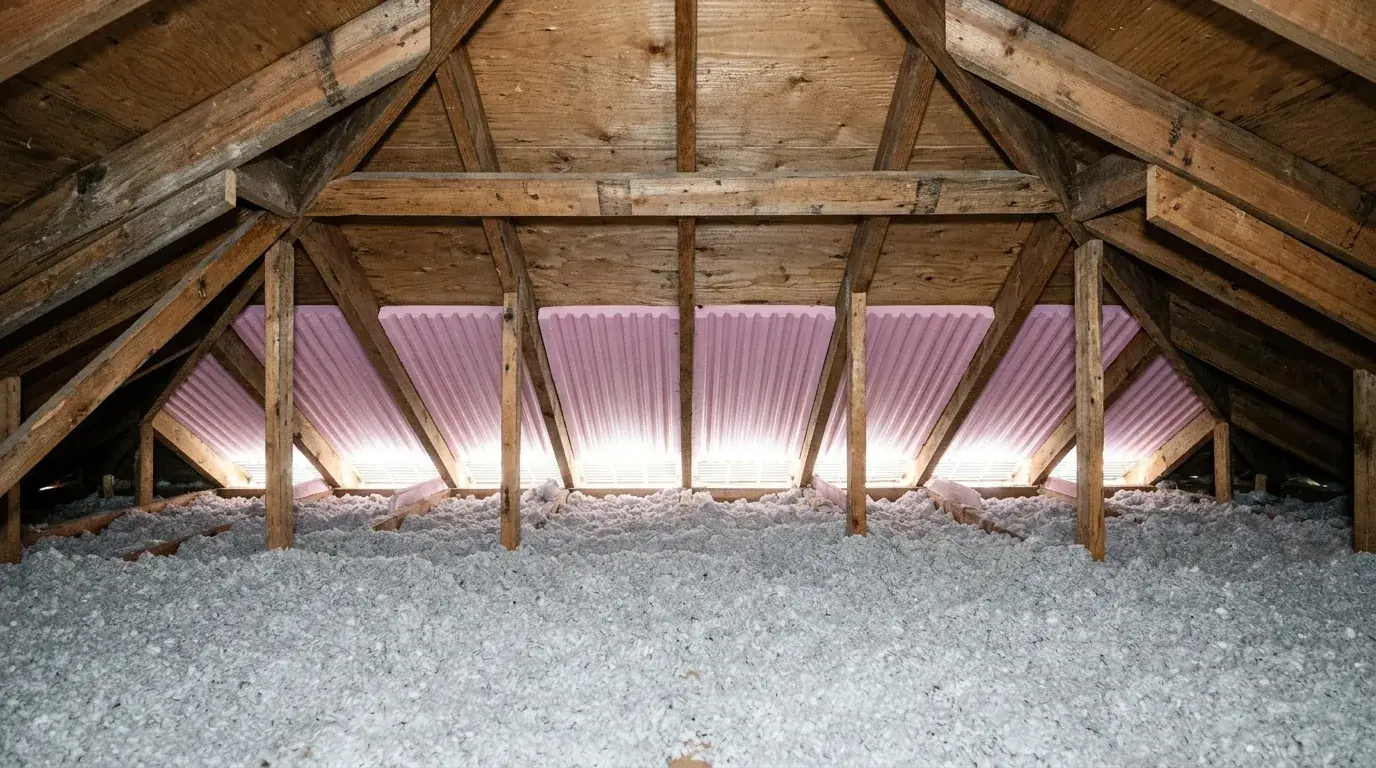
- Install baffles at the eaves and confirm the ventilation path.
- Insulate to the recommended depth.
This is exactly the sequence a good insulation contractor follows. Mold and moisture are also treated as pre-weatherization barriers in the Mass Save® program, to be fixed before insulation.
Reading the pattern of mold in your attic
| Pattern | Likely cause |
|---|---|
| Mold concentrated near a bath fan | Fan venting into the attic or a leaking duct |
| Mold along the lower roof near the eaves | Blocked soffit vents or air leaks from top plates below |
| Mold mainly on north-facing sheathing | Colder sheathing where moisture condenses most |
| Mold around a chimney or plumbing stack | Air leak around the penetration |
| Stains around roofing nails | Frost forming on nails from moist air, then melting |
| Water stains in one spot | Roof leak or flashing problem |
Frost in the attic
On very cold mornings, you may see frost on nails and sheathing in an attic. That frost is moisture from the house that has condensed and frozen. When it warms up, it melts and can drip onto insulation and ceilings, sometimes mistaken for a roof leak. The cure is the same: air seal the attic floor and remove moisture sources.
Questions to answer before insulating
- Is the mold active or old staining from a past problem?
- Have all bath, kitchen and dryer vents been routed outside?
- Are the soffit vents open, and are baffles installed?
- Is the roof sound, with no active leaks?
- Is basement humidity under control?
Remediation basics
Small areas of surface mold are sometimes cleaned and treated; larger areas, or mold affecting the structure, need professional remediation. Some remediation contractors also apply sealants to the sheathing after cleaning. The key point is the same: fix the moisture first, or the mold will return.
Preventing it in a new or renovated attic
- Seal all ceiling penetrations before insulation.
- Use airtight recessed lights or avoid them under unconditioned attics.
- Duct every exhaust fan to the outdoors with insulated ducts.
- Keep the attic hatch airtight and insulated.
Get your attic checked
BCI Group inspects attics across Massachusetts, identifies the moisture sources and fixes air leaks before insulating. Call (774) 278-8256 or request a free estimate.
Frequently asked questions
What causes mold in the attic?
Moisture condensing on cold roof sheathing, usually from warm indoor air leaking into the attic, bath fans or dryer vents ending in the attic, or roof leaks.
Will more roof vents fix attic mold?
Ventilation helps, but air sealing the attic floor and removing moisture sources are more important.
Can I insulate over attic mold?
The moisture source should be fixed and the mold evaluated before adding insulation.
Is attic mold common in Massachusetts?
Yes, especially in older homes with leaky attic floors and bath fans that vent into the attic.
Does Mass Save® help with attic mold?
Mold is treated as a barrier that must be addressed before insulation. Some program paths may offer help; ask during your assessment.
Services mentioned in this article
Insulation Contractor near you in Massachusetts
BCI Group crews work in these communities every week. See local details for insulation in your town: