Key takeaways
- Attics in summer can get extremely hot, and that heat radiates and leaks into the rooms below.
- Thin insulation and air leaks at the attic floor are the main causes.
- Radiant barriers can help in some hot-climate attics but are rarely the best first step in Massachusetts.
- Air sealing, deep attic insulation and correct ventilation cool the second floor and lower AC costs.
Why the second floor overheats
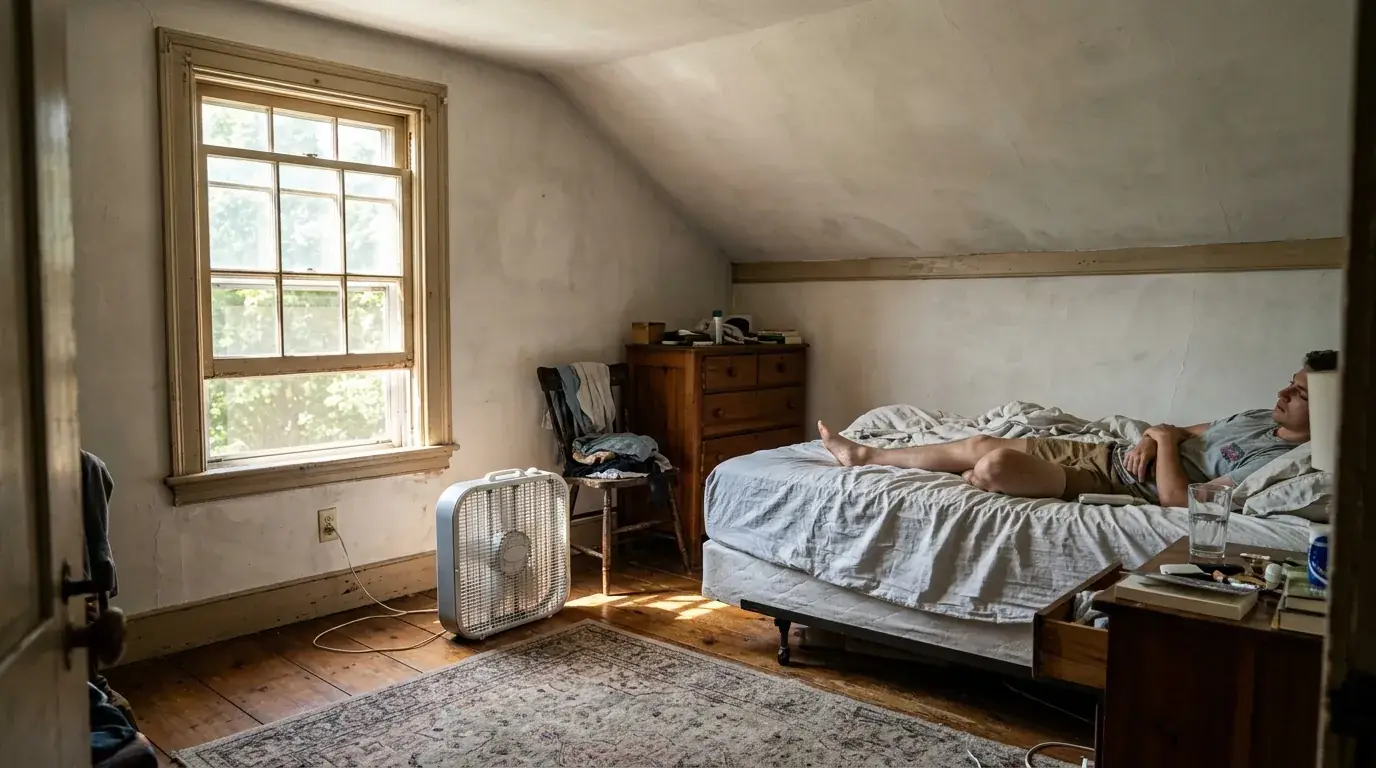
On a sunny summer day, the roof absorbs heat and the attic can get far hotter than the outdoor air. That heat moves into the rooms below in three ways:
- Conduction through thin or settled insulation on the attic floor.
- Air leaks: hot attic air is pulled in through the same gaps that leak heat out in winter.
- Ducts in the attic: cool air from the AC heats up before it reaches the rooms.
Hot air also rises inside the house, so the second floor would be warmer than the first even with a perfect attic. But a hot attic makes the difference much bigger.
Signs your attic is the problem
- Ceilings that feel warm to the touch on hot afternoons.
- Upstairs rooms that stay hot well into the night.
- An AC that runs constantly but cannot keep the second floor comfortable.
- The same rooms are also the coldest in winter.
What about radiant barriers?
A radiant barrier is a reflective foil installed under the roof that reduces radiant heat from the roof into the attic. It is most effective in hot, sunny climates with ducts in the attic. In Massachusetts, where heating is the bigger cost, a radiant barrier usually gives a smaller benefit than air sealing and insulation, and it does nothing for winter heat loss. If you are adding one, it should never replace proper insulation.
The fixes that work in Massachusetts
| Fix | Summer benefit | Winter benefit |
|---|---|---|
| Attic air sealing | Keeps hot attic air out | Keeps warm air in |
| Attic insulation to R-49+ | Slows heat from the attic | Slows heat loss |
| Correct ventilation (soffit to ridge) | Lowers attic temperature | Keeps roof deck cold, fewer ice dams |
| Sealing and insulating attic ducts | Cooler air at the vents | Warmer air at the vents |
| Spray foam roofline (unvented attic) | Brings ducts into conditioned space | Same |
If your HVAC ducts run through the attic, there are two strategies. Either seal and bury the ducts under deep insulation, or move the insulation to the roofline with spray foam so the attic becomes part of the conditioned space. Each has trade-offs that a good contractor will explain.
Do not forget the knee walls and slopes
In capes and homes with finished attics, upstairs rooms have knee walls and sloped ceilings right next to hot attic spaces. These are often the weakest spots. See knee wall insulation and cathedral ceiling insulation.
Heat pumps and upstairs comfort
A ductless heat pump in a hot upstairs room can cool it efficiently, and it heats in winter too. After insulating, the system can be smaller. See mini split sizing.
Quick relief while you plan the fix
- Close blinds on south and west windows during the hottest hours.
- Run a ceiling fan to make rooms feel cooler.
- Use a whole-house or window fan in the evening when outdoor air is cooler, if humidity allows.
- Keep doors open so cooled air can circulate, or make sure closed rooms have return air paths.
- Avoid heat-producing activities upstairs during the afternoon.
Why the attic gets so hot
On a sunny summer day, roof shingles absorb a lot of heat. That heat passes through the roof deck into the attic. Even a well-ventilated attic gets much hotter than outdoor air. With thin insulation on the floor and air leaks into the house, that heat reaches the bedrooms.
Air conditioning and the attic
| Situation | Problem | Fix |
|---|---|---|
| AC ducts in the attic | Cold air warms before reaching rooms | Seal and insulate ducts, or bring the attic inside the envelope |
| Air handler in the attic | Works in extreme heat; leaks pull hot air | Seal the unit and ducts; consider an unvented attic |
| Window units upstairs | Fight heat from the ceiling | Seal and insulate the attic floor |
| Ductless heat pump | Efficient, but works harder under a hot attic | Insulate first to reduce the load |
Whole-house fans: a note of caution
Whole-house fans pull cool evening air through the house and exhaust it into the attic. They can be effective, but the ceiling opening must be sealed and insulated in winter, and the attic must have enough vent area to exhaust the air. A leaky whole-house fan shutter can be a major winter heat leak.
The long-term result
After attic air sealing and insulation, many homeowners find the upstairs stays noticeably cooler in the afternoon and cools down faster at night. The same work lowers winter heating bills, so it pays off in both seasons.
Get your second floor comfortable
BCI Group air seals and insulates attics across Massachusetts, and works with our HVAC partner on heat pump solutions. Call (774) 278-8256 or request a free estimate.
Frequently asked questions
Why is my upstairs so hot in summer?
Heat from a hot attic moves into the rooms below through thin insulation and air leaks, and ducts in the attic warm up the cool air.
Do radiant barriers work in Massachusetts?
They can reduce summer attic heat but usually give less benefit here than air sealing and insulation, which also help in winter.
Will more attic vents cool my upstairs?
Ventilation lowers attic temperature, but sealing and insulating the attic floor has a bigger effect on the rooms below.
Should I insulate the roofline with spray foam?
It can make sense when HVAC ducts or equipment are in the attic. It changes how the attic works, so it should be designed carefully.
Will insulation reduce my AC costs?
Yes. Air sealing and insulation reduce heat gain from the attic, so the AC runs less.
Services mentioned in this article
Blown-In Cellulose near you in Massachusetts
BCI Group crews work in these communities every week. See local details for blown-in cellulose in your town: