Key takeaways
- Condensation forms when warm, moist indoor air touches a surface colder than its dew point.
- Heavy, daily condensation means indoor humidity is too high for the window temperature.
- Sources include showers, cooking, drying clothes, people, plants and damp basements.
- Fixes include bath and kitchen fans that vent outside, controlling basement moisture and air sealing.
Why windows sweat
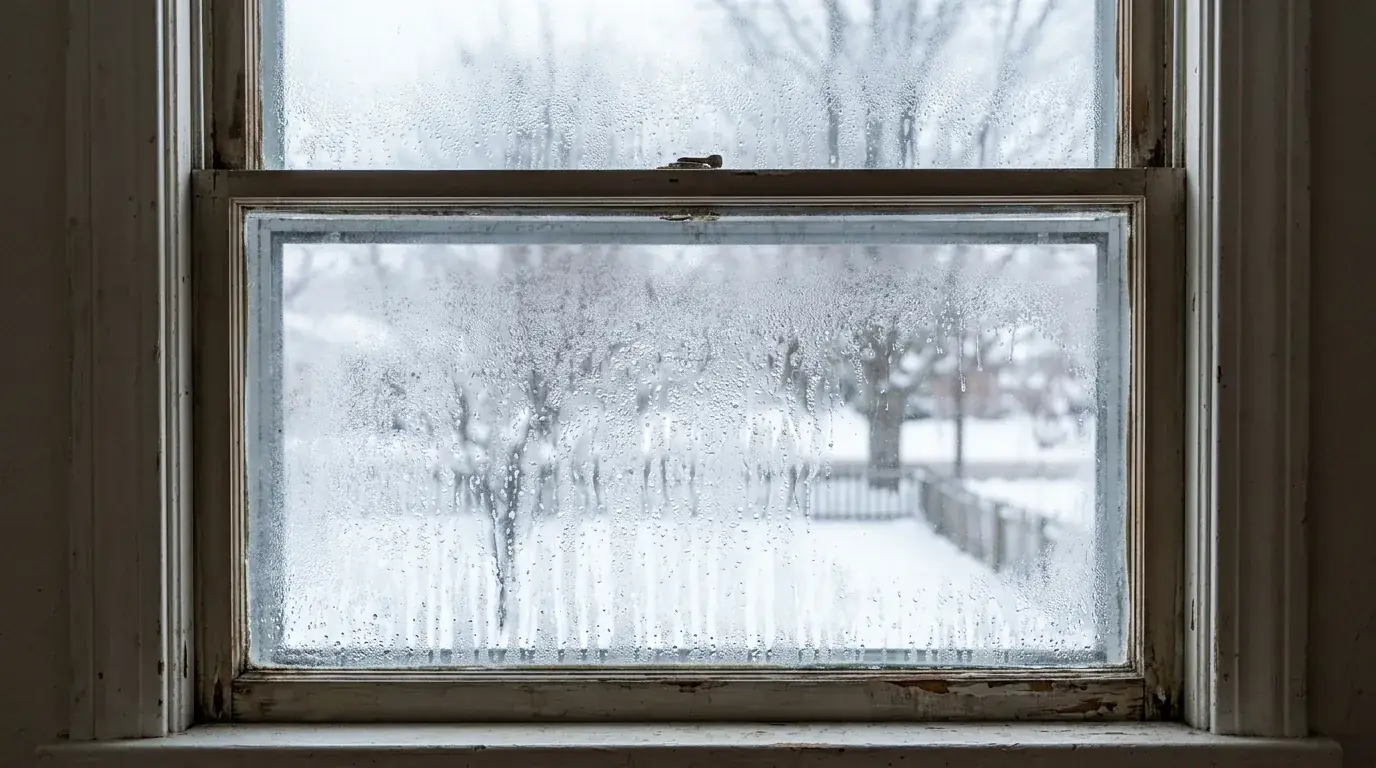
Air holds water vapor, and warm air holds more than cold air. When warm indoor air touches a cold surface, it cools down. If it cools below its dew point, the vapor turns into liquid water. In winter, windows are the coldest surface in most rooms, so that is where you see it first.
Some fog at the bottom corners of a window on the coldest mornings is normal, especially on older windows. But water running down the glass, puddles on the sill, or condensation that lasts all day are signs that indoor humidity is too high.
Where the moisture comes from
- Showers and baths, especially without a working exhaust fan.
- Cooking without a range hood vented outside.
- Drying clothes indoors or a dryer vent that is disconnected.
- People, pets and plants: a family of four adds a lot of moisture every day.
- Damp basements and crawl spaces that pass moisture up into the house. See basement humidity.
- Unvented gas heaters or a humidifier set too high.
Why it matters
Condensation that keeps coming back can:
- Rot wooden window sills and sashes.
- Grow mold on frames, walls and window treatments.
- Peel paint and stain drywall.
- Signal moisture that may also be reaching the attic, where it can cause attic mold.
How to fix it
| Fix | Why it helps |
|---|---|
| Run bath fans during and after showers | Removes moisture at the source |
| Use a range hood that vents outside | Removes cooking moisture |
| Make sure the dryer vents outside | Dryers release a lot of water vapor |
| Control basement moisture | Damp basements feed the whole house |
| Turn down humidifiers | In winter, 30 to 40% relative humidity is usually comfortable |
| Air seal and insulate | Warmer surfaces, less cold air at windows |
| Upgrade very old single-pane windows | Warmer glass surface |
The colder it is outside, the lower your indoor humidity needs to be to avoid condensation. A simple hygrometer helps you see what is happening.
The role of air sealing and ventilation
Air sealing makes a house warmer and more comfortable, but it also reduces the accidental air exchange that used to carry some moisture away. That is why good air sealing goes hand in hand with good ventilation, usually a quiet bath fan or a balanced system. Read why a tight house needs ventilation.
A quick humidity guide for cold weather
As outdoor temperatures drop, the inside surface of windows gets colder, so the humidity level that causes condensation drops too. A general rule used by many building professionals is to lower indoor humidity as it gets colder outside: comfortable humidity in a mild fall week can be too high for a frigid January night. A digital hygrometer helps you adjust.
Where condensation shows up first
- Bottom corners of windows: the coldest part of the glass.
- North-facing rooms: less sun, colder surfaces.
- Bedrooms: people breathe out moisture all night with doors closed.
- Bathrooms and kitchens: high moisture production.
- Behind curtains: trapped air against the glass stays cold.
Window types and condensation
| Window | Glass temperature in winter | Condensation risk |
|---|---|---|
| Single-pane | Very cold | High |
| Single-pane with storm | Warmer | Moderate |
| Older double-pane | Moderate | Moderate |
| Low-e double or triple-pane | Warmer | Lower |
Condensation on storm windows
If condensation forms between the primary window and an exterior storm, warm moist indoor air is leaking past the primary window. Weatherstripping the primary sash and making sure the storm has small weep openings at the bottom usually helps.
When condensation is a symptom of something bigger
- Very high humidity throughout the house: check for a damp basement, unvented dryer or humidifier.
- Condensation only in one room: look for a local source, like a bathroom without a fan or many plants.
- Frost on attic nails and sheathing too: air leaks are carrying moisture into the attic. See attic mold.
A balanced fix
The goal is not to make the house as dry as possible, which can cause discomfort and static. It is to keep humidity in a healthy range, remove moisture at its sources and make interior surfaces warmer through air sealing and insulation.
When to call a professional
If condensation is heavy every day, if you see mold or if wood is rotting, call for an assessment. A home energy audit can measure humidity, check fans and look for moisture sources in the basement and attic. BCI Group's team can help; call (774) 278-8256.
Frequently asked questions
Is condensation on windows bad?
Light fog on very cold mornings is normal. Heavy, daily condensation can damage windows and walls and lead to mold.
What indoor humidity should I aim for in winter?
Around 30 to 40% relative humidity is a common target in cold weather; lower when it is very cold outside.
Will new windows stop condensation?
Newer windows have warmer glass, which helps, but if indoor humidity is very high condensation can still occur.
Does air sealing cause condensation?
Air sealing does not create moisture, but it reduces accidental air exchange. Good ventilation keeps humidity in check.
Why is there condensation between the panes?
That usually means the seal in an insulated glass unit has failed, which is a window repair issue.
Services mentioned in this article
Energy Audits & HERS Ratings near you in Massachusetts
BCI Group crews work in these communities every week. See local details for energy audits in your town: