Key takeaways
- Ducts leak at joints, seams and connections, especially in older systems.
- Leaks in attics, crawl spaces and garages waste heat directly to unconditioned space.
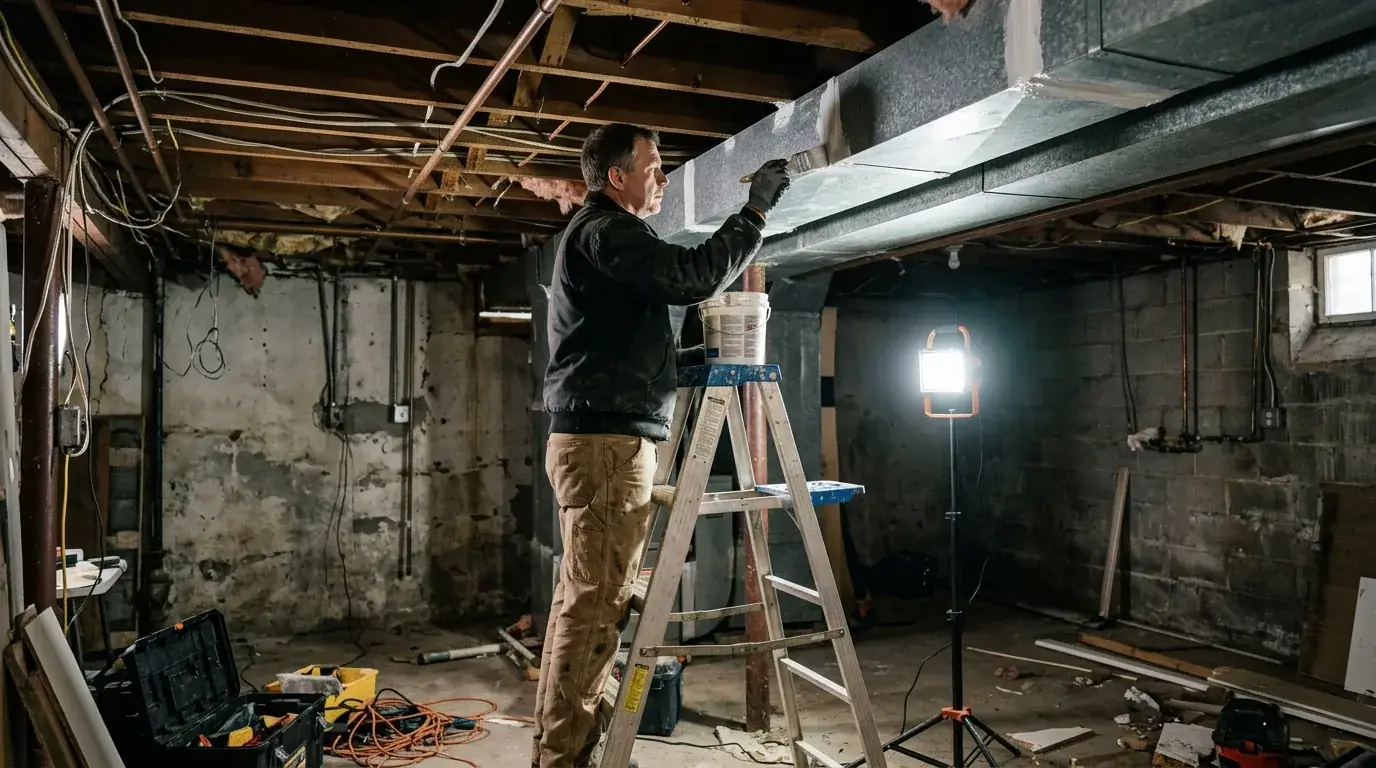
- Mastic or approved foil tape seals joints; insulation protects ducts in unheated spaces.
- A duct leakage test measures the problem and confirms the fix.
How ducts waste energy
In a forced-air system, a furnace or air handler pushes warm (or cool) air through supply ducts to the rooms, and return ducts bring air back. Every joint, seam and connection is a potential leak. When ducts run through unconditioned spaces, like attics, crawl spaces and garages, leaked air is lost entirely, and return leaks can pull in cold, dusty or humid air.
Duct problems also cause:
- Rooms at the end of long runs that never get warm. See uneven temperatures.
- Dust from leaky returns in basements and attics.
- Pressure imbalances that pull air through the house's other leaks.
Where ducts leak most
- Connections at the furnace or air handler (the plenum).
- Joints between duct sections and elbows.
- Takeoffs where branch ducts leave the trunk.
- Boot connections at floor and ceiling registers.
- Flexible duct connections that have pulled loose.
- Panned joist returns (using the floor framing as a return duct).
How leaks are measured
A duct leakage test uses a calibrated fan to pressurize the duct system with the registers sealed and measures how much air escapes. New homes in Massachusetts with ducts outside the thermal envelope must meet code limits for duct leakage, verified by testing. HERS raters perform these tests. See HERS ratings.
How ducts are sealed
| Method | Where it fits |
|---|---|
| Mastic (brushed sealant) | Metal duct joints and seams; durable |
| UL-listed foil tape | Some joints and connections |
| Aerosol duct sealing (internal) | Hard-to-reach ducts inside walls and ceilings |
| Replacing disconnected flex duct | Attics and crawl spaces |
Common cloth duct tape fails over time on ducts. Use mastic or tapes listed for duct sealing.
Insulating ducts in unheated spaces
After sealing, ducts in attics, crawl spaces and garages should be insulated. Another approach is to bring ducts inside the thermal envelope by insulating the attic roofline or crawl space walls; see unvented attics and crawl space encapsulation.
Heat pumps and ducts
If you are adding a ducted heat pump to existing ductwork, sealing and insulating the ducts first improves performance. See insulate before a heat pump.
Where to look for duct problems yourself
- Basement trunk lines: look for gaps at joints and seams, especially near the furnace.
- Disconnected flex ducts: in attics and crawl spaces, flex ducts can pull loose from fittings.
- Panned returns: floor joist bays used as return ducts often leak a lot.
- Registers: gaps between the duct boot and the floor or ceiling.
- Dust streaks: around registers and in attics can indicate air leaking.
Duct insulation levels
Ducts in unconditioned spaces should be insulated to the levels required by code for new installations, and well beyond what many older systems have. Insulation is applied after sealing, with seams taped so the insulation does not trap condensation.
Ducts and indoor air quality
Leaky return ducts in basements, crawl spaces and garages can pull in dust, moisture, radon or fumes and distribute them through the house. Sealing returns improves air quality as well as efficiency.
Combining duct work with other upgrades
| If you are... | Consider |
|---|---|
| Insulating the attic | Seal and insulate attic ducts first, or bury them under insulation |
| Encapsulating the crawl space | Ducts become part of the conditioned space |
| Installing a ducted heat pump | Seal and test existing ducts |
| Finishing the basement | Seal ducts before enclosing them |
The result
Sealed ducts deliver more air to the rooms that need it, make the system run quieter and reduce wasted energy. Rooms at the ends of long runs often feel the biggest improvement.
Get your ducts checked
BCI Group's HERS raters test duct leakage and our crews seal and insulate ducts and the spaces around them. Call (774) 278-8256 or see energy audits and HERS ratings.
Frequently asked questions
How do I know if my ducts are leaky?
Signs include rooms that never get warm, dusty returns and high bills. A duct leakage test measures it.
Can I seal ducts myself?
Accessible metal duct joints can be sealed with mastic. Hidden ducts and testing are best left to professionals.
Is duct tape OK for ducts?
No. Use mastic or tapes listed for duct sealing; common duct tape fails over time.
Should ducts in the attic be insulated?
Yes, after sealing. Or bring them inside the thermal envelope by insulating the roofline.
Is duct testing required for new homes?
In Massachusetts, new homes with ducts outside the envelope must meet duct leakage limits verified by testing.
Services mentioned in this article
Energy Audits & HERS Ratings near you in Massachusetts
BCI Group crews work in these communities every week. See local details for energy audits in your town: