Key takeaways
- The HERS Index is a scale created by RESNET that rates a home’s energy performance.
- A score of 100 matches a reference home built to the 2006 energy code; 0 is a net-zero energy home.
- Each point lower is about 1% more efficient than the reference home.
- Massachusetts Stretch Code towns use HERS ratings for new homes.
What HERS is
HERS stands for Home Energy Rating System, a national standard managed by RESNET. A certified HERS rater analyzes a home's construction, tests it and uses approved software to calculate its HERS Index.
How the scale works
| HERS Index | Meaning |
|---|---|
| 130 or higher | Typical of many older existing homes |
| 100 | Equal to a reference home built to the 2006 IECC |
| 50 | About 50% less energy than the reference home |
| 0 | Net-zero: produces as much energy as it uses |
Lower is better. Each point is roughly 1% of the reference home's energy use. A home with HERS 60 is about 40% more efficient than the reference home.
How a rating is done
- Plan review: the rater models the home from the plans and specifications.
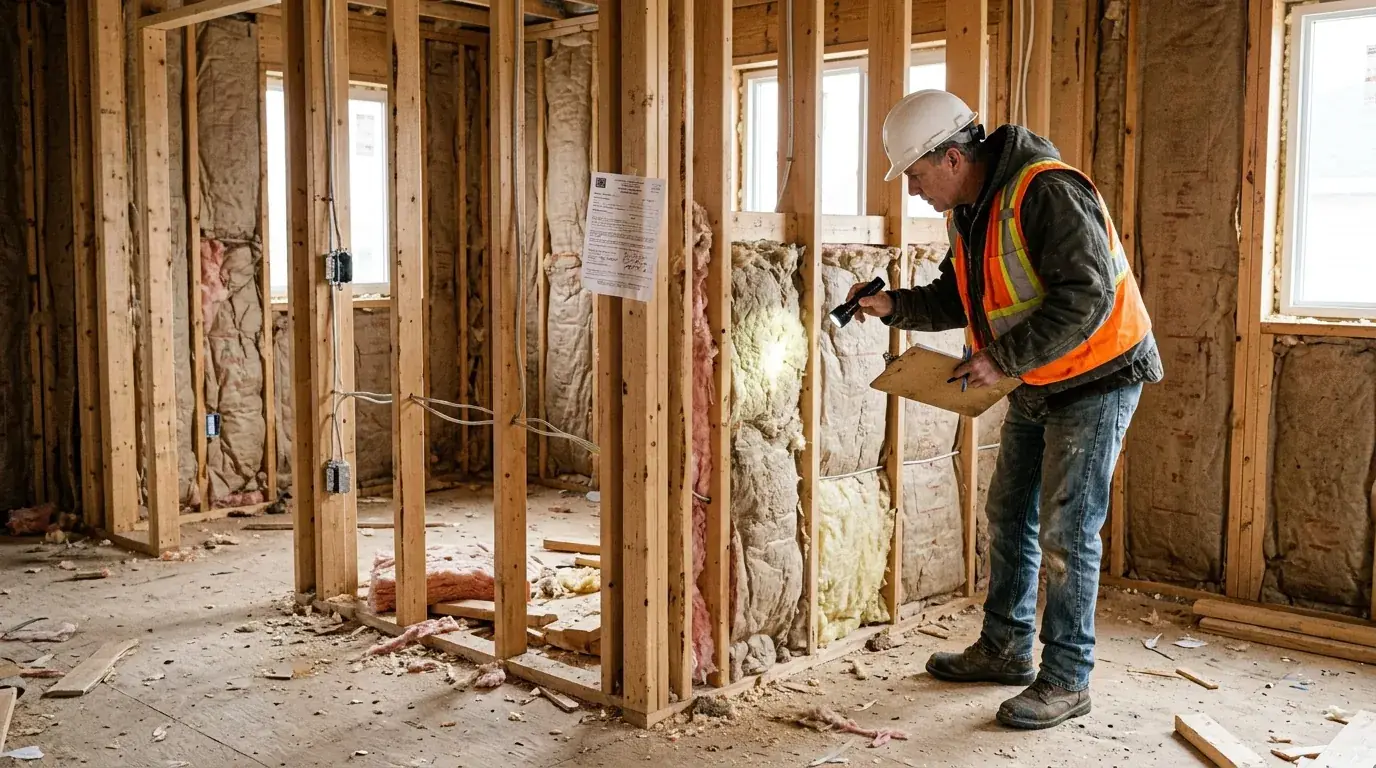
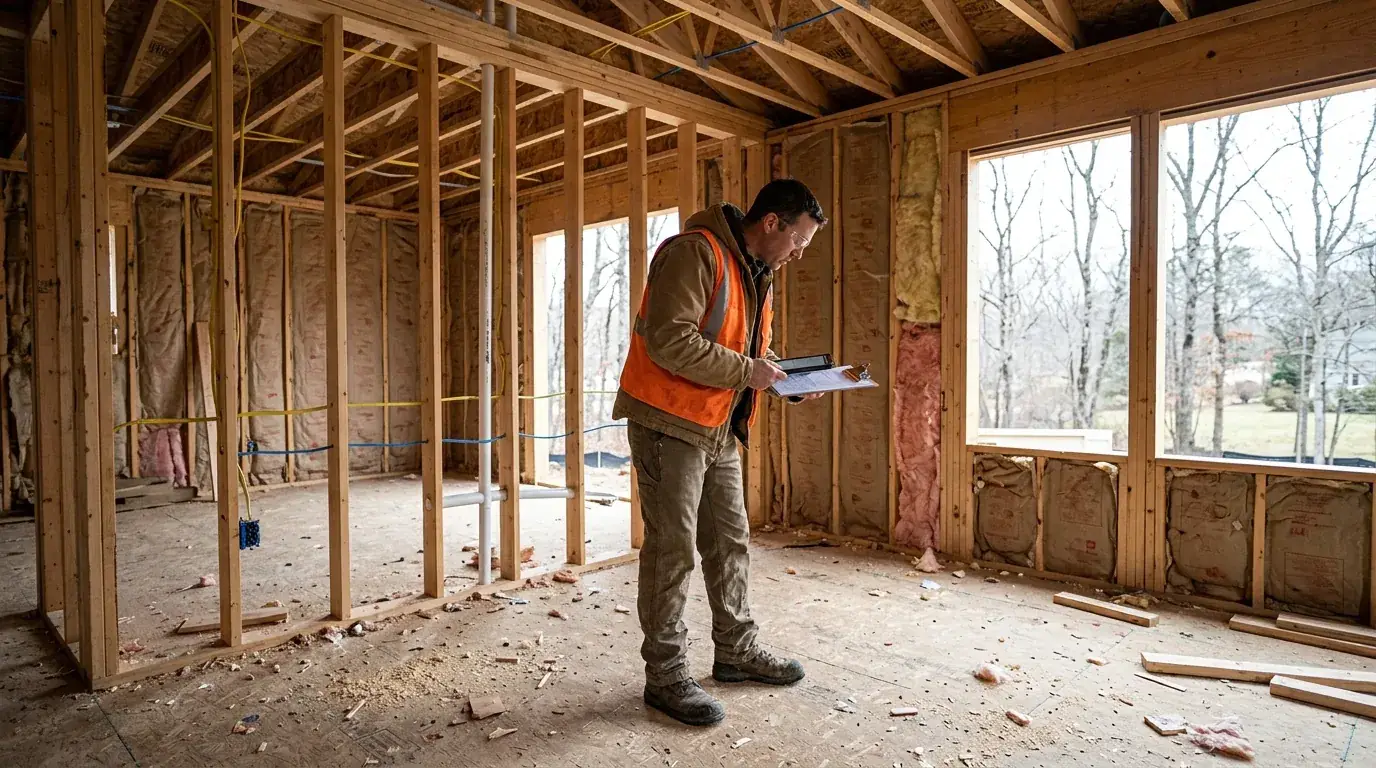
- Pre-drywall inspection: insulation installation quality and air sealing are checked before walls are closed. See fiberglass batt mistakes.
- Final testing: blower door test, duct leakage test (if ducts are present) and verification of equipment.
- Final rating: the software calculates the HERS Index and produces documentation for the building department and programs.
Why it matters in Massachusetts
Massachusetts' Stretch Energy Code, adopted by most municipalities, uses a HERS rating path for new homes, with maximum HERS Index targets that depend on how the home is heated. The Specialized Opt-in Code adds further requirements. A HERS rater is part of nearly every new home project in those towns. See the Massachusetts Stretch Code.
HERS ratings are also used for:
- Mass Save® residential new construction incentives.
- ENERGY STAR certification.
- Marketing and selling efficient homes.
What drives a good score
- A tight envelope (low ACH50).
- Well-installed insulation in walls, attics and foundations.
- High-performance windows.
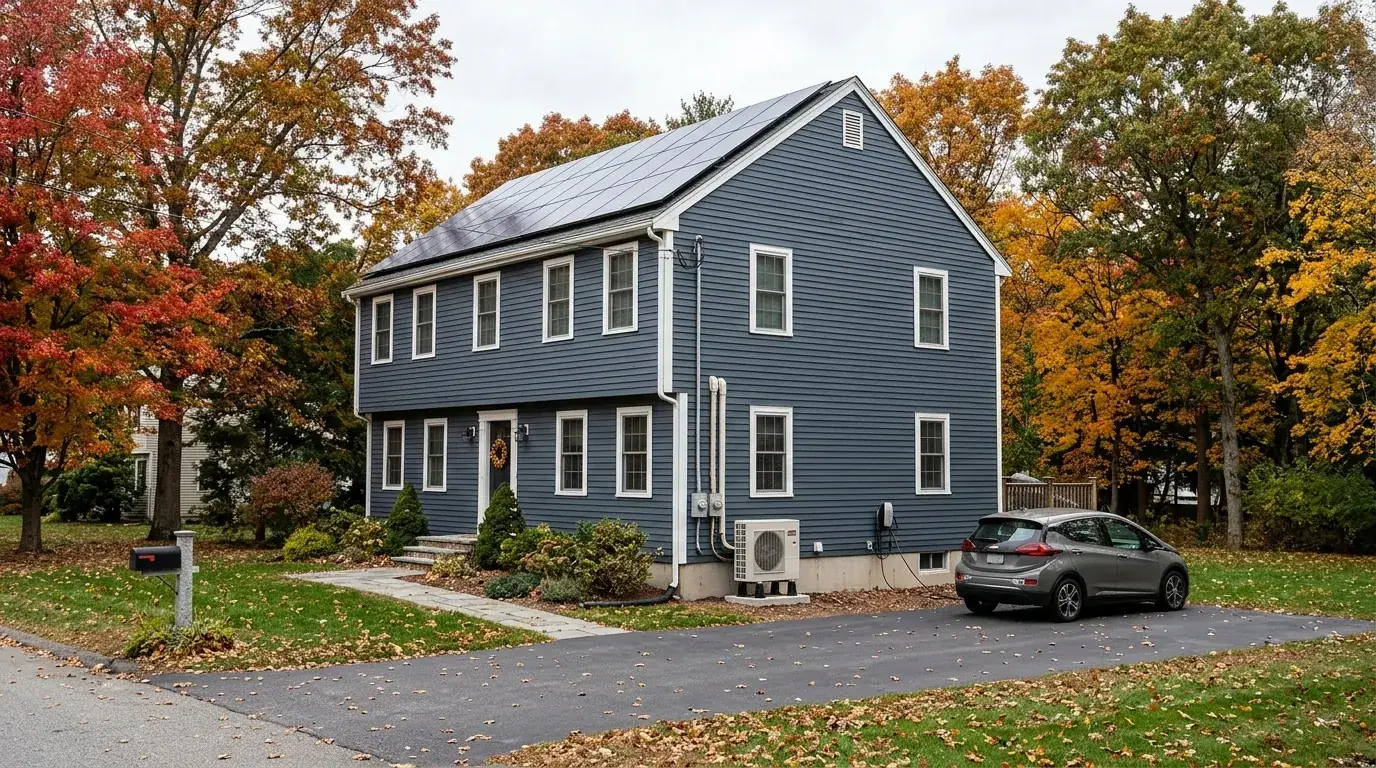
- Efficient heating, cooling and water heating; heat pumps help significantly.
- Tight, well-located ducts.
- Solar panels, which can drive the score toward 0.
Bring the rater in at the design stage. Small changes on paper, like more insulation or a different heating system, are much cheaper than fixes after framing.
Existing homes
HERS ratings are mainly used for new construction, but existing homes can be rated too, for example before and after a deep energy retrofit.
HERS score vs. energy bills
A HERS Index compares a home to a reference home of the same size and shape. It estimates relative efficiency, not exact bills, which depend on occupants, thermostat settings, fuel prices and weather. Still, a lower score generally means lower energy use for the same lifestyle.
What raters check at the pre-drywall inspection
- Insulation installed to the specified R-values and quality grade.
- Air sealing at plates, penetrations, rim joists and the attic plane.
- Air barriers behind tubs, showers, fireplaces and stairs on exterior walls.
- Insulation and air barrier alignment at knee walls and attic hatches.
- Window installation and flashing (as relevant to the program).
Improving a projected HERS score
| Change | Typical effect on HERS |
|---|---|
| Tighter envelope (lower ACH50) | Lowers score |
| Higher-efficiency heat pump | Lowers score |
| Better windows | Lowers score |
| More attic or wall insulation | Lowers score |
| Ducts inside conditioned space | Lowers score |
| Solar PV | Lowers score significantly |
The rater can run scenarios to show which changes reach the target most cost-effectively.
HERS and resale value
Some buyers and agents value documented efficiency. A HERS certificate, blower door results and ENERGY STAR certification (when earned) are useful marketing documents for new homes.
Choosing a HERS rater
Look for RESNET-certified raters who work in your area and understand the Massachusetts Stretch and Specialized Codes. Raters who also coordinate with insulation crews can help builders resolve issues quickly.
Work with in-house HERS raters
BCI Group's HERS raters and insulation crews work together, which helps builders hit their HERS targets with fewer surprises. See energy audits and HERS ratings or call (774) 278-8256.
Frequently asked questions
What is a good HERS score?
Lower is better. New homes built to current Massachusetts codes typically score far below 100; high-performance homes go much lower, and net-zero homes reach 0.
Who performs HERS ratings?
Certified HERS raters accredited through RESNET.
Is a HERS rating required in Massachusetts?
In Stretch Code and Specialized Code municipalities, new homes typically use the HERS rating path to show compliance.
How much does a HERS rating cost?
It depends on the home size and scope. Ask a rater for a quote based on your plans.
Can an existing home get a HERS rating?
Yes, though ratings are most common in new construction.
Services mentioned in this article
Energy Audits & HERS Ratings near you in Massachusetts
BCI Group crews work in these communities every week. See local details for energy audits in your town: