Key takeaways
- A heat pump’s size is set by the house’s heat loss on the coldest days.
- Air sealing and insulation reduce that heat loss, so the system can be smaller and cheaper.
- A smaller, right-sized system runs more efficiently and keeps rooms more even.
- In Massachusetts, insulation and air sealing are heavily rebated through Mass Save®.
The logic in one sentence
Every heat pump has to be big enough for the house's heat loss on a design cold day; reduce the heat loss and you reduce the heat pump you need.
What changes when you insulate first
| Insulate after | Insulate first | |
|---|---|---|
| Heat pump capacity | Sized for a leaky house | Sized for a tight house |
| Equipment cost | Higher | Lower |
| Efficiency in use | Often oversized after later insulation | Right-sized, runs longer and steadier |
| Backup heat use | More | Less |
| Comfort | Drafts and cold rooms remain | Even temperatures |
The cold-weather capacity problem
Heat pumps deliver less heat as it gets colder outside, exactly when a leaky house needs the most. In a drafty house, the system may need backup heat on many winter days. In a sealed and insulated house, the same heat pump can cover far more of the season on its own. See heat pumps in cold climates.
Which improvements matter most
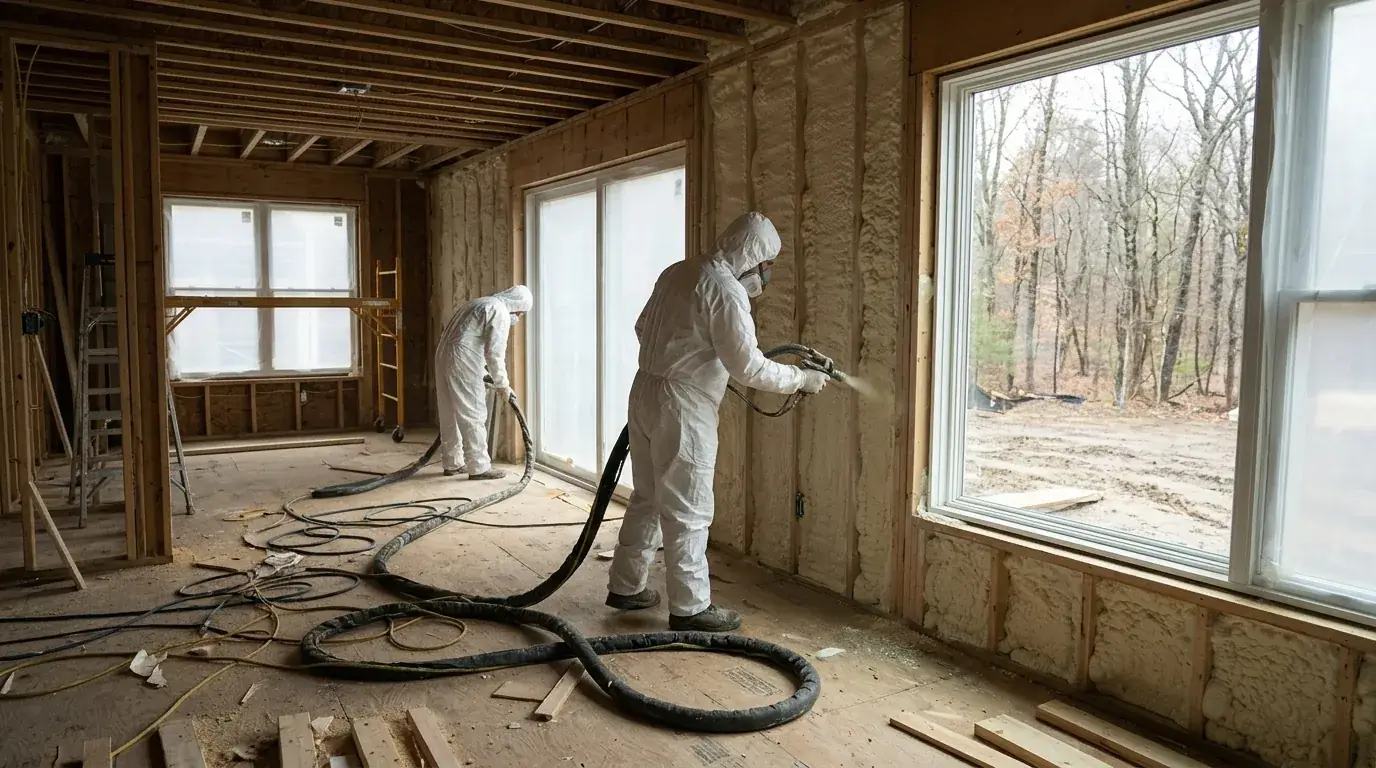
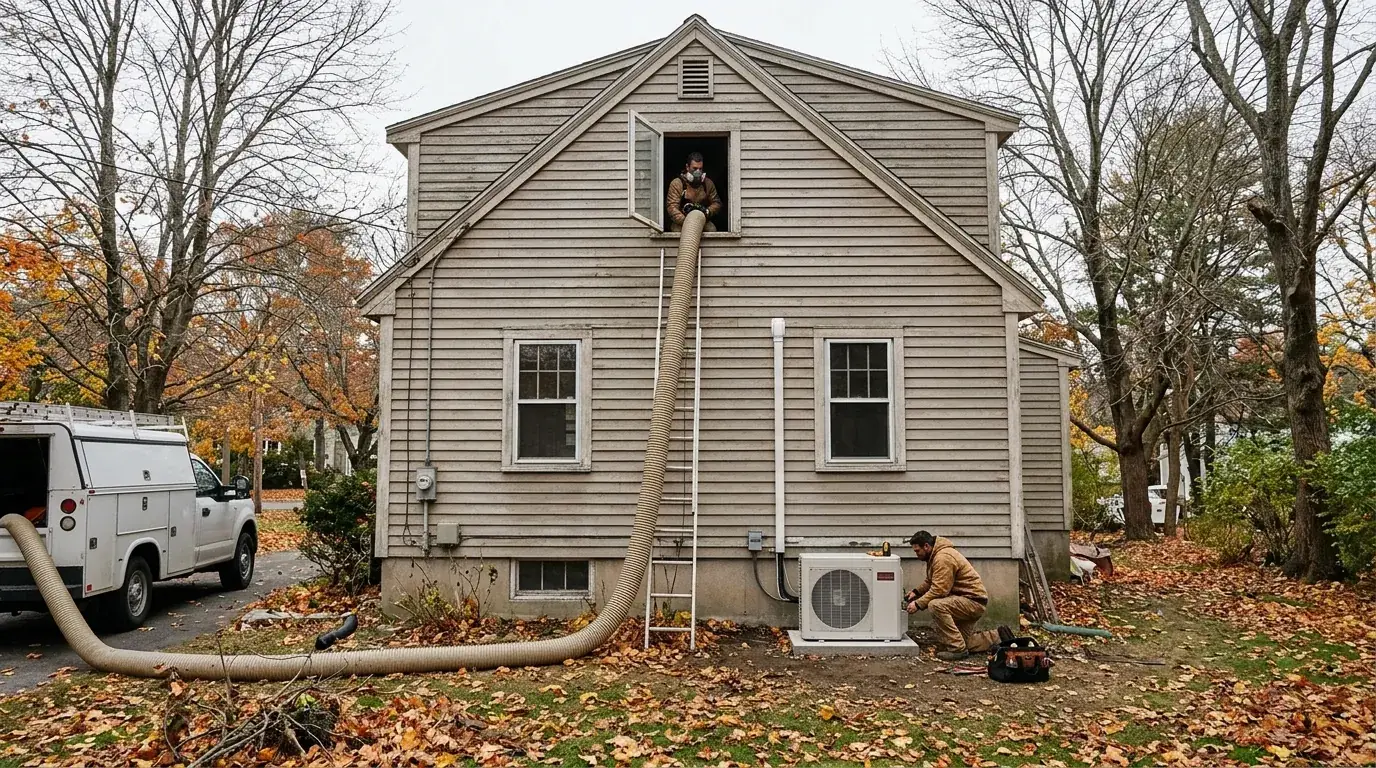
- Attic air sealing and insulation: the biggest reduction in most homes. See attic air sealing.
- Basement rim joists: reduces cold air at the bottom of the house. See rim joist insulation.
- Wall insulation in pre-1960 homes with empty walls.
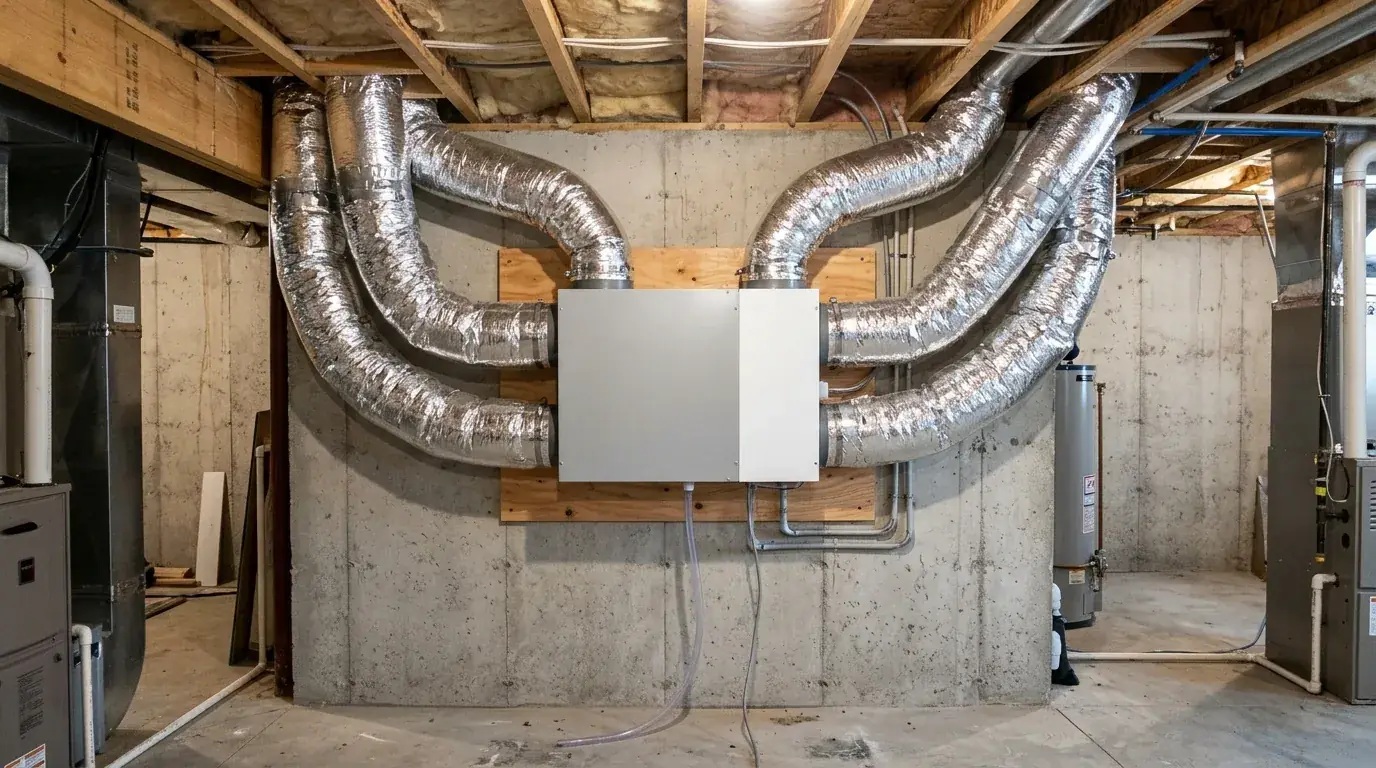
- Duct sealing if the heat pump will use ducts. See duct sealing.
Comfort is the hidden benefit
Heat pumps deliver gentle, steady heat. In a drafty house, that can feel less comfortable than a hot radiator, because cold air keeps sweeping across the floor. After air sealing, the steady heat feels even and quiet. Many heat pump complaints are really building-shell complaints.
Mass Save® supports the right order
Mass Save® offers no-cost air sealing and rebates for approved insulation to eligible customers, along with heat pump rebates and the 0% HEAT Loan. Some heat pump incentive paths also look at whether the home has been weatherized. See heat pump rebates.
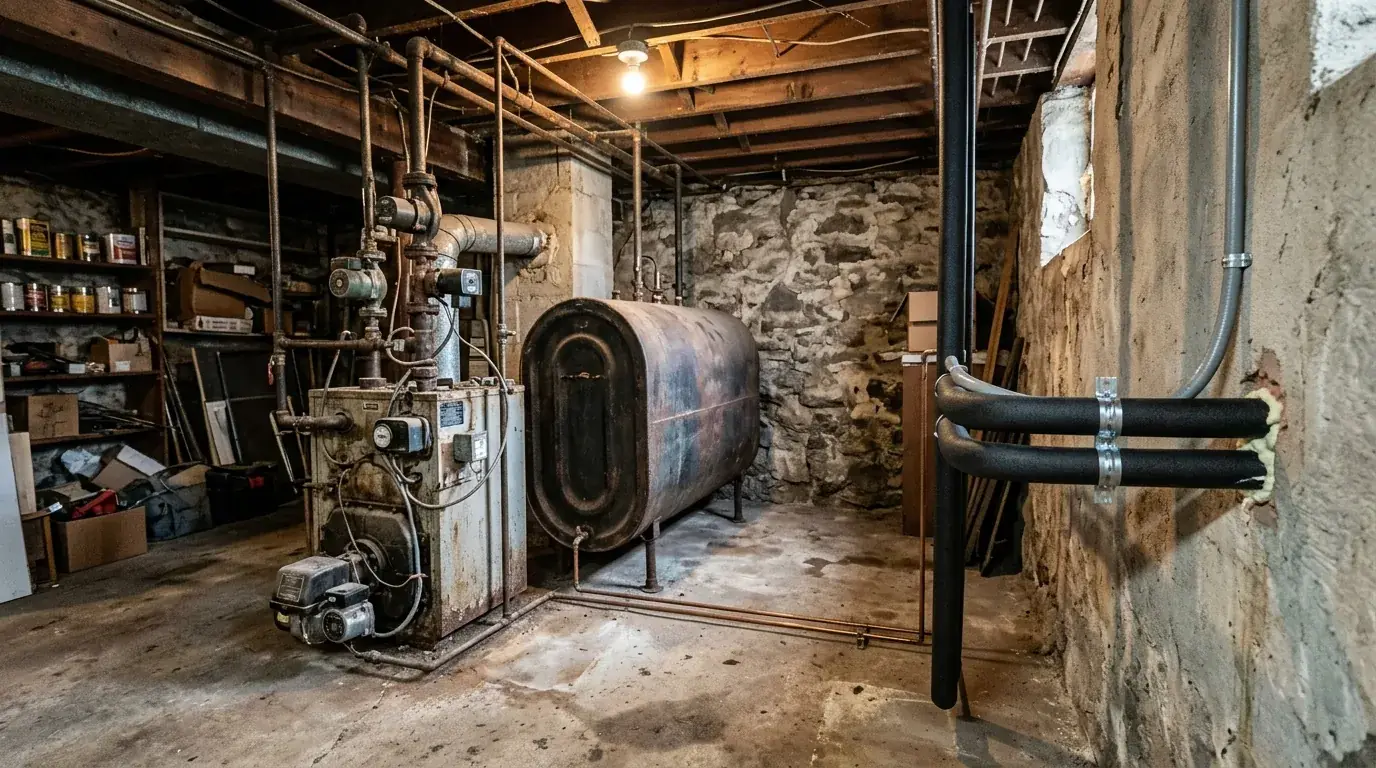
If your heating system is failing, you may not have time to insulate first. In that case, tell the designer what insulation is planned so the system is sized for the future, not the current, house.
A sample comparison, in general terms
Picture two identical 1960s colonials in Central Massachusetts. In the first, the owner installs a heat pump right away; the designer must size it for a drafty house with thin attic insulation, so multiple large units are needed and backup heat runs on cold nights. In the second, the owner air seals and insulates first; the designer sizes for the lower heat loss, and fewer or smaller units cover most of the winter. The second house usually ends up with a lower equipment cost, lower bills and better comfort, while insulation incentives offset much of the shell work.
How much shell work is enough?
| Priority | Upgrade | Effect on heat pump sizing |
|---|---|---|
| 1 | Attic air sealing | Large reduction in heat loss in many homes |
| 2 | Attic insulation to R-49+ | Further reduction |
| 3 | Rim joist sealing | Reduces infiltration at the base |
| 4 | Wall insulation (if empty) | Significant in older homes |
| 5 | Window upgrades or storms | Moderate; often later |
Test before and after
A blower door test before and after air sealing gives the designer real numbers for the load calculation. Many designers prefer measured leakage to assumptions.
Planning both projects together
- Schedule the energy assessment first.
- Complete air sealing and insulation.
- Have the heat pump designer use post-weatherization data.
- Apply for heat pump rebates and the HEAT Loan with the final scope.
What if you already have a heat pump?
If a heat pump was installed before insulation, weatherizing now still helps: the system will run less, rooms will feel more even and backup heat will be needed less often.
Plan both steps together
BCI Group handles energy audits, air sealing and insulation, and coordinates with our HVAC partner 1A Home Energy on heat pumps. One plan, the right order. Call (774) 278-8256.
Frequently asked questions
Should I insulate before getting a heat pump?
Yes. Insulation and air sealing reduce the heating load, allowing a smaller, cheaper and more efficient system.
How much smaller can the heat pump be?
It depends on how leaky and under-insulated the house is. A heat-loss calculation before and after shows the difference.
What if my boiler is failing now?
Size the new system for the planned insulation, and complete the shell work as soon as possible.
Does Mass Save® help with both?
Yes. Mass Save® offers insulation and air sealing incentives, heat pump rebates and 0% financing for qualifying projects.
Will insulation make a heat pump more comfortable?
Yes. Fewer drafts and warmer surfaces make the steady heat of a heat pump feel more even.
Services mentioned in this article
Insulation Contractor near you in Massachusetts
BCI Group crews work in these communities every week. See local details for insulation in your town: