Key takeaways
- Spray foam is made on site from two chemical components that react; the risk is during and shortly after installation.
- Installers wear protective equipment, and occupants stay out of the work area during spraying and for the re-occupancy period the manufacturer specifies.
- Once fully cured, spray foam is inert and stable.
- Codes require foam to be covered by a thermal or ignition barrier in most locations.
Why the question comes up
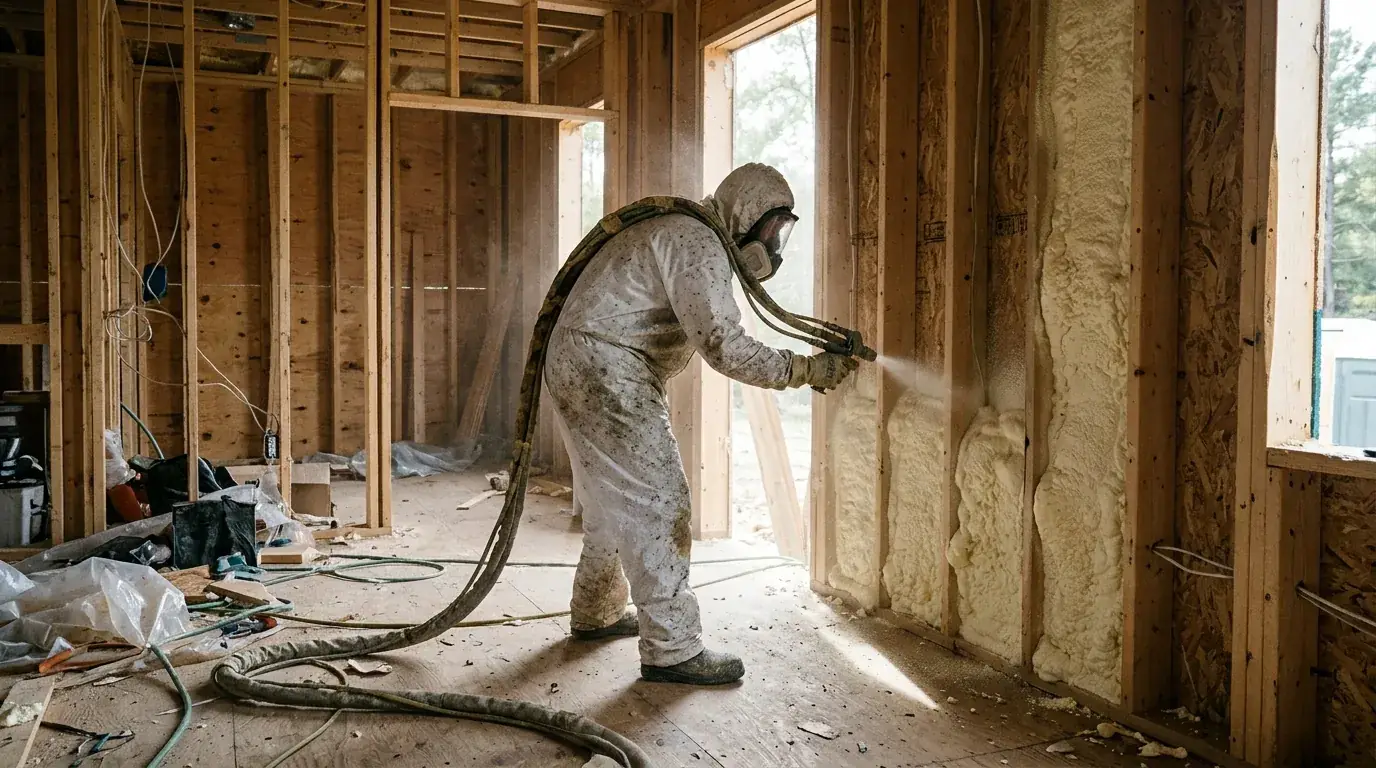
Unlike fiberglass or cellulose, spray foam is manufactured on site. Two liquids, an isocyanate component ("A side") and a polyol resin blend ("B side"), are mixed in a heated spray gun and react to form foam. During spraying, the chemicals and vapors can irritate the lungs, eyes and skin. That is why installation safety, ventilation and re-occupancy times matter.
How a professional installation protects you
- Trained installers who follow the manufacturer's instructions for temperature, mix and thickness.
- Protective equipment: full suits, gloves and respirators, often supplied-air.
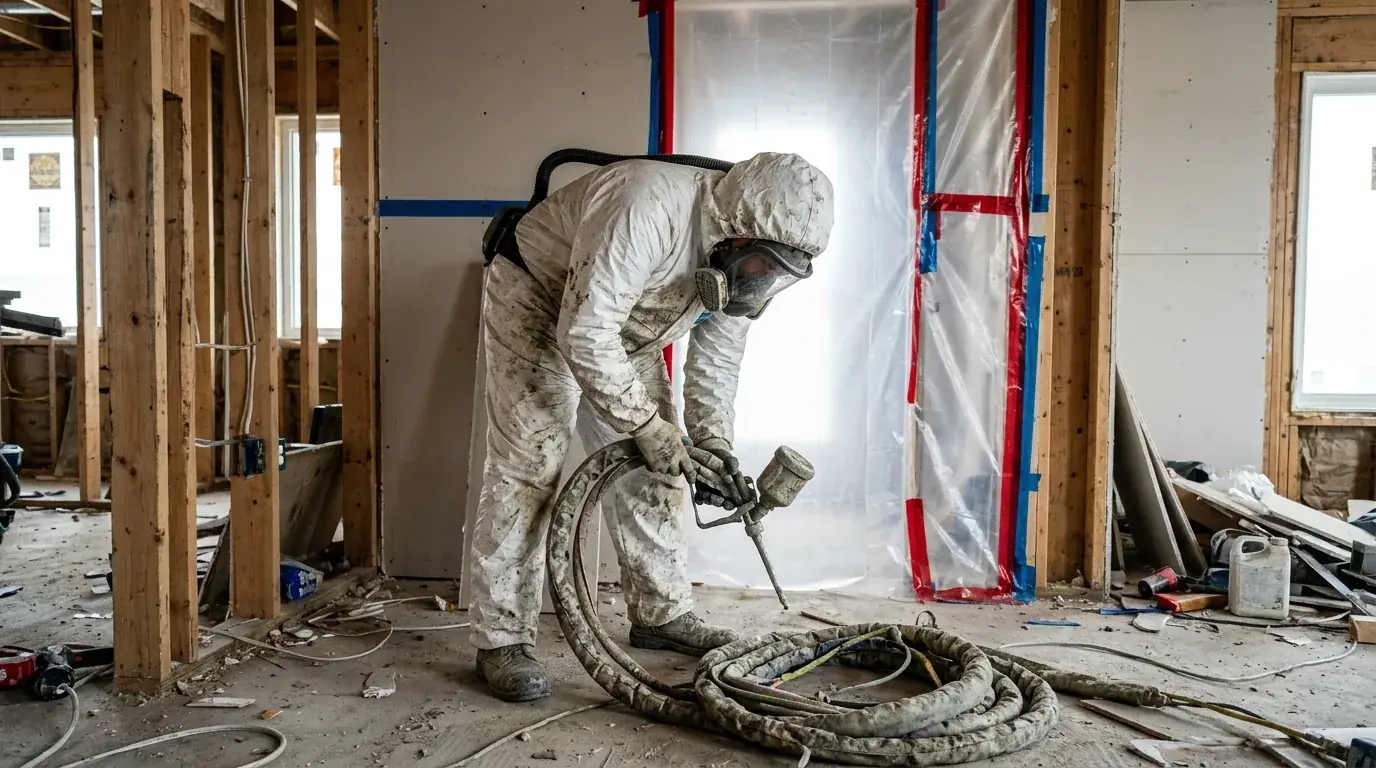
- Containment: the work area is closed off with plastic sheeting.
- Ventilation: the work area is ventilated during and after spraying.
- No occupants in the work area during spraying and for the manufacturer's specified re-occupancy period, commonly at least 24 hours.
What product will you use? What is its re-occupancy time? How will the area be ventilated? A professional answers these questions clearly.
After the foam cures
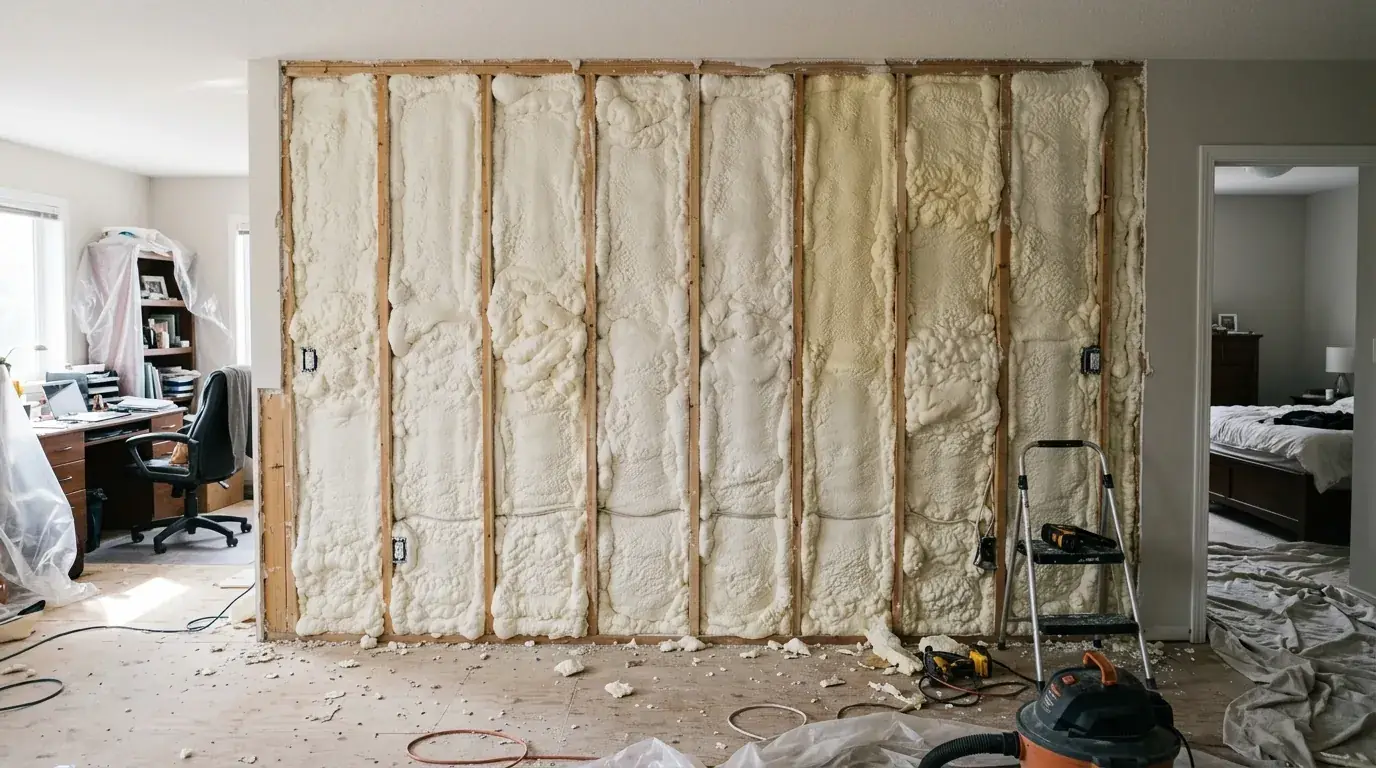
Once the reaction is complete and the foam has cured, it is an inert, stable plastic. It does not shed fibers like fiberglass. Some people notice a mild odor for a short time after installation; proper ventilation and correct mixing minimize it. Persistent strong odors can indicate an installation problem, such as an incorrect mix ratio, which is why choosing an experienced installer matters.
Fire safety
Spray foam is a foam plastic. Building codes generally require it to be separated from living spaces by a thermal barrier, typically 1/2-inch drywall, or in some attics and crawl spaces an ignition barrier or approved intumescent coating. These rules exist so that foam does not contribute to a fire's spread. See thermal barrier requirements and our fire retardant paint service.
Moisture and building safety
Using the right foam in the right place matters for the long-term health of the building. In Massachusetts, closed-cell foam is generally preferred against cold surfaces like roof decks, rim joists and foundation walls because it controls moisture. Open-cell is vapor-open and needs careful design in cold-climate assemblies. See open-cell vs. closed-cell.
Ventilation after air sealing
Spray foam makes buildings much tighter. A tight house needs controlled ventilation to keep indoor air fresh. See why a tighter house needs ventilation.
Questions to ask before hiring
| Question | Why it matters |
|---|---|
| Who installs: your crew or subcontractors? | Accountability and training |
| What product and re-occupancy time? | Plan when you can return |
| How will you ventilate and contain the area? | Protects the rest of the house |
| Is a thermal or ignition barrier included? | Code compliance and fire safety |
| What thickness and R-value? | Performance and fair pricing |
What happens on installation day
- Preparation: the crew covers floors, windows and anything that should not get overspray.
- Containment: plastic sheeting isolates the work area; HVAC may be shut off or sealed to keep vapors from spreading.
- Ventilation: fans exhaust air from the work area to the outdoors.
- Spraying: installers wearing protective equipment apply foam in passes.
- Curing and ventilation continue for the period the manufacturer specifies.
- Cleanup and inspection: trimming, cleanup and a final check.
Who should take extra precautions
People with asthma, chemical sensitivities or respiratory conditions should talk with their contractor before the project. Planning to be away during installation and the re-occupancy period, and confirming ventilation, gives extra peace of mind.
Odor: what is normal and what is not
| Situation | What it suggests |
|---|---|
| Mild odor during the first day or two, fading quickly | Normal for many installations |
| Strong odor lasting weeks | Possible installation issue; contact the installer |
| Fishy or ammonia-like smell | Possible off-ratio foam; needs evaluation |
| Odor only when the area is warm | Have the installer investigate |
Product certifications
Some spray foam products are tested for low emissions under recognized indoor air quality standards. Ask your contractor which product they use and whether it carries such certifications.
Comparing with other materials
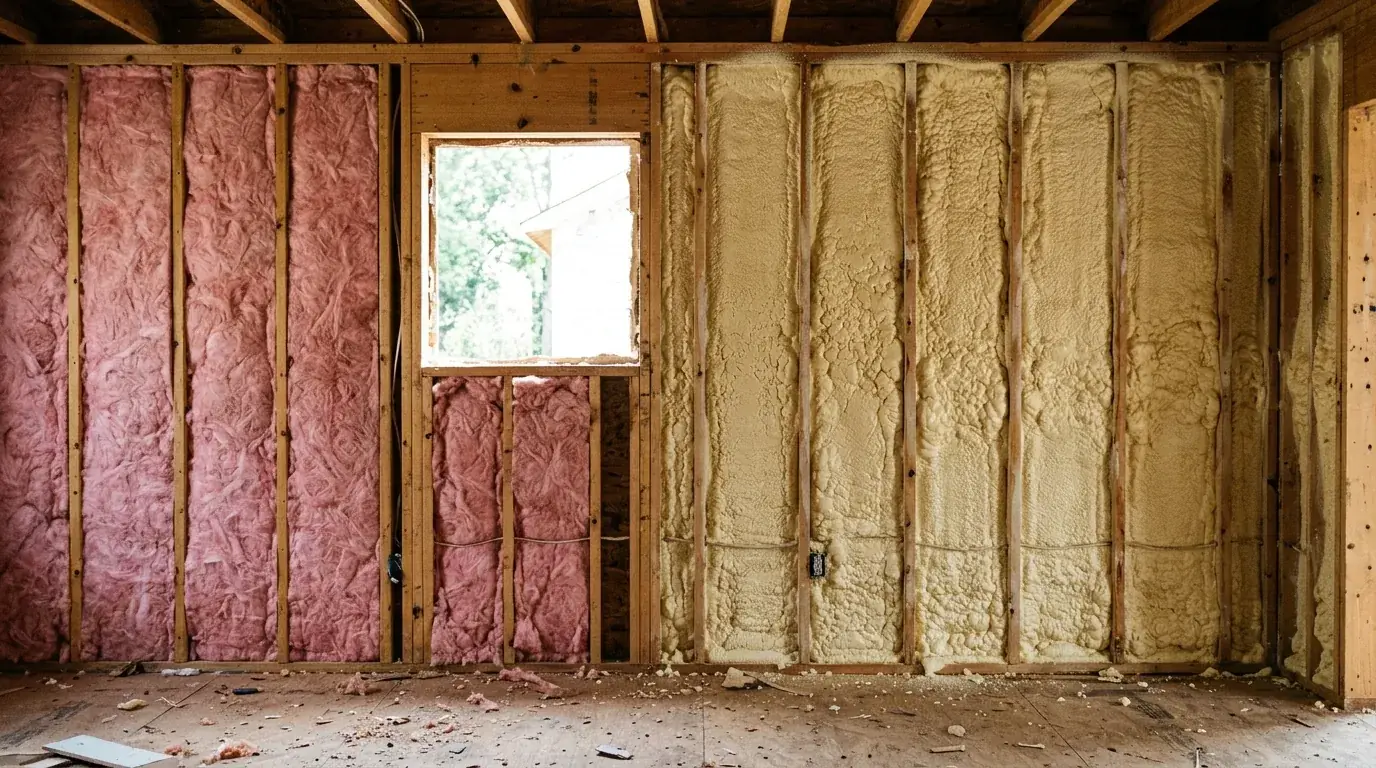
Every insulation material has handling precautions during installation: fiberglass and mineral wool can irritate skin and lungs, and cellulose is dusty. The difference with spray foam is that it is manufactured on site, which is why installer training and procedures matter so much.
The bottom line
When installed by trained professionals following manufacturer procedures, spray foam is a safe, durable insulation used in homes across New England. Ask questions, choose an experienced installer and follow the re-occupancy guidance.
Talk to our team
BCI Group's own crews install spray foam with containment, ventilation and code-compliant coatings. Call (774) 278-8256 or request a free estimate, and ask us anything about the process.
Frequently asked questions
Is spray foam safe once it cures?
Yes. Once fully cured, spray foam is an inert, stable plastic.
How long should I stay out after spray foam is installed?
Follow the manufacturer’s re-occupancy time for the product used, commonly at least 24 hours. Your installer will tell you.
Does spray foam smell?
There can be a mild odor during and shortly after installation. A strong, lasting odor may indicate an installation problem.
Is spray foam a fire hazard?
Spray foam must be covered by a thermal or ignition barrier as required by code, which addresses fire safety.
Can I stay in the house during spray foam installation?
Occupants should stay out of the work area during spraying and the re-occupancy period. Depending on the job, you may need to leave the house entirely.
Services mentioned in this article
Spray Foam Insulation near you in Massachusetts
BCI Group crews work in these communities every week. See local details for spray foam in your town: