
Key takeaways
- Mineral wool, also called stone wool or rock wool, is made from volcanic rock and recycled slag spun into fibers.
- It reaches about R-4 to R-4.3 per inch in batts, slightly more than standard fiberglass batts.
- It is non-combustible, which makes it a common choice for fire-rated walls and fireblocking.
- Its density makes it one of the best insulation choices for reducing noise between rooms and floors.
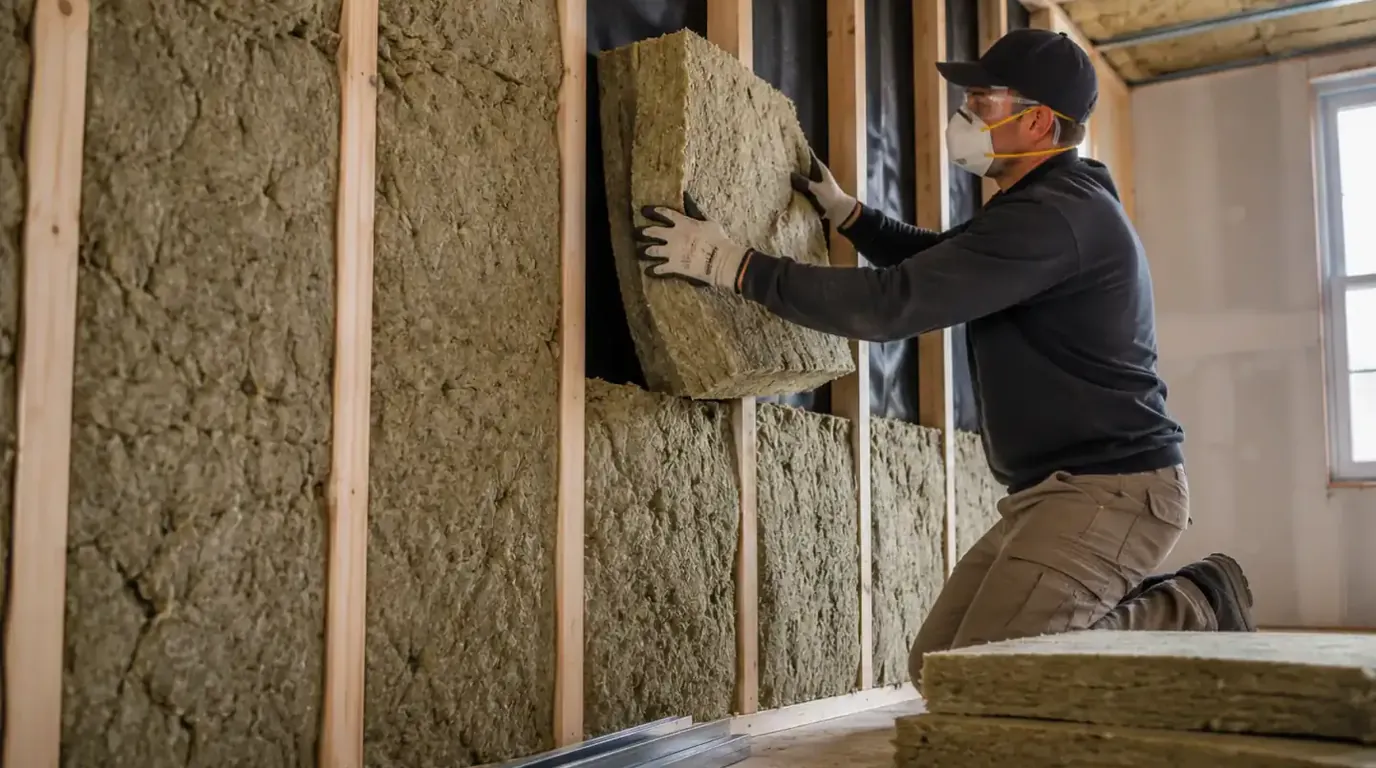
Mineral wool insulation is made by melting stone and recycled slag and spinning it into dense fibers. It is sold as batts, boards and loose fill. Builders and homeowners choose it for three reasons: it resists fire, it absorbs sound and it holds its shape. This guide explains mineral wool's R-value, fire and sound performance, moisture behavior and where it makes sense in Massachusetts homes.
Mineral wool at a glance
| Property | Mineral wool batts | Standard fiberglass batts |
|---|---|---|
| R-value per inch | About R-4 to R-4.3 | About R-3.1 to R-3.4 (higher for high-density) |
| Fire | Non-combustible, withstands very high temperatures | Glass fibers resist fire; facings can burn |
| Sound | Excellent, thanks to density | Good |
| Water | Repels water, drains and dries | Does not absorb water but loses R-value when wet |
| Fit | Stiff, friction-fits tightly and is cut with a serrated knife | Soft, easier to compress or leave gaps |
| Cost | Higher | Lower |
Exact values depend on the product. For a full comparison, see mineral wool vs. fiberglass.
Fire resistance
Stone wool fibers do not burn and can withstand temperatures far above those of a typical house fire. That is why mineral wool is used in fire-rated wall and floor assemblies, around chimneys where code allows, and as a fireblocking material in many applications. In multifamily buildings and additions, it helps assemblies meet fire-resistance ratings when installed as specified. See fireblocking requirements.
A fire rating belongs to the whole tested assembly: studs, drywall type, fasteners and insulation. Mineral wool helps, but it must be installed exactly as the listed assembly requires.
Sound control
Mineral wool is dense, so it absorbs sound well inside wall and floor cavities. It is a common choice for:
- Bedrooms, home offices and media rooms.
- Walls and floors between units in two-family and multifamily homes.
- Bathrooms and laundry rooms.
- Ceilings under bedrooms.
Insulation is only one part of soundproofing. Mass, decoupling and sealing gaps matter just as much. See how to soundproof walls and does spray foam soundproof a room?
Moisture and basements
Mineral wool repels liquid water and dries out without losing its shape, which makes it useful in some basement and exterior applications. Rigid mineral wool boards are also used as continuous exterior insulation. In basements, the assembly still needs proper moisture and vapor control. See basement insulation.
Where mineral wool makes the most sense
- Interior walls and floors where sound control matters.
- Fire-rated assemblies and areas that need non-combustible insulation.
- Open exterior walls in renovations and additions, where a slightly higher R-value per inch helps in 2x4 walls.
- Garage walls and ceilings next to living spaces. See garage insulation.
- Continuous exterior insulation with rigid boards.
Where another material may be better
For open attic floors, blown cellulose or fiberglass usually gives more R-value for the money. For closed walls in older homes, dense-pack cellulose fills cavities without opening them. For rim joists and roof decks, spray foam air seals better. See types of home insulation.
Installation tips
- Cut batts slightly wider than the cavity so they friction-fit with no gaps.
- Cut neatly around boxes, pipes and wires instead of compressing the batt.
- Seal air leaks first; mineral wool slows heat and sound but does not stop air.
- Follow the listed assembly exactly where fire ratings apply.
Cost and value
Mineral wool costs more than standard fiberglass batts. It is worth it where fire resistance or sound control matters, or where the higher R-value per inch helps in shallow walls. For general wall and attic insulation, other materials often give better value.
Talk to an installer
BCI Group installs mineral wool for sound control, fire-rated assemblies and fireblocking in homes and commercial buildings across Massachusetts. See our mineral wool and sound control service or request a free estimate below.
Frequently asked questions
What is mineral wool insulation?
It is insulation made from melted volcanic rock and recycled slag spun into dense fibers, sold as batts, boards and loose fill. It is also called stone wool or rock wool.
What is the R-value of mineral wool?
Mineral wool batts are about R-4 to R-4.3 per inch, depending on the product.
Is mineral wool fireproof?
It is non-combustible and withstands very high temperatures, which is why it is used in fire-rated assemblies and for fireblocking. Fire ratings apply to the whole tested assembly.
Is mineral wool good for soundproofing?
Yes. Its density makes it one of the best insulation choices for reducing noise, especially combined with added mass and sealing.
Is mineral wool better than fiberglass?
It has a higher R-value per inch, better fire and sound performance and holds its shape, but it costs more. Fiberglass is often the better value where those benefits are not needed.
Services mentioned in this article
Mineral Wool & Sound Control near you in Massachusetts
BCI Group crews work in these communities every week. See local details for Mineral wool in your town:


