Key takeaways
- Capes have five separate insulation zones upstairs: knee walls, the floor behind them, sloped ceilings, the top attic and dormers.
- Skipping any one of them leaves cold rooms and ice dams.
- Dense-pack cellulose and spray foam are both used, depending on access.
- Mass Save® commonly covers knee walls, slopes and attics in capes.
Why capes are different
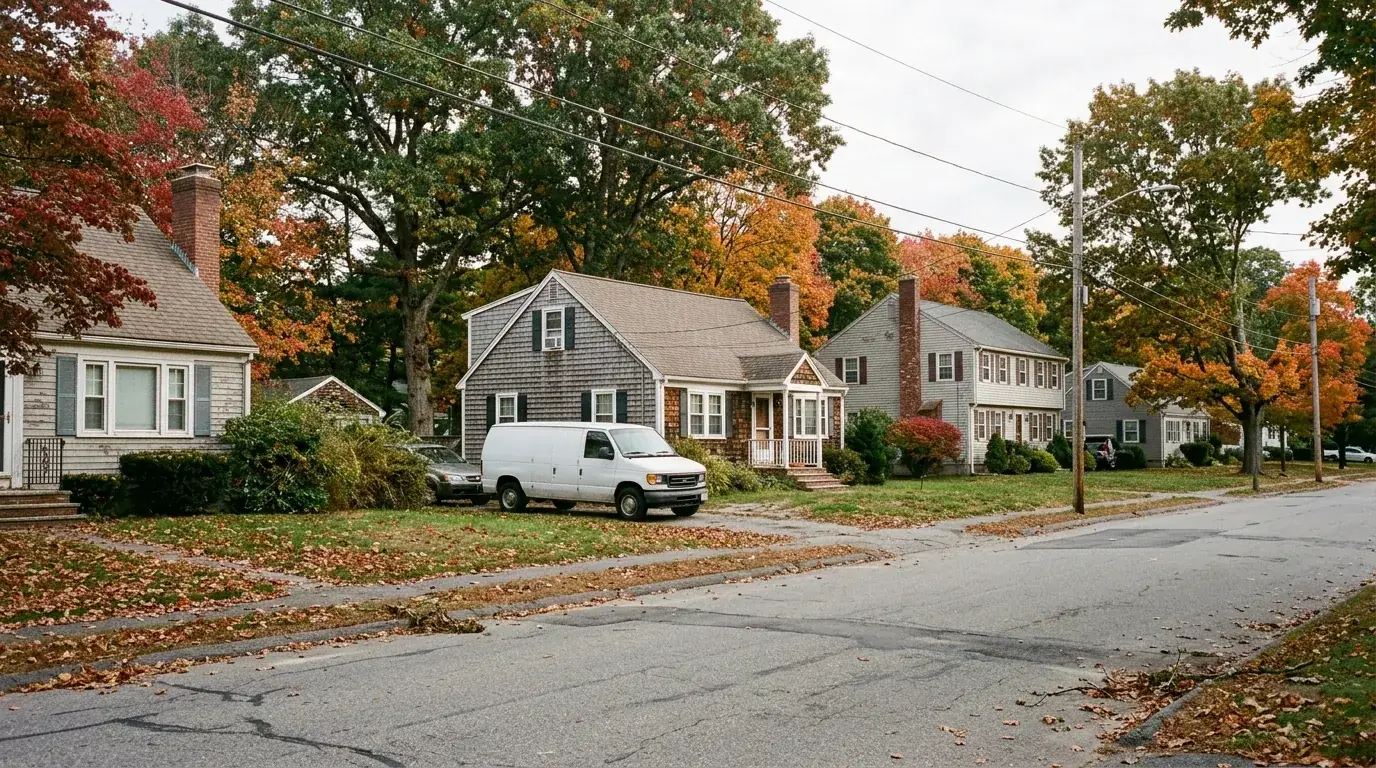
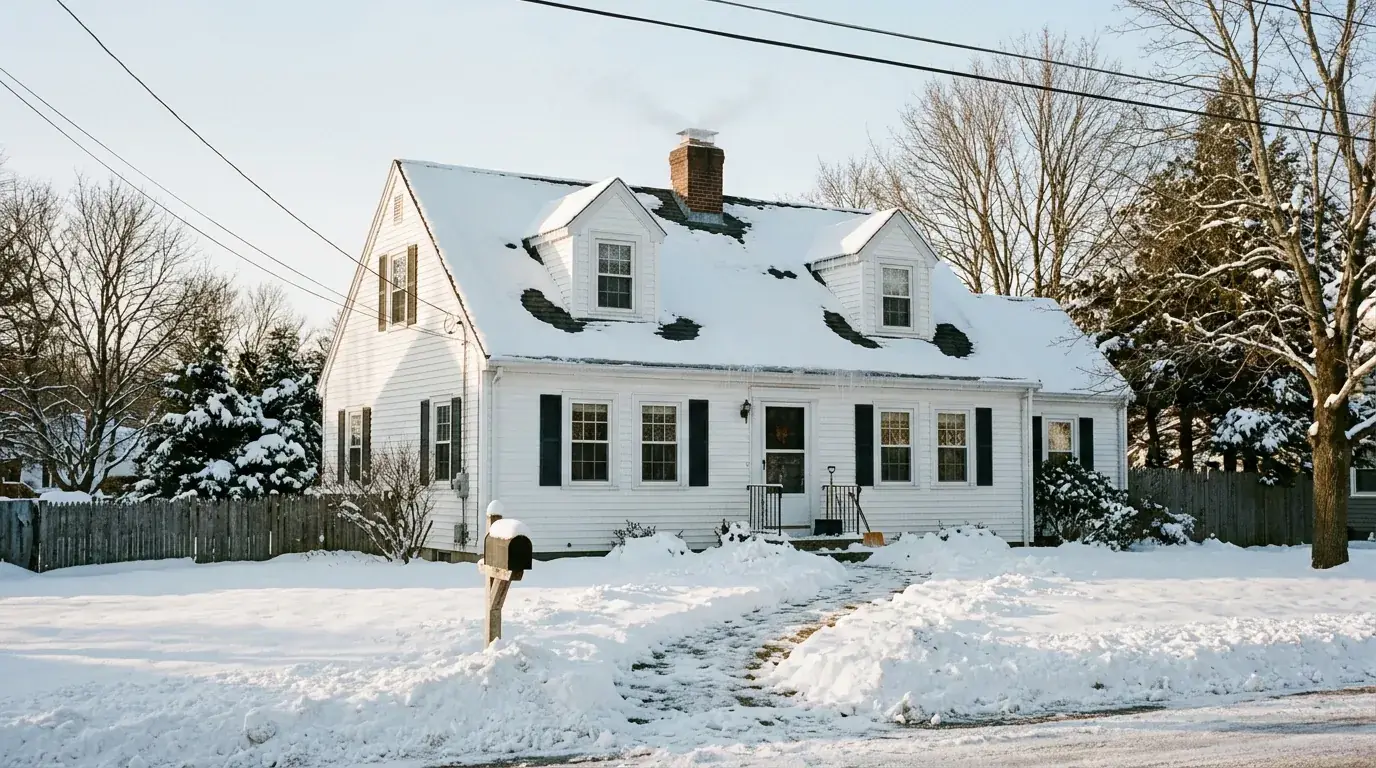
A cape (story-and-a-half) house has its second floor tucked under the roof. Built in huge numbers after World War II in towns like Framingham, Natick, Quincy, Brockton, Shrewsbury and Auburn, capes are compact and charming. But the upstairs rooms are wrapped by a complicated set of surfaces, and each one leaks heat.
The five zones
- Knee walls: the short walls on each side of the upstairs rooms.
- The floor behind the knee walls: floor joists that run under the heated rooms and are open to the cold attic behind the knee wall.
- Sloped ceilings: the rafters between the knee wall and the flat ceiling.
- The top attic: a small attic above the flat ceiling.
- Dormers: walls, cheeks and small roofs, often barely insulated.
The two strategies
| Insulate the knee walls | Insulate the roofline | |
|---|---|---|
| Knee walls | Insulate + air barrier on attic side | Left as interior walls |
| Floor behind knee walls | Blocked and sealed | Becomes conditioned |
| Slopes | Dense-pack or foam | Foam continues down to eaves |
| Top attic | Air seal + blown insulation | Air seal + blown insulation, or foam at the roof |
| Best when | Budget-focused; storage behind knee walls not needed warm | Ducts or pipes in knee wall spaces; warm storage desired |
See knee wall insulation for details.
Sloped ceilings
In existing capes, the sloped section is usually closed with plaster or drywall. Dense-pack cellulose can be blown into each rafter bay from the top attic or from the knee wall space. In renovations, spray foam gives the most R-value in shallow rafters. See cathedral ceiling insulation.
Ice dams on capes
Capes are among the most ice-dam-prone homes in Massachusetts, because heat escapes through the knee walls and slopes right above the eaves. Sealing and insulating those zones is the fix. See ice dams.
Downstairs and basement
Do not forget the first floor: rim joists and basement walls in capes leak just like in any house. See rim joist insulation.
blocking the floor joists behind the knee walls. Without it, cold attic air flows under the upstairs rooms and chills the ceiling of the first floor.
Mass Save® and capes
Knee walls, attic slopes and the top attic are common Mass Save® measures. See Mass Save® insulation rebates.
Cape dormers in detail
Shed and gable dormers add headroom to capes, but each dormer has cheek walls, a small roof and connections to the main roof, all of which are often poorly insulated. Typical fixes include dense-packing dormer cheeks and roofs or spraying foam where accessible during renovations.
Expanded capes
Many Massachusetts capes have been expanded with full shed dormers across the back, turning them into nearly two-story homes. These renovations sometimes left gaps where new framing meets old. An infrared scan quickly shows cold spots at those transitions.
First-floor issues in capes
| Area | Common issue |
|---|---|
| Rim joists | Leaky, uninsulated |
| Exterior walls | Thin or no insulation in older capes |
| Breezeway or garage connection | Air leaks into the house |
| Basement | Damp, cold foundation walls |
Heat pumps in capes
After weatherization, many capes are well suited to ductless heat pumps: one or two heads downstairs and smaller heads in upstairs bedrooms. The knee wall and slope work makes the upstairs much easier to keep comfortable year-round.
Capes across Massachusetts
From post-war neighborhoods in Framingham, Natick and Shrewsbury to the South Shore and Worcester County, capes share the same layout and the same weak points. That predictability helps: an experienced crew knows exactly where to look.
Make your cape comfortable
BCI Group insulates capes across MetroWest, Central Massachusetts and the South Shore. Call (774) 278-8256 or request a free estimate.
Frequently asked questions
Why are cape upstairs bedrooms so cold?
They are surrounded by knee walls, sloped ceilings and small attics that are often poorly insulated and leak air.
What is the best way to insulate a cape?
Either insulate and seal the knee walls, floor behind them, slopes and top attic, or insulate the full roofline with spray foam.
Do capes get ice dams more than other houses?
Often yes, because heat escapes through the knee walls and slopes near the eaves.
Can sloped ceilings be insulated without removing plaster?
Often yes, with dense-pack cellulose blown from the attic or knee wall spaces.
Does Mass Save® cover cape insulation?
Knee walls, slopes and attics are common approved measures for eligible customers.
Services mentioned in this article
Blown-In Cellulose near you in Massachusetts
BCI Group crews work in these communities every week. See local details for blown-in cellulose in your town: