Key takeaways
- Spray foam insulation is sprayed as a liquid that expands, insulating and air sealing in one step.
- Closed-cell foam is about R-6 to R-7 per inch and resists moisture; open-cell foam is about R-3.5 to R-3.8 per inch and is softer and lighter.
- It pays off most at rim joists, basement walls, roof decks, cathedral ceilings and other hard-to-seal areas.
- Professional installation, proper re-occupancy times and code-required thermal or ignition barriers are part of a safe job.
Spray foam insulation is one of the most effective ways to insulate and air seal the hardest parts of a house in one step. It is also one of the most misunderstood. This guide explains how spray foam works, the difference between open-cell and closed-cell foam, where it makes sense in Massachusetts homes, what drives the cost and what a safe, code-compliant installation looks like.
How spray foam works
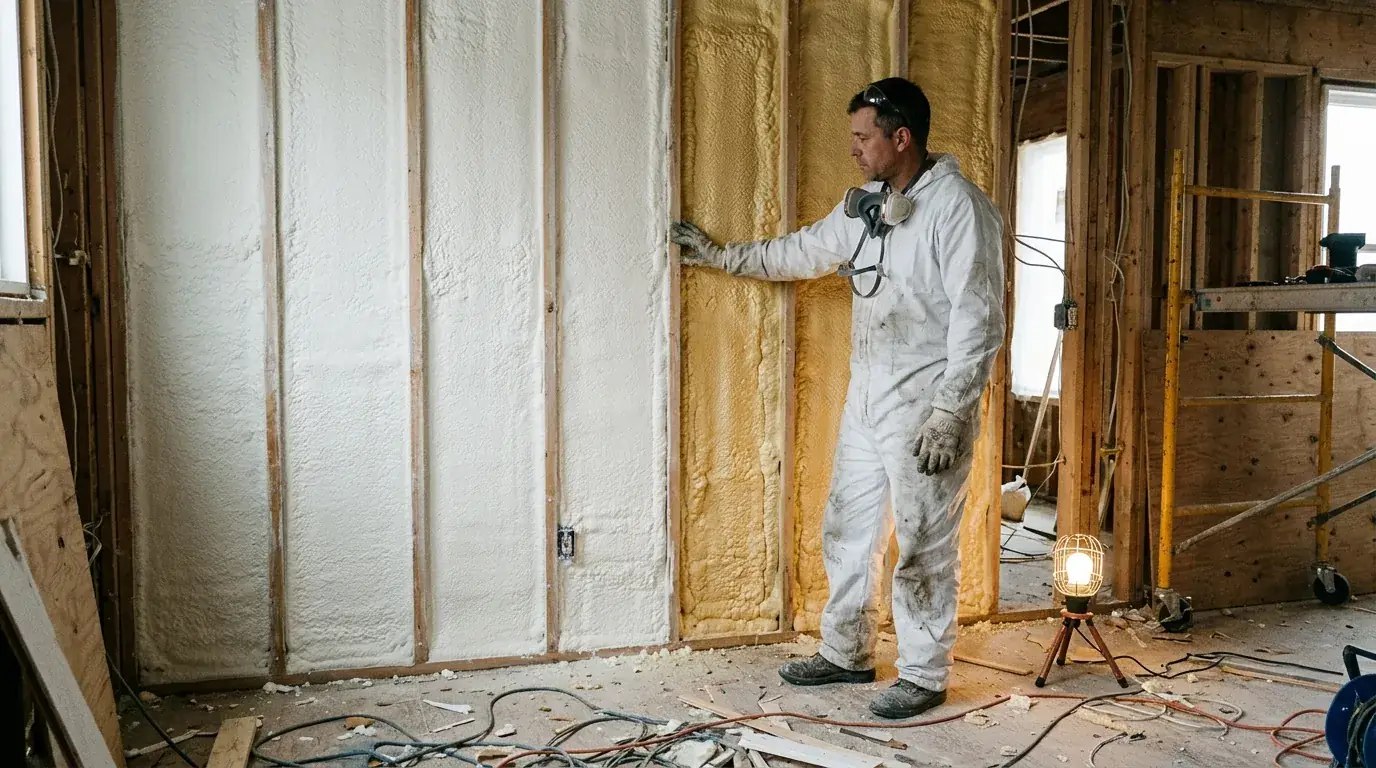
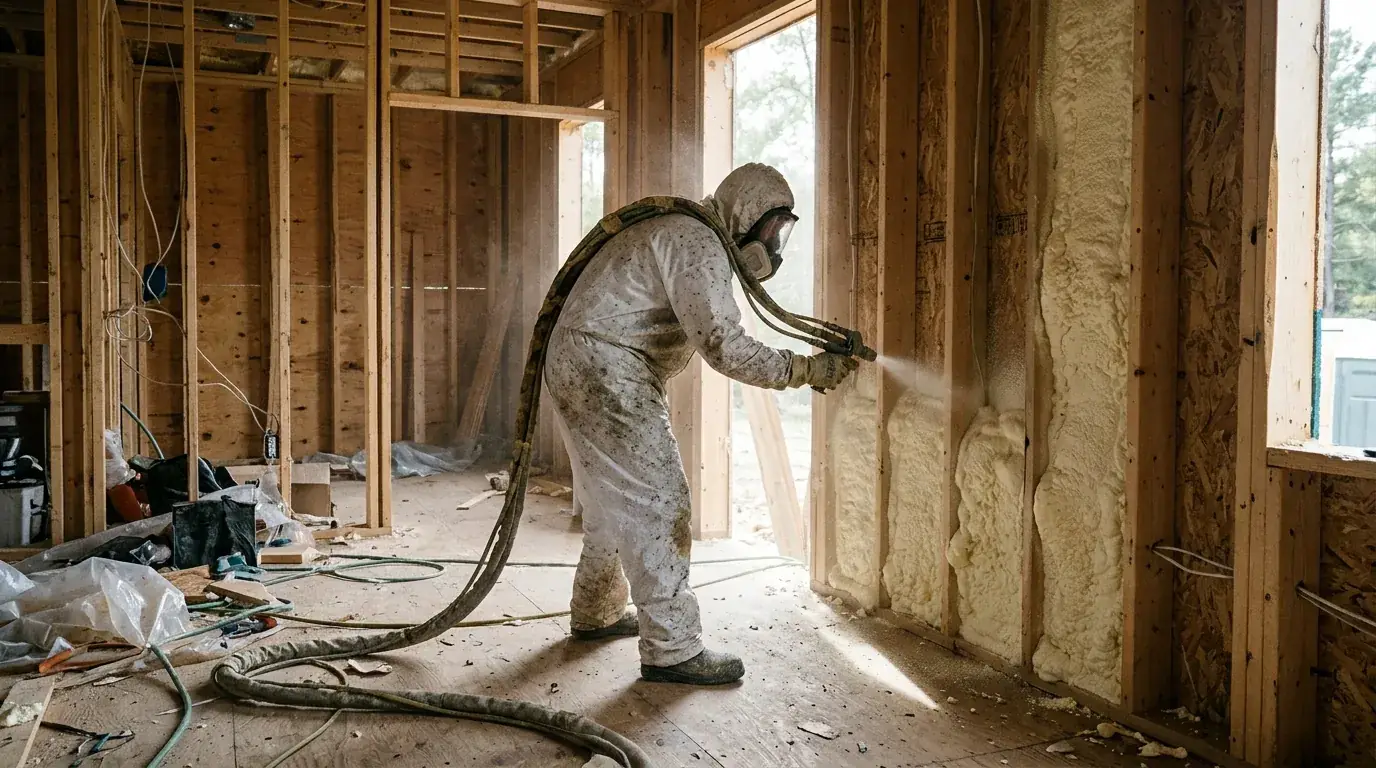
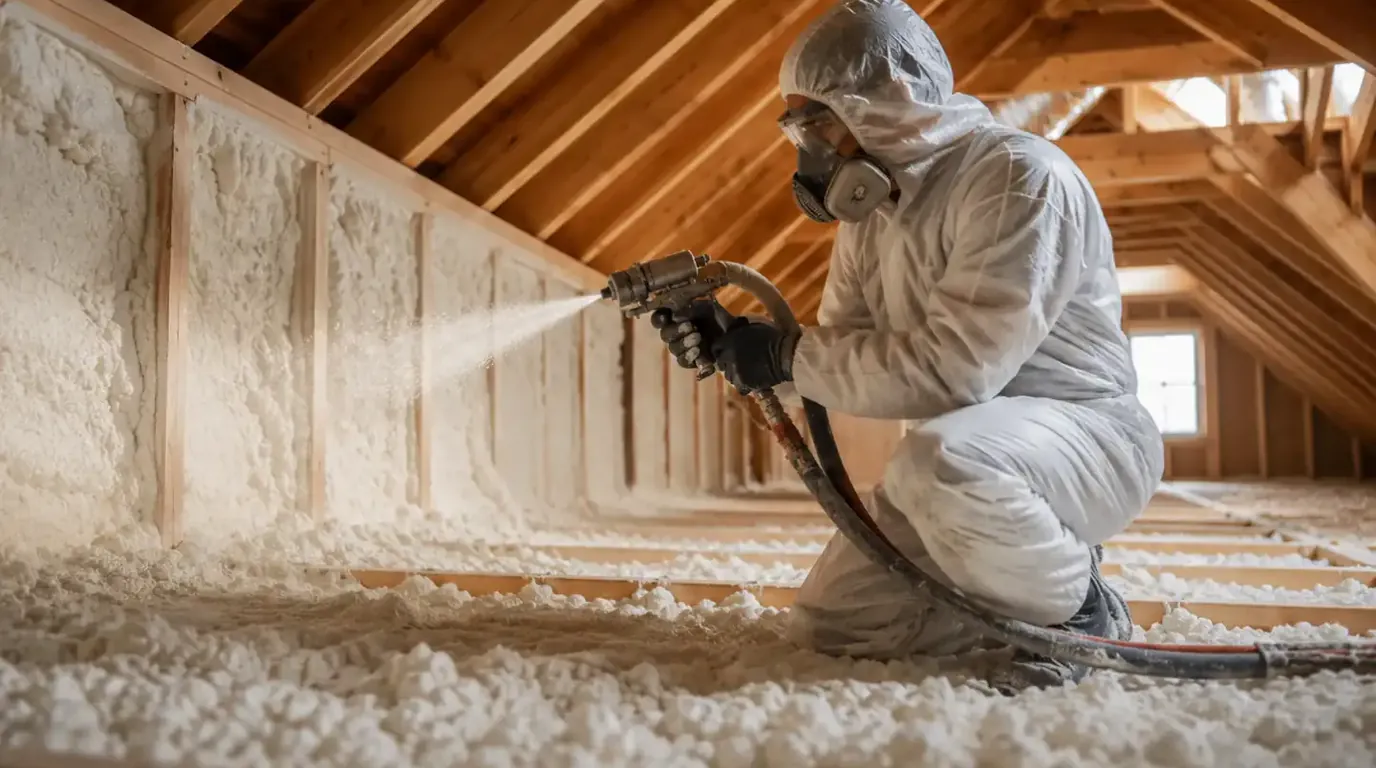
Spray polyurethane foam starts as two liquids that are mixed at the spray gun. They react, expand and harden within seconds, filling gaps, cracks and irregular cavities that batts and boards cannot. Because it sticks to the surface and fills the space, a properly installed layer both insulates and air seals. That is the main reason spray foam outperforms many materials in leaky areas: in cold climates, air leakage often wastes as much heat as conduction.
Open-cell vs. closed-cell spray foam
| Property | Open-cell | Closed-cell |
|---|---|---|
| R-value per inch | About R-3.5 to R-3.8 | About R-6 to R-7 |
| Density | About 0.5 lb per cubic foot | About 2 lb per cubic foot |
| Moisture | Vapor-open, absorbs water | Resists water; vapor retarder at about 1.5 to 2 inches |
| Rigidity | Soft and flexible | Rigid, adds strength |
| Sound | Very good absorption | Moderate |
| Cost per inch | Lower | Higher |
Exact values depend on the product. For a deeper comparison, see open-cell vs. closed-cell spray foam.
Where spray foam pays off
- Rim joists: the leakiest spot in most basements. See rim joist insulation.
- Basement and crawl space walls, where closed-cell foam handles ground moisture. See spray foam on basement walls and crawl spaces.
- Roof decks and cathedral ceilings, where rafter depth is limited. See spray foam under the roof deck.
- Finished attics and bonus rooms. See bonus rooms.
- Unvented attics with HVAC equipment or ductwork. See unvented attics.
- New construction and additions, where open walls make spraying simple.
- Pole barns and metal buildings prone to condensation. See metal buildings.
Where another material may be better
Spray foam is not always the best value. On an open attic floor, air sealing plus blown cellulose or fiberglass usually costs less for the same result. In closed walls of older homes, dense-pack cellulose fills cavities without opening them. See spray foam vs. fiberglass and dense-pack cellulose. A good contractor recommends the material that fits each area, not one product for everything.
Safety and re-occupancy
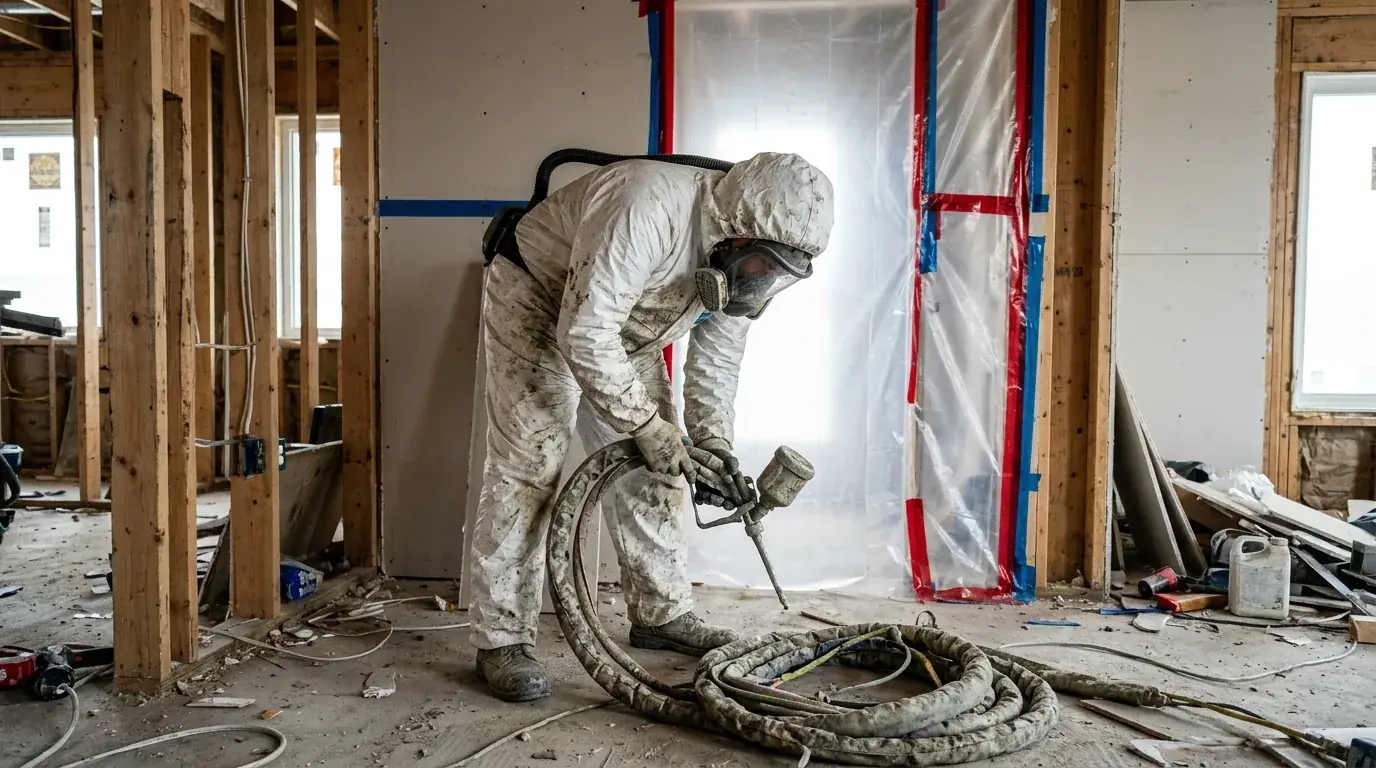
Spray foam chemicals need professional handling. During and after spraying, installers wear protective equipment, the work area is ventilated and occupants stay out for the re-occupancy time set by the manufacturer, often about 24 hours. Once cured, foam is inert. Problems usually trace back to poor mixing, spraying too thick in one pass or skipping ventilation. See is spray foam insulation safe?
Building codes require spray foam to be separated from living spaces by a thermal barrier, such as drywall, and in some attics and crawl spaces by an ignition barrier or approved coating. See thermal and ignition barriers over spray foam.
What drives spray foam cost
- Foam type: closed-cell costs more per inch than open-cell.
- Thickness needed to reach the target R-value or code requirement.
- Area and access: tight crawl spaces and tall roof decks take longer.
- Prep and protection of the surrounding space.
- Coatings or barriers required by code.
- Removal of old insulation where needed.
For details, see spray foam insulation cost in Massachusetts.
How long spray foam lasts
Properly installed spray foam lasts for the life of the building. It does not settle or sag. See how long spray foam lasts.
Mass Save® and spray foam
Mass Save® insulation incentives apply to approved measures recommended through a Home Energy Assessment and installed by a participating contractor. In some homes that includes foam in specific areas such as rim joists or basement walls. Ask what is covered before work begins. See Mass Save® rebates in 2027.
Questions to ask a spray foam contractor
- Which foam, which product and what thickness for each area?
- What R-value will each area reach?
- How is the space ventilated, and when can we return?
- Which thermal or ignition barrier is required, and who installs it?
- How is moisture handled in basements, crawl spaces and roof decks?
- What warranty applies to the installation and the product?
Talk to a spray foam installer
BCI Group installs open-cell and closed-cell spray foam across Massachusetts with our own crews, along with the coatings and barriers code requires. See our spray foam services or request a free estimate below.
Frequently asked questions
What is spray foam insulation?
It is a two-part polyurethane foam sprayed as a liquid that expands and hardens, insulating and air sealing in one step.
Is closed-cell or open-cell spray foam better?
Closed-cell is better where moisture or limited space matters, such as basements and roof decks. Open-cell is lighter, less expensive per inch and good for sound control.
What is the R-value of spray foam?
Closed-cell foam is about R-6 to R-7 per inch and open-cell about R-3.5 to R-3.8 per inch, depending on the product.
How long do I need to stay out after spray foam is installed?
Follow the manufacturer's re-occupancy time, often about 24 hours, while the area is ventilated.
Does spray foam need to be covered?
Usually yes. Codes require a thermal barrier such as drywall between foam and living spaces, and some attics and crawl spaces need an ignition barrier or approved coating.
Does Mass Save cover spray foam?
Mass Save incentives can apply to approved measures recommended in a Home Energy Assessment, which may include foam in specific areas. Confirm coverage before work begins.
Services mentioned in this article
Spray Foam Insulation near you in Massachusetts
BCI Group crews work in these communities every week. See local details for spray foam in your town: