Key takeaways
- Blown-in insulation cost depends on the area, the depth or density required, the material and the prep work.
- Dense-packing closed walls costs more per square foot than blowing an open attic floor because it takes more material and labor.
- Air sealing, baffles, dams and removal of old insulation are often the difference between two quotes.
- Mass Save® can cover most or all of approved blown-in insulation for eligible customers.
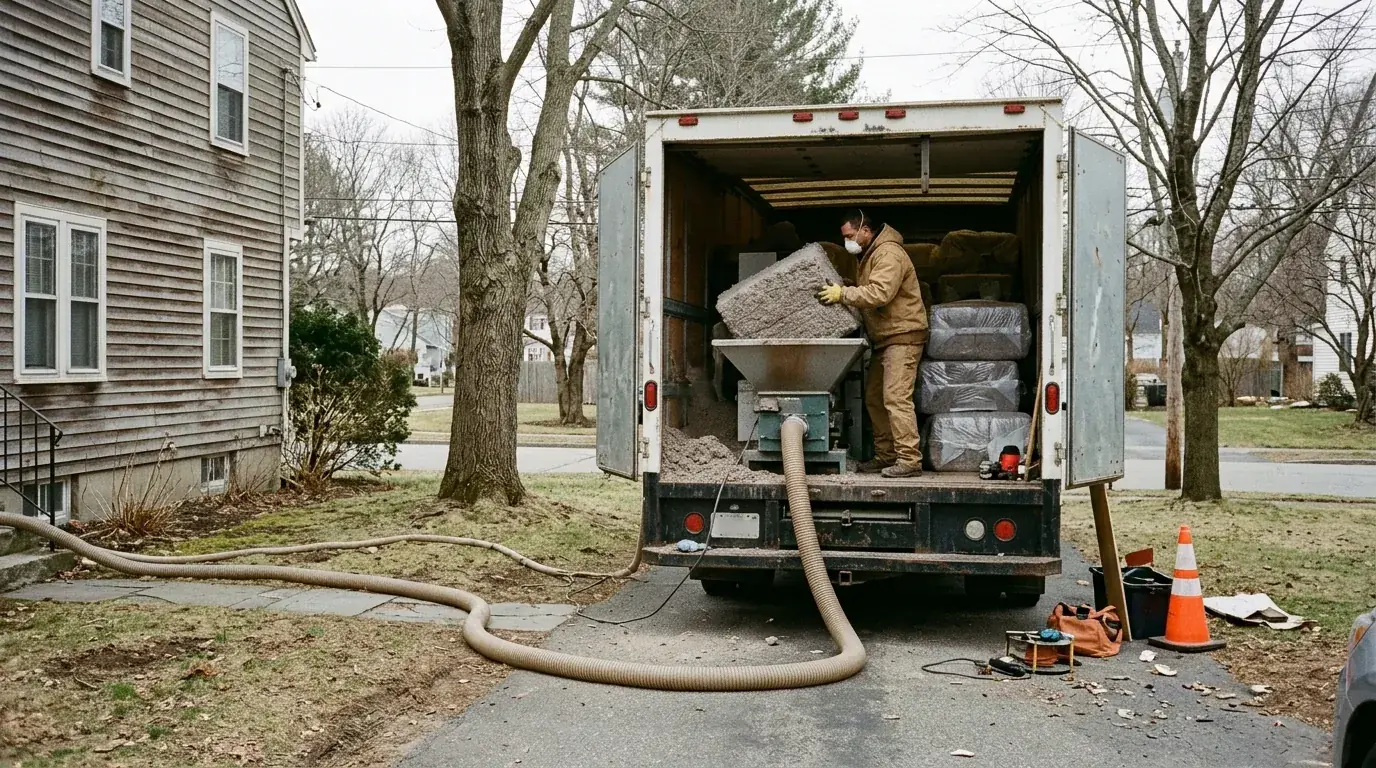
Blown-in insulation is loose cellulose or fiberglass blown into attics and walls with a machine. It is fast, fills irregular spaces and is one of the most cost-effective upgrades for older Massachusetts homes. This guide explains what affects blown-in insulation cost, how attic and wall projects differ and how Mass Save® incentives change what you actually pay.
Attic floors vs. closed walls
Blown-in projects fall into two very different jobs:
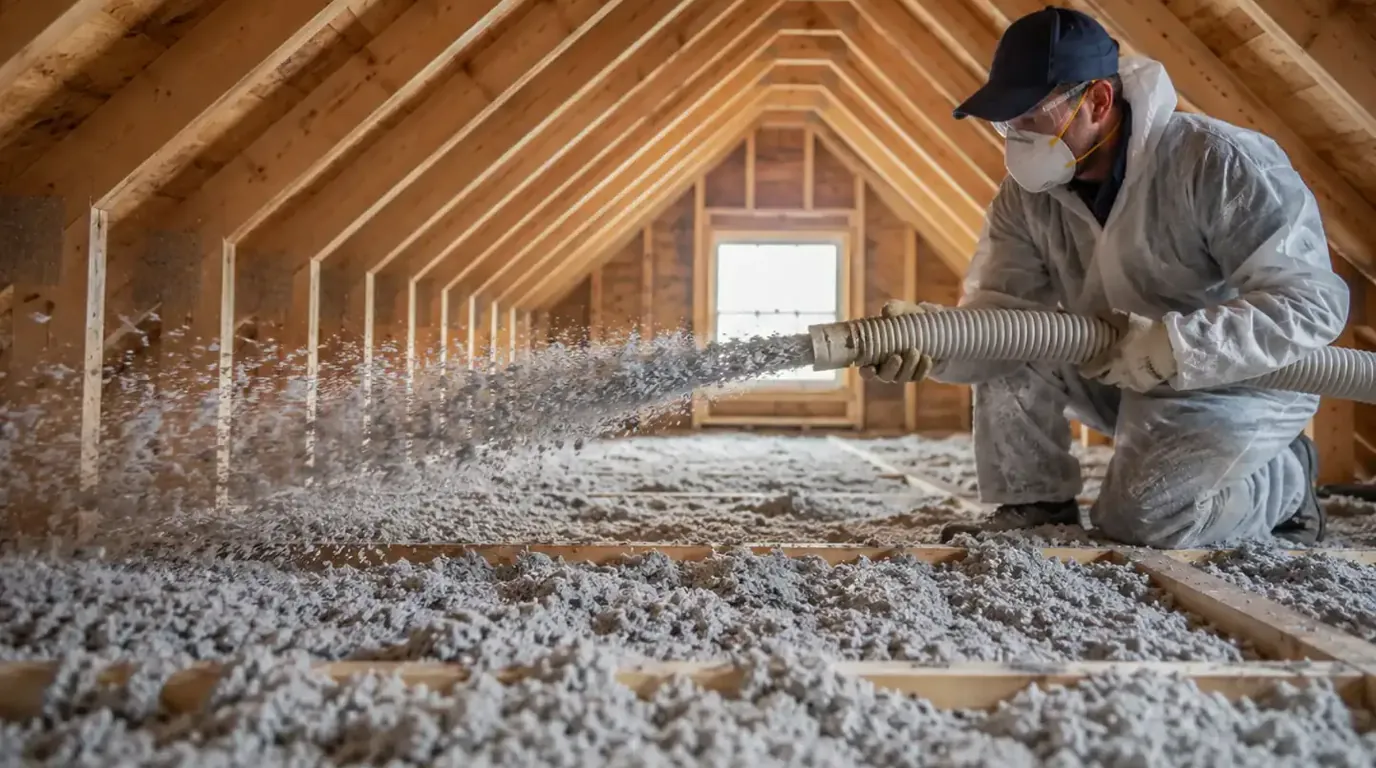
- Open attic floors: loose-fill insulation is blown to a target depth over the attic floor. It is the simplest and lowest-cost type of blown-in work.
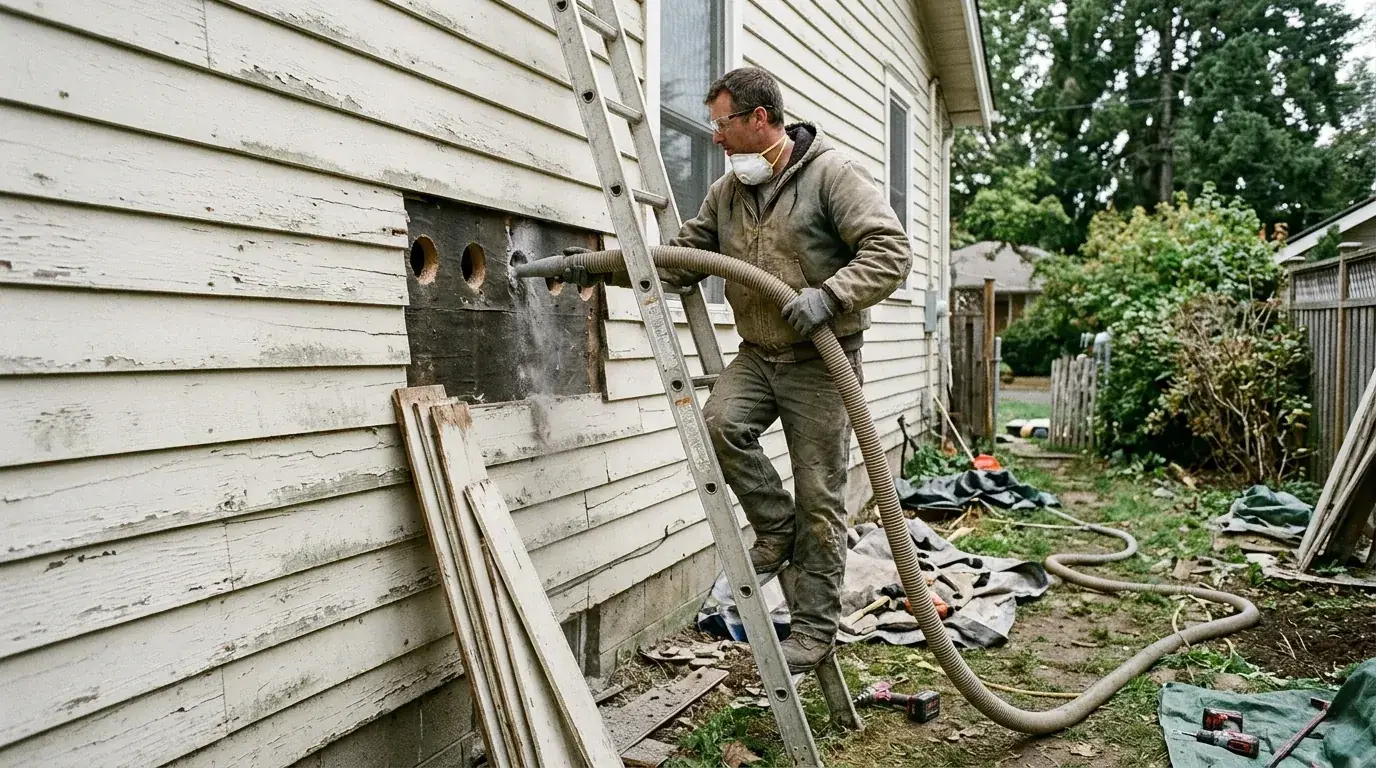
- Closed walls: cellulose is dense-packed through small holes into each stud cavity, then the holes are plugged and patched. It takes more material per square foot, more time and finish work. See dense-pack cellulose walls.
The main cost factors
| Factor | Why it matters |
|---|---|
| Area | Square footage of attic floor or wall to be filled. |
| Target depth or density | Reaching R-49 to R-60 in an attic takes more material than a light top-up. |
| Material | Cellulose and fiberglass differ in cost per R-value and depth needed. |
| Air sealing | Sealing the attic floor first is labor-intensive but gives much of the benefit. |
| Prep work | Baffles at the eaves, dams around hatches and chimneys, covering recessed lights. |
| Removal | Wet, moldy or contaminated insulation must come out first. |
| Access | Low-slope attics, small hatches and multi-level homes take longer. |
| Wall finish work | Drilling and patching plaster or siding adds labor on wall projects. |
Cellulose vs. fiberglass on price
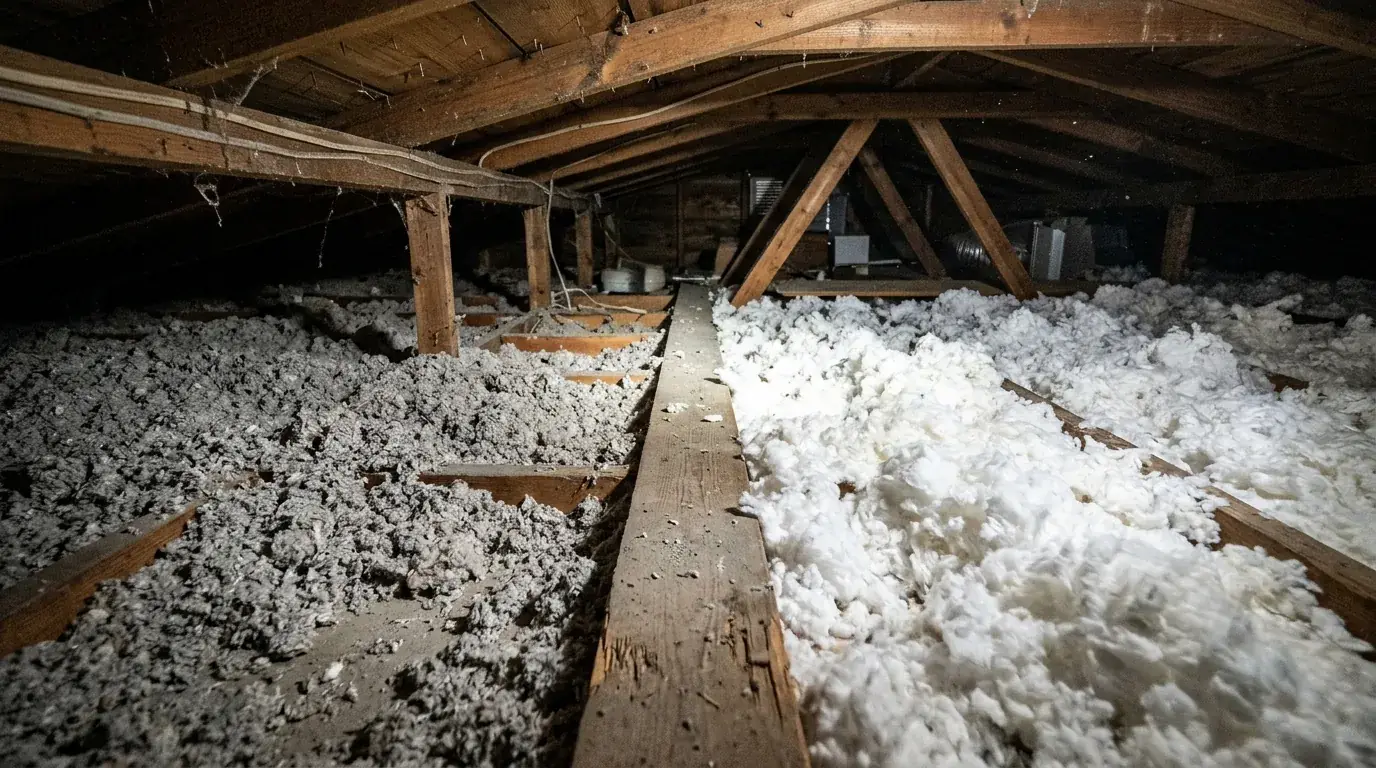
Both are good choices for attic floors. Cellulose is denser and slows air movement better; fiberglass is lighter, does not absorb water and needs more depth to reach the same R-value. In walls, dense-packed cellulose is the usual choice. The better value depends on the attic and the goal. See cellulose vs. fiberglass and our blown-in insulation guide.
What a good quote includes
- The areas to be insulated and the square footage of each.
- The material and the target R-value or installed depth for each area.
- The air sealing scope: which openings will be sealed and with what.
- Prep items: baffles, dams, hatch weatherstripping and insulated cover.
- Any removal and how it is handled.
- How wall holes are plugged and finished on dense-pack jobs.
- The incentives applied and who submits the paperwork.
A low quote that skips air sealing and baffles is not a bargain. Ask each contractor to list the same items so you can compare them line by line.
How Mass Save® changes the price
For eligible customers, Mass Save® offers a no-cost Home Energy Assessment, no-cost targeted air sealing and large rebates on approved insulation, with enhanced incentives for moderate-income households and up to 100% for income-eligible households. The work has to be recommended through the assessment and installed by a participating contractor. See Mass Save® insulation rebates and what changes in 2027.
The 0% HEAT Loan can finance your share of eligible work. Federal tax credits for insulation ended for work placed in service after December 31, 2025.
Hidden issues that add cost
- Knob-and-tube wiring must be evaluated before insulating around it. See barriers to insulating.
- Vermiculite may contain asbestos and must be handled correctly. See vermiculite.
- Moisture or mold in the attic must be fixed first. See attic mold.
- Bath fans venting into the attic must be ducted outside.
Is blown-in insulation worth it?
In most older Massachusetts homes, yes. Air sealing and blown-in attic insulation are among the fastest-payback upgrades available, and with Mass Save® incentives the payback gets shorter. They also reduce ice dams and make upstairs rooms more comfortable year-round.
How long the job takes
Most attic projects are completed in a day or two. Wall projects depend on the number of walls and the siding or plaster. See what to expect on installation day.
Get a clear quote
BCI Group installs blown cellulose and fiberglass in attics and walls across Massachusetts and lists every item in writing. See our blown-in cellulose service or request a free estimate below.
Frequently asked questions
What affects blown-in insulation cost the most?
The area, the depth or density required, air sealing, prep work such as baffles and dams, removal of old insulation and access.
Is blown-in insulation cheaper in attics or walls?
Attic floors are usually less expensive per square foot. Dense-packing closed walls needs more material, more labor and finish work.
Is cellulose or fiberglass cheaper to blow in?
It depends on the product and the depth needed. Fiberglass needs more depth for the same R-value, while cellulose is denser. Compare cost per R-value, not per bag.
Does Mass Save cover blown-in insulation?
Yes, for eligible customers, approved blown-in insulation recommended through a Home Energy Assessment can receive large rebates, up to 100% for income-eligible households.
Can blown-in insulation go over old insulation?
Usually yes, after the attic floor is air sealed and as long as the old insulation is clean and dry.
Services mentioned in this article
Blown-In Cellulose near you in Massachusetts
BCI Group crews work in these communities every week. See local details for blown-in cellulose in your town: