Key takeaways
- Air sealing closes the gaps that let heated air escape and cold air in; it is often the most cost-effective energy upgrade.
- The biggest leaks are usually in the attic floor and basement, not around windows.
- A blower door test measures leakage before and after and helps find the leaks.
- Mass Save® offers no-cost targeted air sealing for eligible customers.
Air sealing means closing the gaps, cracks and holes that let air move between your living space and the outdoors, the attic, the basement or the walls. In a typical older Massachusetts home, those gaps add up to the equivalent of an open window running all winter. This guide shows where the leaks hide, how professionals seal them, how leakage is measured and how to make sure a tighter house stays healthy.
Why air sealing matters
Warm air rises and escapes through the top of the house, and cold air is pulled in at the bottom to replace it. This stack effect is strongest on the coldest days. Air sealing:
- Reduces heating and cooling loss that insulation alone cannot stop.
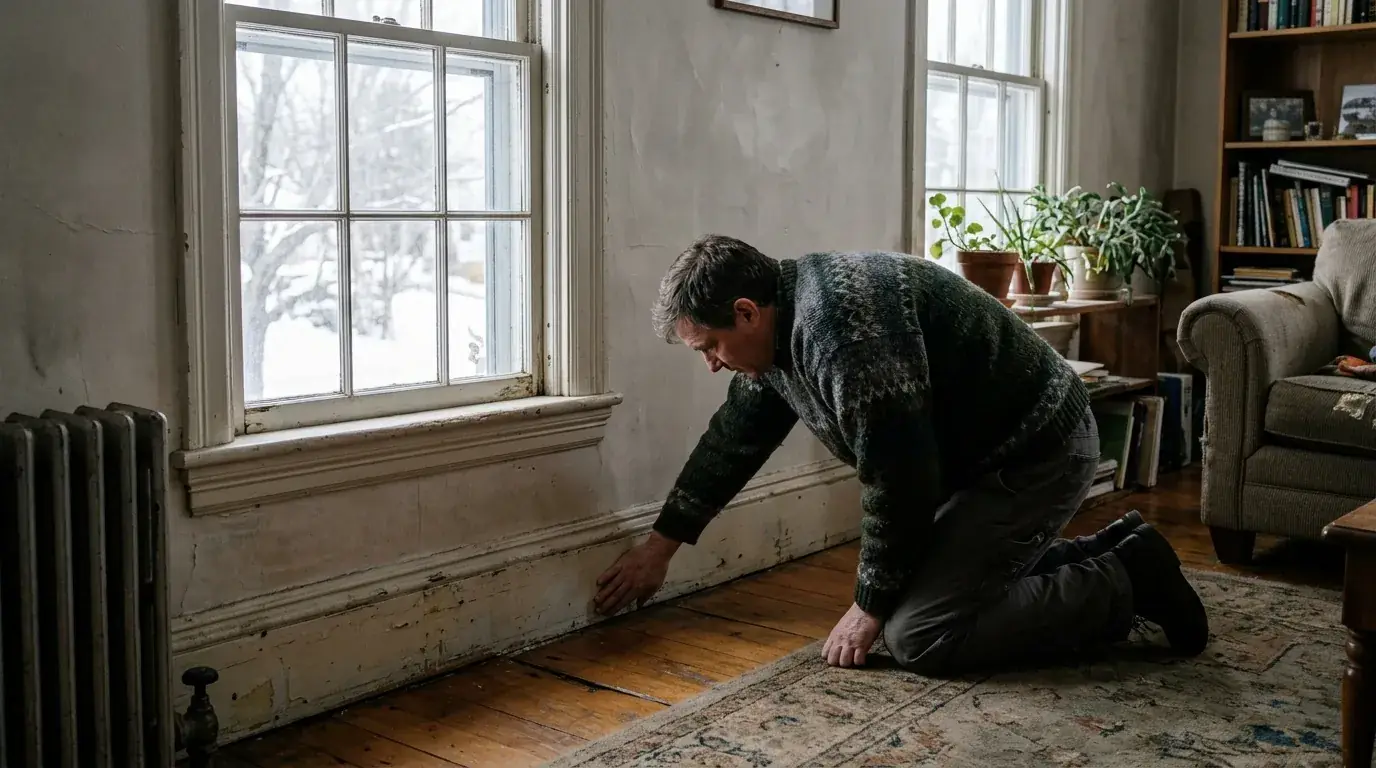
- Cuts drafts and cold floors. See cold floors.
- Helps prevent ice dams by keeping heat out of the attic.
- Keeps moist indoor air out of attics and walls, where it can condense.
- Reduces dust, pollen and pests coming in through gaps.
Where the biggest leaks are
| Location | Common leaks |
|---|---|
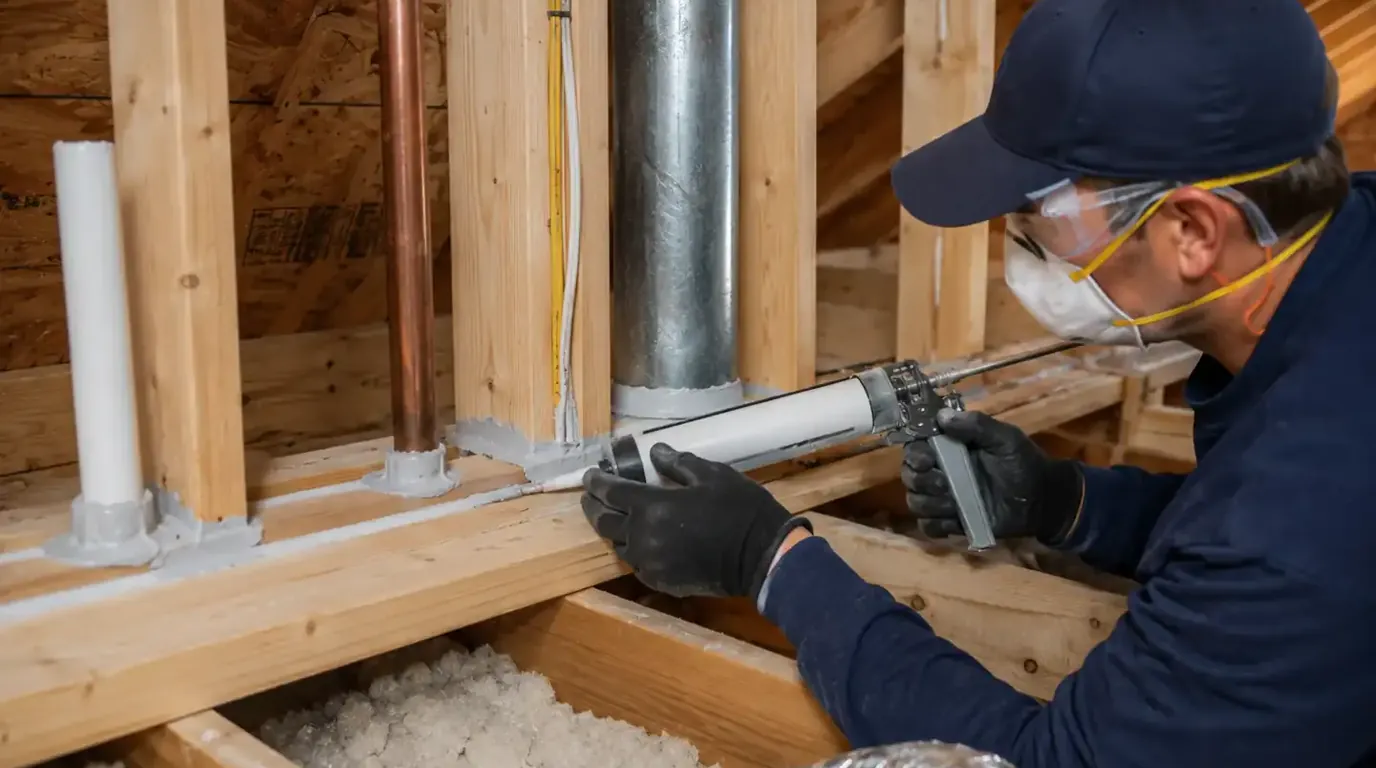
| Attic floor | Top plates, chimney and flue chases, plumbing stacks, wiring holes, recessed lights, the attic hatch |
| Basement | Rim joists, sill plates, bulkheads, pipe and wire penetrations |
| Balloon-framed walls | Open paths from basement to attic in older homes |
| Knee walls | Open floor cavities behind knee walls in capes and finished attics |
| Living space | Outlets and switches on exterior walls, baseboards, window and door trim |
| Ductwork | Leaky ducts in attics, basements and garages |
Windows and doors get the attention, but the attic floor and basement rim are usually where the largest leaks are. See attic air sealing and rim joist insulation.
How professionals seal a house
- Expanding foam for gaps and holes around pipes and wires.
- Caulk for small cracks and top plates.
- Rigid board and foam to cap large openings such as chases and soffits.
- Sheet metal and fire-rated sealant around chimneys and flues, as code requires.
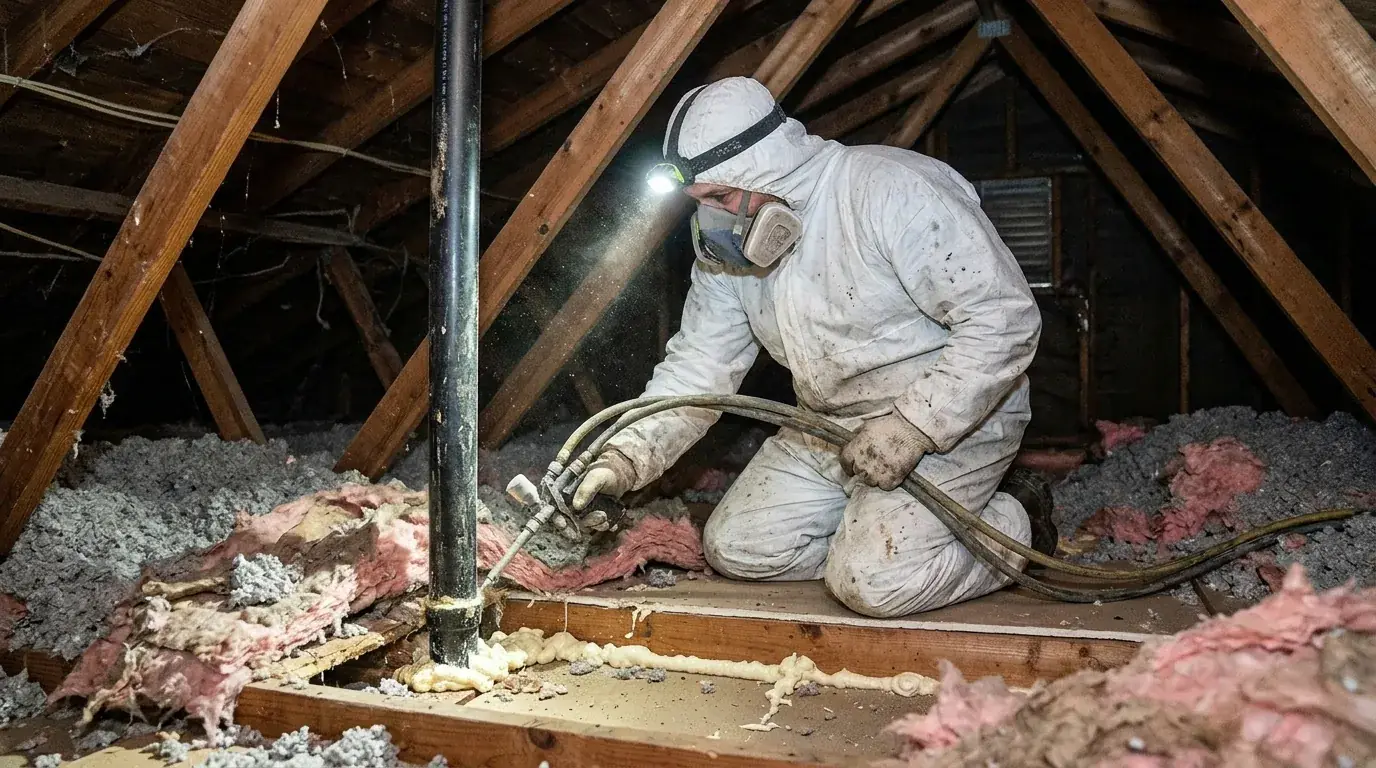
- Spray foam at rim joists and other hard-to-reach areas.
- Weatherstripping and insulated covers for attic hatches and pull-down stairs.
- Duct sealing with mastic or approved tape. See duct sealing.
Chimneys, flues and recessed lights need clearances and the right fire-rated materials. Ordinary foam and caulk are not allowed directly against them.
Measuring leakage with a blower door
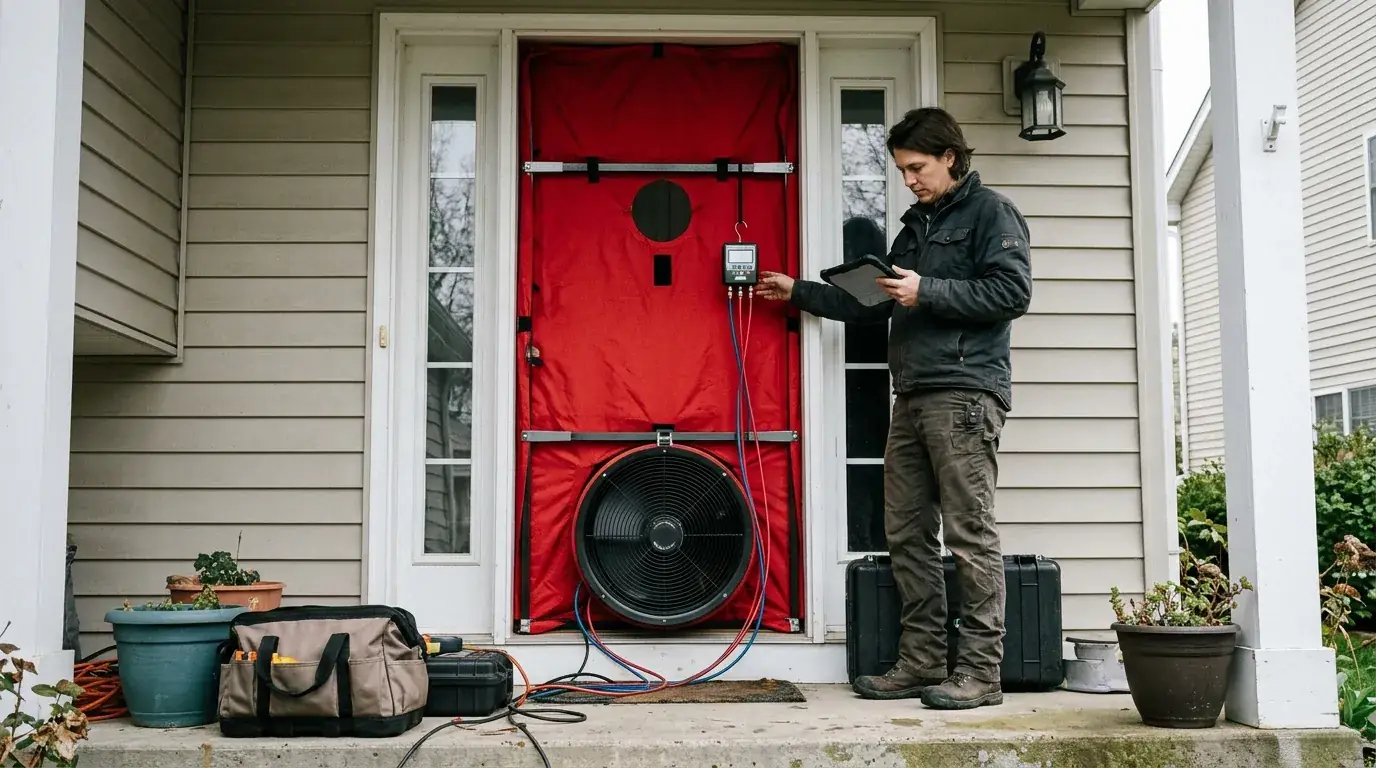
A blower door test uses a calibrated fan in an exterior doorway to depressurize the house and measure how much air leaks in. The result is often expressed as ACH50, air changes per hour at 50 pascals. Testing before and after shows how much the sealing achieved, and running the fan while inspecting with an infrared camera helps find leaks. See blower door test, ACH50 and infrared thermal imaging.
Ventilation in a tighter house
A tighter house needs controlled ventilation so moisture and pollutants have a way out. That usually means bath fans ducted outside, a good kitchen range hood and, in very tight homes, whole-house ventilation. Combustion appliances must still vent safely. See bath fan ventilation and ERV vs. HRV.
DIY vs. professional air sealing
Homeowners can weatherstrip doors, caulk trim and add outlet gaskets. The biggest leaks, in the attic floor, the basement rim and hidden framing paths, usually require pulling back insulation, working in tight spaces and following fire codes, which is where professional crews and testing make the difference. See drafty house fixes.
Mass Save® coverage
For eligible customers, Mass Save® offers no-cost targeted air sealing after a no-cost Home Energy Assessment, along with large rebates on approved insulation. See Mass Save® rebates in 2027.
Air sealing and new construction
For new homes, the Massachusetts energy code sets maximum air leakage verified by testing. Builders working toward a HERS rating or the Stretch Code plan air sealing from the framing stage. See new construction insulation and HERS and the Stretch Code.
Get your house sealed and tested
BCI Group air seals attics, basements and walls, runs blower door tests and installs the insulation that goes with them. See our energy audits and testing or request a free estimate below.
Frequently asked questions
What is air sealing?
Air sealing closes gaps, cracks and holes that let air move between the living space and the outdoors, attic, basement or walls.
Where are the biggest air leaks in a house?
Usually in the attic floor and basement: top plates, chimney chases, plumbing and wiring holes, recessed lights, attic hatches and rim joists.
Is air sealing worth it?
Yes. It is often the most cost-effective energy upgrade, reducing heat loss, drafts and ice dams, and it makes insulation work better.
Can a house be too tight?
A tight house needs controlled ventilation, such as bath fans ducted outside, and safe venting for combustion appliances. With those in place, tighter is better.
Does Mass Save pay for air sealing?
Mass Save offers no-cost targeted air sealing for eligible customers after a no-cost Home Energy Assessment.
How is air leakage measured?
With a blower door test, which depressurizes the house and measures leakage, often reported as ACH50.
Services mentioned in this article
Energy Audits & HERS Ratings near you in Massachusetts
BCI Group crews work in these communities every week. See local details for energy audits in your town: