Key takeaways
- Massachusetts is in climate zone 5A, where ENERGY STAR recommends R-49 to R-60 in an attic floor.
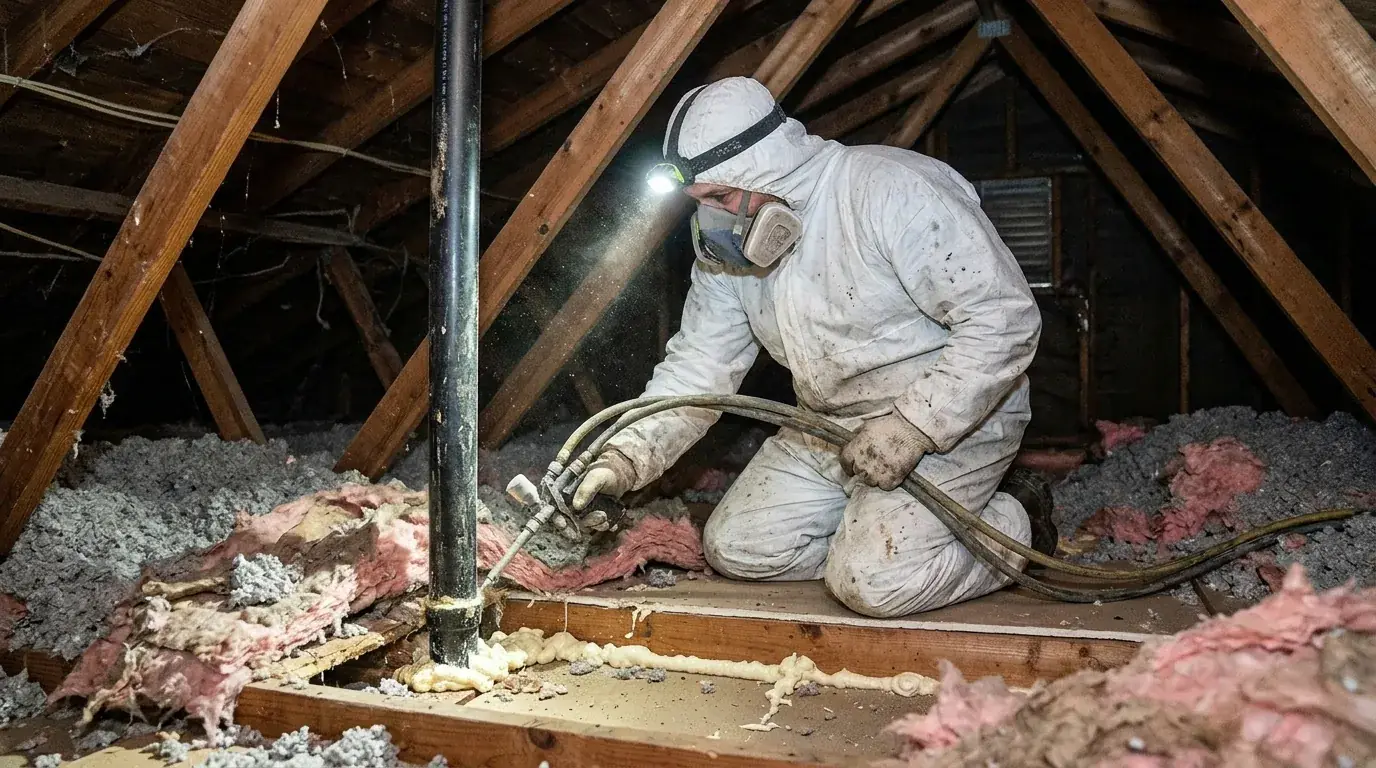
- Air seal the attic floor before adding insulation; it is a large part of the benefit and prevents ice dams.
- Blown cellulose and blown fiberglass are the usual best value for open attic floors; spray foam fits roof decks and finished attics.
- Mass Save® can cover air sealing at no cost and most or all of approved attic insulation for eligible customers.
Attic insulation is the single most common energy upgrade in Massachusetts, and for good reason. Warm air rises, so a thin or leaky attic floor lets heat escape all winter, causes ice dams and makes upstairs rooms hot in summer. This guide covers how much attic insulation you need, the best materials, why air sealing comes first, ventilation, when old insulation should come out and how Mass Save® helps.
How much attic insulation you need
Massachusetts sits in climate zone 5A. For attic floors in this zone, ENERGY STAR recommends R-49 to R-60. Many homes built before the 1980s have R-11 to R-19, often settled, uneven or missing in places. As a rough guide, that target means about 13 to 17 inches of blown cellulose or about 16 to 22 inches of blown fiberglass, depending on the product.
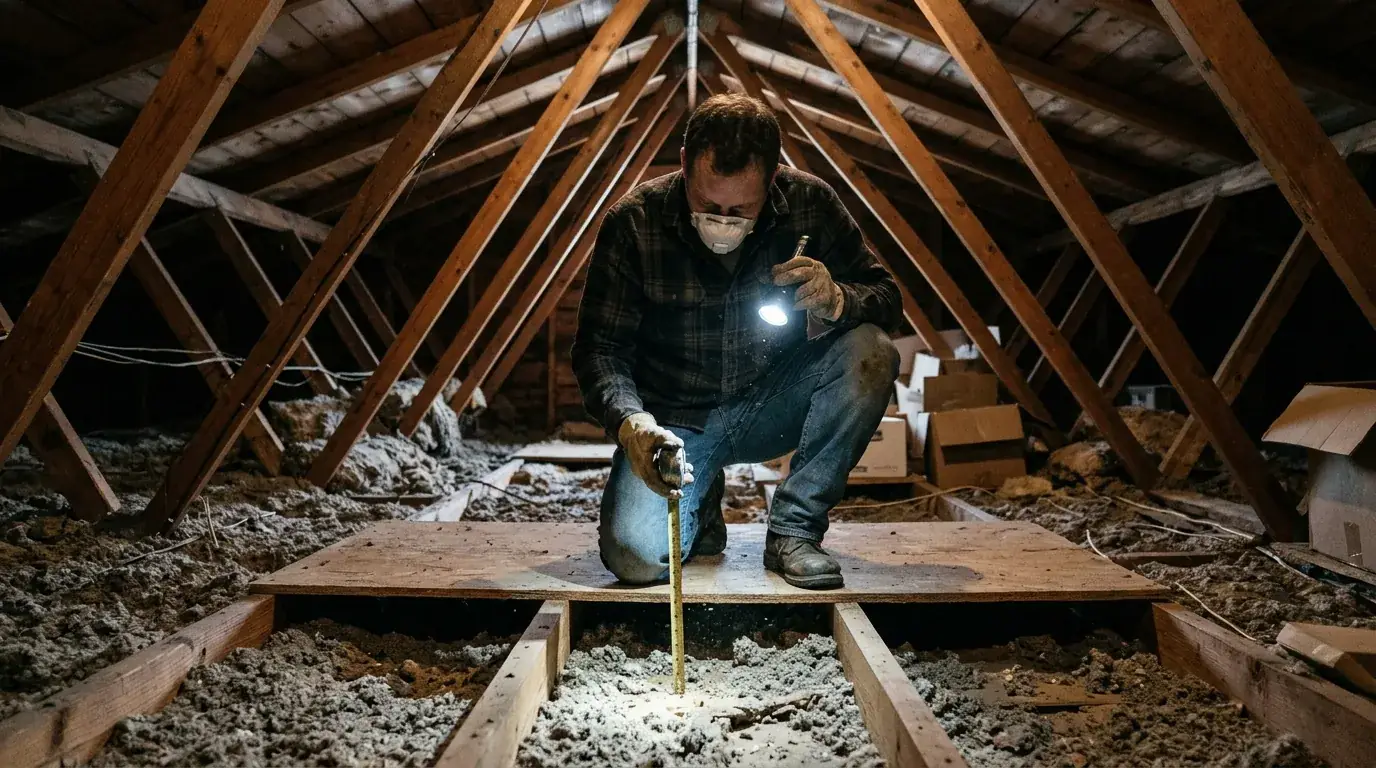
Measure the depth in several spots with a ruler. If the insulation is level with or below the tops of the floor joists, you almost certainly need more. See how much attic insulation you need in Massachusetts.
Air sealing comes first
Insulation slows heat moving through the attic floor, but it does not stop air. Warm, moist air leaks into the attic through gaps around chimneys, plumbing stacks, wiring holes, recessed lights, top plates and the attic hatch. Sealing those gaps before adding insulation:
- Cuts heating loss that insulation alone cannot stop.
- Reduces ice dams by keeping heat out of the roof.
- Prevents moisture from condensing in the attic, which can cause attic mold.
See why air sealing comes before insulation.
The best insulation for an attic
| Material | Best for | Notes |
|---|---|---|
| Blown cellulose | Open attic floors | Dense, good at slowing air movement, treated for fire and pests |
| Blown fiberglass | Open attic floors | Light, does not absorb water, needs more depth for the same R-value |
| Fiberglass or mineral wool batts | Easy-access attics, knee walls | Must be cut and fitted carefully with no gaps |
| Spray foam | Roof decks, cathedral ceilings, unvented attics | Insulates and air seals in one step; higher cost |
For most open attic floors, air sealing plus blown cellulose or blown fiberglass gives the best value. Compare them in cellulose vs. fiberglass. When the attic is finished or holds HVAC equipment, insulating the roof deck with spray foam can be the better choice.
Ventilation and baffles
Most vented attics need air to enter at the soffits and leave at the ridge or gable vents. Before blowing insulation, installers place baffles at the eaves so the insulation does not block the soffit vents. Bath fans and dryer vents must be ducted outside, not into the attic. See attic ventilation and soffit vents and bath fan ventilation.
Hard spots in Massachusetts attics
- Knee walls in capes and finished attics. See knee wall insulation.
- Cathedral ceilings with shallow rafters. See cathedral ceiling insulation.
- Attic hatches and pull-down stairs, which need weatherstripping and an insulated cover.
- Recessed lights that are not rated for insulation contact.
- Old wiring and vermiculite, which must be addressed first. See vermiculite insulation.
When old attic insulation should come out
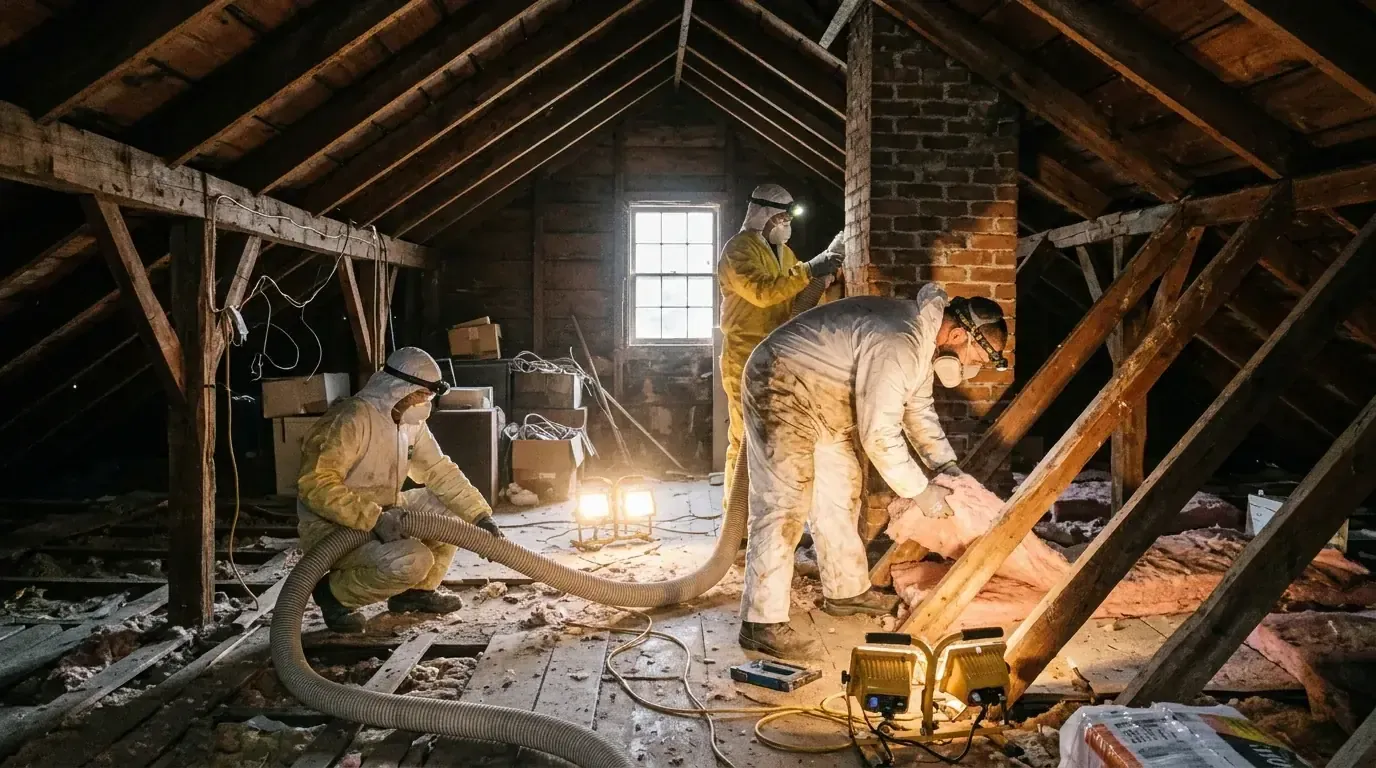
Clean, dry insulation can usually stay, and new insulation goes on top after air sealing. Wet, moldy, rodent-contaminated or smoke-damaged insulation should be removed. See attic insulation removal.
Keep insulation away from chimneys and flues as code requires, never bury recessed lights that are not IC-rated and keep knob-and-tube wiring uncovered until an electrician has dealt with it.
What attic insulation costs
The price depends on attic size, the target R-value, how much air sealing is needed, access and whether old insulation must be removed. See attic insulation cost for the full breakdown.
Mass Save® rebates for attic insulation
For eligible customers, Mass Save® offers a no-cost Home Energy Assessment, no-cost targeted air sealing and large rebates on approved insulation, up to 100% for income-eligible households. See Mass Save® rebates in 2027 and Mass Save® insulation rebates.
What to expect on install day
Most attic projects take a day or two. The crew protects the path through the house, seals the attic floor, installs baffles and dams, blows insulation to the agreed depth with depth markers and shows you the finished work. See what to expect on installation day.
Get your attic checked
BCI Group air seals and insulates attics across Massachusetts with blown cellulose, blown fiberglass and spray foam. See our blown-in insulation service or request a free estimate below.
Frequently asked questions
How much attic insulation do I need in Massachusetts?
ENERGY STAR recommends R-49 to R-60 for attic floors in climate zone 5A, which includes Massachusetts.
What is the best insulation for an attic?
For most open attic floors, air sealing plus blown cellulose or blown fiberglass gives the best value. Spray foam fits roof decks, cathedral ceilings and unvented attics.
Should I remove old attic insulation before adding more?
Not usually. Clean, dry insulation can stay. Wet, moldy, contaminated or damaged insulation should be removed.
Why air seal the attic before insulating?
Air leaks carry heat and moisture into the attic. Sealing them cuts heat loss, reduces ice dams and protects the attic from condensation.
Does Mass Save pay for attic insulation?
For eligible customers, Mass Save offers no-cost targeted air sealing and large rebates on approved insulation, up to 100% for income-eligible households.
How long does attic insulation take to install?
Most attics are finished in one or two days, depending on size, air sealing and access.
Services mentioned in this article
Blown-In Cellulose near you in Massachusetts
BCI Group crews work in these communities every week. See local details for blown-in cellulose in your town: